
Get The Facts On The Albuterol Inhaler Transition
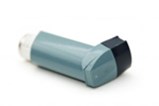
Millions of asthma patients and their healthcare providers do not know that at the end of this year, their life-saving medications will be gone. Today, FDA urged patients still using chlorofluorocarbon (CFC) albuterol metered-dose inhalers (MDIs) to switch to alternate hydrofluoroalkane (HFA) inhalers (albuterol and levalbuterol) before CFCs are completely off the market. As of December 31, 2008, no CFC albuterol inhalers will be manufactured or sold in this country.
CFC is used to propel medication from asthma inhalers into patients' airways. But it also depletes the earth's ozone layer, so it's being phased out of medications like inhaled albuterol, one of the top 10 prescriptions written in the United States. Patients with asthma, COPD and other respiratory conditions use albuterol at the first sign of symptoms, before exercise and when experiencing breathing exacerbations. Alternate inhalers using HFA as a propellant are replacing CFC albuterol.
"We applaud FDA's efforts to educate patients and medical professionals about the new HFA inhalers," states Nancy Sander, president and founder of Allergy & Asthma Network Mothers of Asthmatics (AANMA). "There are critical differences between CFC and HFA inhalers that patients need to know in order to use these medications properly."
- HFA MDIs have a softer spray. Some patients comment that force of the HFA propellant is not strong enough to "push open" their airways during an attack. But it is the correct inhalation technique, not the force of the propellant, that determines how well the medication works. Neither type of inhaler can push or force airways open.
- HFA MDIs have different cleaning requirements. HFA MDIs need to becleaned more frequently than CFC MDIs. HFAs tend to clog more quickly than CFCs, preventing medication from reaching patients' airways.
- HFA MDIs have different priming requirements. Priming (sprayingmultiple doses into the air) loads the correct dose of medicationinside the inhaler. Each HFA inhaler has different priminginstructions, which can be quite different from CFC priming.
- HFA MDIs offer more treatment options. In the past, all brand andgeneric albuterol CFC MDIs were virtually identical. Now there are three uniquely different formulations of albuterol HFA inhalers plus a levalbuterol HFA inhaler -- each distinctly different from the others. Some people may find that one HFA inhaler works better for them than another.
- HFA MDIs cost more than generic CFC albuterol MDIs. HFA MDIs are not simply copies of CFC MDIs with new propellants. The inhaler transition required a complete overhaul of the MDI manufacturing process. No generic HFA MDIs are currently available. This translates to higher out-of-pocket expenses for many patients, even those with prescription drug coverage. Pharmaceutical companies are providing financial assistance to patients in the form of rebates, discounts and coupons and patient assistance programs.
"These are lifesaving medications," says Sander. "Patients and medical professionals need to know that inhalers are changing and have the opportunity to make the switch in a medically responsible way. Our advice to patients: Get the facts. Know your options. Make informed choices."
Visit AANMA's MDI Transition Web page at www.breatherville.org/MDITransition for more information.
About Allergy & Asthma Network Mothers of Asthmatics
Founded in 1985, Allergy & Asthma Network Mothers of Asthmatics is the leading national nonprofit family organization dedicated to eliminating suffering and death due to asthma, allergies and related conditions. AANMA's core areas of expertise are education, advocacy and outreach. For more information visit www.breatherville.org.
SOURCE: Allergy & Asthma Network Mothers of Asthmatics