INSIGHTS ON DRUG DEVELOPMENT
-
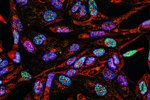
 Studying The Spatial Architecture Of Glioblastoma
Explore how intra-tumor heterogeneity (ITH) impacts cancer progression and therapy resistance with advanced imaging platforms and custom antibody panels to reveal the spatial architecture of glioblastoma (GBM).
-
 A Universal Workflow Approach For Single Cell Mass Spectrometry Based Proteomics
Learn about a streamlined workflow that improves reproducibility, reduces contamination, and simplifies single-cell proteomics with comparable results to FACS.
-
 Drug Development Plan Explained: DPP Templates And Examples
Only 6.7% of Phase 1 drugs reach approval. A well-structured Drug Development Plan (DDP) can meaningfully improve your odds — learn exactly how to build one.
-
 Modifying The Micro-Environment To Improve Dissolution Rate
Discover how modifying the micro-environment with targeted excipients can significantly enhance the dissolution rate of poorly soluble drugs using conventional manufacturing methods.



-
Don't Let Your Filling Equipment Dictate Your Drug Formulation6/1/2026
Gravimetric powder dosing measures true mass to eliminate equipment-driven reformulation, preserving particle design and speeding clinical development.
-
Can Targeted LNP Delivery Take In-Vivo CAR-T Therapy Beyond The Liver?9/17/2026
Achieving successful extrahepatic CAR T delivery with LNPs requires addressing the unique biological and technological barriers and designing targeting approaches that leverage innovative LNP design.
-
Facilitate Handling Of Bulk Powders With Dry Granulation8/11/2025
Handling bulk powders in manufacturing presents serious challenges—from unpredictable caking to safety risks—that can disrupt workflows. Discover solutions to streamline operations and protect your team.
-
Ask Us Anything: Matt Bio On Peptide Commercialization Trends7/23/2026
Matt Bio, CSO of Cambrex and President of Snapdragon Chemistry, on the capacity bottleneck behind peptide shortages — and why moving from solid-phase to liquid-phase synthesis unlocks reactors already sitting idle around the world.
-
Managing Endotoxins - Detect, Prevent, Remove9/8/2025
Explore the risks of endotoxin contamination in drug manufacturing and discover sustainable, animal-free detection methods to ensure pharmaceutical safety and regulatory compliance.
DRUG DEVELOPMENT SOLUTIONS
-
With Waters FlexCHOICE: mySystem Coverage Solutions you’ll have access to all the service, support, and performance maintenance options you need to ensure uninterrupted performance and more control over your service and maintenance costs.
-

Poor solubility derails ~80% of molecules. Thermo Fisher Scientific's Quadrant 2 platform uses AI/ML to predict the right formulation strategy before lab work begins.
-

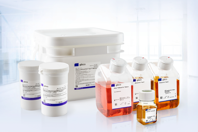
Discover a high-performing solution for mAb production designed to significantly improve titers, cell viability, and protein quality in CHO cell lines.
-

Discover an automated solution that revolutionizes 3D model creation for life scientists to enhance throughput and precision integrated with advanced imaging and analysis systems.
-

Leica EZ
The Leica EZ4 educational stereomicroscope with 4.4:1 zoom for entry level university and college courses such as biology, anatomy and chemistry provides over 20 years of bright LED illumination which saves time and cost of replacement bulbs.