INSIGHTS ON PHARMACEUTICAL INSPECTION
-
 Ultimate X-Ray Shootout
Discover how advanced X-ray inspection systems balance contaminant sensitivity and cost, accurately detecting minute glass and metal fragments within high-density packaging lines.
-
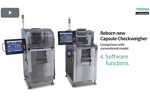
 Capsule Checkweigher Software Functions
Strengthen data integrity and 21 CFR Part 11 compliance. Discover how advanced software features, automated lot controls, and secure network integration protect your production line.
-
 Effective Strategies To Minimize Product Loss During Fill Finish
Every drop of high-value biologic lost in fill finish is money left on the table. Learn practical strategies to protect your yield.
-
 Unlock Smart Production: The Key Role Of Checkweighing
In today's fast-paced production, precision checkweighing is crucial. Discover how smart algorithms, real-time analysis, and automation optimize performance and minimize downtime.



-
Capsule Checkweigher Weigh Cell6/16/2026
Examine these internal component updates and see how modular scaling optimizes mass-inspection tasks. Achieve consistent weight accuracy on high-speed pharmaceutical lines with this checkweigher.
-
Tablet And Capsule Inspection: Detecting Defects Before They Ship8/3/2026
Inline X-ray inspection identifies density variations and foreign contaminants in solid dose products to prevent costly recalls and ensure strict quality compliance.
-
Integrity Testing Of Inhaler Products1/5/2026
Ensuring inhaler integrity is vital for patient safety and regulatory compliance. Discover how Vacuum decay testing provides a sensitive, non-destructive method to detect leaks and maintain sterility.
-
5 Reasons To Invest In The Automatic Test System3/17/2026
Automated metal detector testing strengthens quality control. With faster checks and continuous system monitoring, operations gain higher accuracy, safer workflows, and better production efficiency.
-
Helium Leak Detection On Glass Cartridge Containers1/5/2026
Helium leak detection offers unmatched sensitivity for verifying glass cartridge seal integrity. Learn how this advanced method outperforms traditional tests and provides confidence in packaging.
PHARMACEUTICAL INSPECTION SOLUTIONS
-

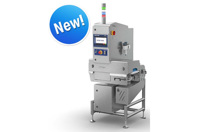
Compact, High-Speed and Precise.
A unique solution which inspects individually wrapped food or pharmaceutical products at high line speeds. The X34C combines a short total footprint with an optimized focal distance to enhance detection of non-conforming products and reducing waste. -
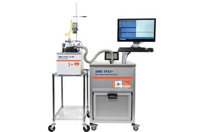
 1915+ (Helium Leak Detection)")
The most current model, the Seal Integrity Monitoring System (SIMS) 1915+, is the ideal choice for your helium-based leak detection system. Compared to conventional vacuum bubble and dye penetration test methods, packages can be quantitatively tested using helium as the tracer gas that ensures higher levels of accuracy. Such an approach allows a comparison between multiple packaging materials and forms production line settings and stability storage conditions, supporting the entire lifecycle.
-

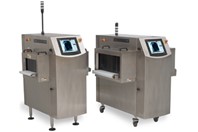
Find metallic and non-metallic foreign objects and eliminate "wet" product effects common with metal detectors with the Thermo Scientific™ NextGuard™ X-ray Detection Systems. Designed for a wide variety of food applications, NextGuard systems offer enhanced capabilities to inspect packaged products for missing pieces or components, under and over-fills, and other quality problems with easily customizable vision software. Both the Conveyor and C500 models are easy-to-use, cost effective and thoughtfully designed systems that eliminate common barriers when migrating from metal detection to x-ray inspection.
-

Developments in non-destructive, deterministic testing technologies that can achieve optimum assurance in container closure for biologics.
-

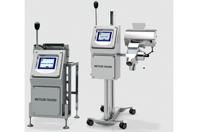
METTLER TOLEDO Safeline pharmaceutical metal detector systems are designed to offer maximum flexibility in process areas. A compact footprint enables systems to be inserted into areas where space is restricted. Robust, low profile, fully rotating castors provide ease of mobility, enabling the system to be used in multiple locations. Flexibility is further enhanced by the ability of the metal detection head to be adjusted easily (without the need for tools) in all three axes to suit any configuration.