
A Peek Into Novo Nordisk's Sustainable Facility Construction Mindset

A conversation with Larry Lane and Joy Forbes, Novo Nordisk, and Life Science Connect's Executive Editor Jon O'Connell
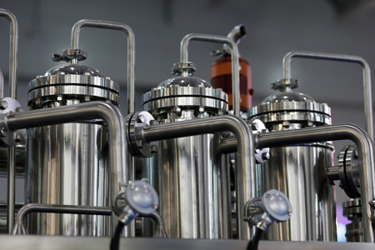
To make good on a promise of zero environmental impact at its $4.1 billion fill/finish facility in Clayton, North Carolina, Novo Nordisk reimagined the facility's carbon profile before pouring the first slab.
The greenfield expansion offered flexibility to begin strategizing at the ground floor, starting with structural materials. However, the true challenge lies in the water-energy nexus, where fill-finish operations must balance the resource-heavy demands of water for injection (WFI) and clean-in-place (CIP) with corporate sustainability goals.
Fill/finish operations notoriously consume tremendous energy and resources, making the zero-impact goal especially ambitious. The company started by focusing on reducing greenhouse gases produced when manufacturing and transporting products, known as embodied carbon. For Novo Nordisk, that meant using lower-carbon-footprint steel and concrete while achieving the same structural integrity as more carbon-dense materials.
Novo Nordisk's Larry Lane, director of construction and engineering connecting infrastructure to production for the company's Clayton project, and Joy Forbes, senior manager, production support, will describe the company's facility design and construction strategy during a panel discussion on sustainability at the International Society for Pharmaceutical Engineering's 2026 ISPE Facilities of the Future Conference in February.
Lane and Forbes offered to give us an overview of their talking points with a Q&A. Here's what they told us:
Novo Nordisk's choice of Grade 65 steel over the standard but heavier Grade 50 steel has been celebrated for its massive reduction in embodied carbon. What other hidden materials in a large-scale fill/finish facility design are ripe for optimizing to bring down that embodied carbon footprint in the design phase?
Concrete! Outside of structural steel, we found concrete to be the second leading contributor to embodied carbon, and we utilized high fly ash mix with fiber and steel mesh reinforced concrete to help offset this.
Sticking with construction materials, can you talk about how you validated those choices to make sure vibration sensitivity and structural integrity aren't compromised?
These initial selections of both Grade 65 building steel and high fly ash fiber and steel mesh reinforced concrete were selected very early in the design process so structural integrity was “built-in.” Vibration analysis, especially for high-speed filling and check-weighing equipment, was an independent effort after main structures were designed, which resulted in slight structural modifications to ensure that problematic frequencies were avoided. With high fly ash fiber and steel mesh reinforced concrete, final surface finishes may drive adoption as these fibers are intermittently exposed to the surface.

How do you reconcile the zero-environmental-impact goal with the energy-intense reality of Grade A/B cleanrooms? Have you implemented any novel airflow or air exchange strategies that deviate from the traditional standard of over-engineering? Any other approaches worth noting?
Our facility utilizes isolator-based technology, which is less energy-intensive than a traditional cascading A/B/C/D design. Even so, any Class A/B environment requires a substantial amount of energy related to HVAC requirements. We have implemented advanced airflow modeling/simulations to minimize static pressure/airflow velocities to ensure we’re operating in the optimal conditions.
In addition, we utilize fan wall arrays in the air handling units (AHUs), which allow us the best control method for varying airflow conditions while allowing us to select the highest efficiency DC fans available. Lastly, we employ production-based setbacks for the majority of our HVAC systems, reducing the amount of energy consumed when not in production.
WFI and CIP in a fill/finish facility are massive resource drains. Beyond LEED Gold certification, what specific best practices in water recovery or circularity, like final-rinse recovery or cold WFI, are you implementing that other process engineers could adopt?
We have very aggressive water reclamation and reuse systems being employed on this project, including rainwater harvesting systems and process water reclamation systems. Both of these systems are capable of processing reclaimed water back to WFI quality and can be used directly in the production process. Being able to purify these reclaimed water streams back to a level that can be used in product is a significant best practice in the industry. We would make the point that having ample time to “fine tune” CIP cycles, however, probably has the most long-term impact on reducing the significant water demands of a pharmaceutical process and is rarely accomplished!
About The Experts:
 Larry Lane leads the design, engineering, engineering systems, and construction efforts for the largest pharmaceutical/biotech investment in the history of North Carolina. As Project Director, Construction & Engineering for the Novo Nordisk Fill-Finish Expansion project in Clayton, NC, he and his team are responsible for translating Novo Nordisk's ambitious sustainability goals into the design, specification, construction, and operation of this new facility. He holds a B.S. in mechanical engineering from North Carolina State University.
 Joy Forbes has over 25 years of manufacturing experience and has held engineering and management positions focused on safety, environmental compliance, facility maintenance, and project management. She is senior manager for FFEx production support, where she is responsible for site services, metrology, asset management and reliability, and the EHS&S teams. She holds a B.S. in chemical engineering and an M.Sc. in engineering from North Carolina A&T State University. She also holds an M.Sc. in management from the University of Phoenix.