INSIGHTS ON SOLID DOSE MANUFACTURING
-
 How To Solve Complex Pediatric Dosing Challenges Using Tailored Solutions
With a partner who understands the science, the regulations, and the real-world demands of dosing children, development can move faster, smarter, and with greater confidence
-
 Enabling Complex Phase IIa Dosing Through Flexible Clinical Packaging Design
Discover how flexible, patient‑centric clinical packaging supports complex Phase IIa dosing while protecting timelines, ensuring compliance, and avoiding costly primary packaging changes.
-
 Navigating The Development Of Dry Powder For Inhalation
A CDMO-authored framework for navigating dry powder inhaler development, covering target product profile definition, API characterization, particle engineering technology selection, and encapsulation considerations.
-
 HPAPI Containment: A Full Lifecycle Safety Innovation
Containing highly potent APIs across a full operational lifecycle requires a structured approach that addresses hazard scoring, quality by design, performance testing, and safe enclosure disposal.




-
Lower Punch Tip Bending / Buckling11/11/2024
When manufacturing mini-tablets, adjusting punch force ratings is crucial to prevent bending or buckling. The Rankine-Gordon formula offers a safer force rating for microtip tooling.
-
Modeling Polymer Interactions To Improve Amorphous Solid Dispersion Stability7/15/2026
Molecular dynamics modeling revealed how hydrogen bonding between PVP and Eudragit drives stable amorphous solid dispersion formation, cutting formulation screening time significantly.
-
Benefits Of Isolator Technology In Fill-Finish12/10/2025
Isolator technology enhances sterility assurance, reduces contamination risk, improves operator safety, and supports regulatory compliance, making it essential for modern aseptic fill-finish operations.
-
The Future Of Sustainable Amorphous Dispersion Development4/15/2026
Sustainable amorphous dispersion cuts cost, risk, and timelines by removing solvent waste, simplifying manufacturing, strengthening supply chains, and scaling efficiently to commercialization.
-
Cytiva's Aseptic Filling Workcell User Group1/9/2026
Discover how global collaboration among aseptic filling experts is driving innovation and improving operations.
SOLID DOSE MANUFACTURING SOLUTIONS
-

Handling highly potent active pharmaceutical ingredients safely requires precise pressure control and automated breach response that many facilities struggle to maintain consistently.
-

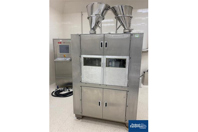
Used Elizabeth Hata HT-X65LD-U Tablet Press, 65 Station, BB-tooling, 8 ton pre and main compression, Keyed Upper Punch Guide, Dual Sided, Force Feeders, 13MM max tablet diameter, 18MM max depth of fill, 624,000 max TPH output, Feed hopppers, Control Panel, S/N: 2038.
-

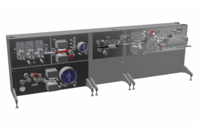
This high-output, vacuum drum commercial platform forms part of our Evolve range, designed to fill blister strips at high-speed. This unit offers a commercial scale-up from our vacuum drum development platform.
-

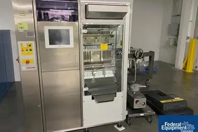
Used IMA Precisa 18 tablet/capsule checkweigher. Made in 2003. Size 2 change parts. With Becker vacuum pump. S/N: PA1099.
-

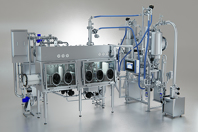
The pharmaceutical industry has steadily moved to increased production and handling of sterile highly potent active ingredients (HPAPIs). Dec’s containment technologies comply with pharmaceutical quality manufacturing standards and are available for aseptic operations.