
INSIGHTS ON CRITICAL ENVIRONMENTS
-
 Why You Need Spare Parts On Hand For Pharma And Lab Equipment
Advanced spare parts planning can reduce downtime. Learn why precise component specifications matter and how seemingly identical parts can differ significantly in quality, performance, and failure risk.
-
 Sustainable Vaccine Manufacturing: Securing The Future Of Global Health
Explore how next-gen technologies, from mRNA platforms to digital tools, are transforming vaccine manufacturing to make it more sustainable, flexible, and accessible.
-
 Glove Integrity Testing: Changes In EU GMP Annex 1
EU GMP Annex 1 now defines clear expectations for glove integrity testing. Examine how reliability, efficiency, and equipment usability are becoming essential factors for maintaining compliance.
-
 How Digital Cleaning Validation Can Simplify Audit Readiness And Improve Compliance
Discover how to enhance audit readiness and improve compliance by shifting to a digital cleaning validation program. Learn to determine worst-case products and maximum safe carryover limits.



-
Ensuring Performance And Compliance: Successful FAT Of Filling Line Isolator For Creative Lifesciences, Taiwan3/19/2026
Rigorous Factory Acceptance Testing ensures filling line isolators meet performance and safety standards. This validation is vital for aseptic integrity and protecting both product and operator.
-
Validating VH2O2 Decontamination Cycles For Product And Personnel Safety6/30/2026
Discover how ultra-sensitive spectroscopy transforms decontamination validation, revealing hidden efficiencies that safely cut facility downtime while ensuring absolute safety.
-
Solutions For Lab Scale Sterile Filtration And Clarification2/24/2026
Filtration strategies help maintain sample integrity by reducing particulates and controlling contaminants. Learn why choosing the right pore size supports consistent, reliable biological workflows.
-
Adapting To Evolving Needs: How Modular Cleanrooms Enhance Safety In Pharmaceutical Manufacturing6/9/2026
High-potency therapies demand stringent containment and worker safety. Discover how scalable, modular infrastructure simplifies compliance and protects product integrity in regulated facilities.
-
5 Key Principles Of Cleanroom Particle Counting6/24/2025
Discover the five essential principles of cleanroom particle counting and how they ensure compliance, prevent contamination, and protect product quality in highly regulated manufacturing environments.
CRITICAL ENVIRONMENT SOLUTIONS
-

Sterility is key for high-risk applications such as injectables, parenteral formulations, ophthalmic and peritoneal dialysis solutions, and many more.
-

Your next cleanroom is more akin to a piece of equipment than a room. Operational efficiencies, compliant flow of materials and personnel, and lifecycle considerations should dictate the selection of your cleanroom partner. AES designers have been engineering functional cleanroom facilities for over three decades, guaranteeing the performance of each and every facility. Our in-house designers work as a team with our cleanroom construction personnel to engineer a cost-effective project while maximizing performance, value, and constructability. The greatest value is realized when AES is integrated into the design team at the start of the project. Early project integration with the AES experts helps the infrastructure team decide what support and cleanroom solutions the clean space requires. Early participation by AES saves design costs, expedites schedule, and eliminates a duplication of services.
-

GMP storage services offer controlled, refrigerated, frozen, ultralow, and cryogenic environments with redundancy, monitoring, and specialized handling to ensure product stability and compliance.
-

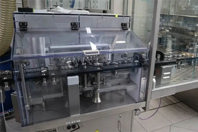
Unused Groninger Aseptic Vial Filling Line, speeds up to 150 vials/minute. Line is designed to CE-norms. Set up for 3 mL, 5 mL with 13mm neck size, 10R, 10Ml, with 20mm neck size, speeds up to 150 vials/minute, 20H, with 20mm neck size, speeds up to 60 vials/minute, and 30mL with 20mm neck size range, speeds up to 50 vials/minute.
-

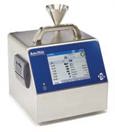
The TSI AEROTRAK™ Portable Particle Counters offer the most features and flexibility for customers interested in manually monitoring particle contamination at high flow rates.



FREE CLEANING VALIDATION E-BOOK
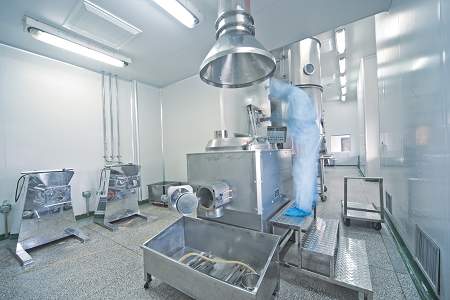
Learn how to employ science-, risk-, and statistics-based approaches to cleaning and cleaning validation at your facility with this free, 100-page e-book, written by a global team of cleaning validation experts, pharmaceutical toxicologists, statisticians, and Six Sigma professionals.


