INSIGHTS ON PHARMACEUTICAL LOGISTICS
-
 Food Safety Digital Maturity In The Supply Chain
Look at how connected data and automated processes strengthen safety, improve traceability, and streamline compliance across the supply chain—offering a clear roadmap for progression.
-
 Quality Roundtable: Raw Material Planning For Tech Transfer And Scaling Biologics
Join this roundtable of biopharmaceutical professionals as they share their insights to help you navigate important quality and planning decisions for the progression of your biologic.
-
 Supply Resiliency For Bioprocessing Amid Global Volatility
Build bioprocessing resiliency with strategic supply chain management. Learn to meet quality, compliance, and time-to-market demands amid global volatility with effective sourcing.
-
 Shedding Light On Photo-Stability Forced Degradation
Ensure the stability and safety of your drug products by utilizing comprehensive forced degradation and photo-stability testing, guided by ICH and FDA standards, to identify degradation pathways and assess light exposure risks.




-
Demonstrating Technical Excellence In Contract Manufacturing12/10/2024
Tech Talks explore ADC development innovations, including integrated supply chains, seamless pilot-to-GMP scale-ups, and advanced process analytical technology (PAT).
-
Biopharma Supply, Reimagined: Blarney, A Climate-Neutral Facility For Best-In-Class Filters11/11/2025
Explore how a new, climate-neutral manufacturing facility strengthens biopharma supply chains. Understand the benefits of its advanced filtration technologies and commitment to environmental sustainability.
-
From LAL To rFC: The Evolution Of Endotoxin Testing6/26/2026
Protect patient safety and ensure regulatory compliance by implementing sensitive, reliable bacterial endotoxin testing as a critical component of pharmaceutical quality assurance.
-
Global Complexity Demands Local Resilience8/31/2026
With integrated capabilities spanning early development through commercial manufacturing, our U.S. network helps customers build greater supply chain resilience, navigate uncertainty, and create a more reliable path to market.
-
Clinical, Commercial Packaging: Delivering Next-Gen Therapies4/7/2026
See how strategic, agile, and sustainable packaging is transforming drug delivery into a key driver of speed, safety, and patient-centric innovation.
PHARMACEUTICAL LOGISTICS SOLUTIONS
-

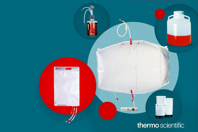
Explore a comprehensive portfolio of proven, high-quality solutions that can fulfill the storage, transport, and sampling needs of bioproduction facilities with confidence.
-

Discover a regionalized filtration network that delivers consistency, security, and sustainability for biopharma manufacturing—featuring ISO-certified sites, climate-neutral operations, and a broad filter portfolio.
-

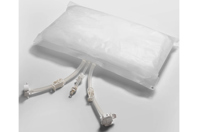
GORE STA-PURE Flexible Freeze Containers are durable single-use containers for cold chain handling of bulk drug substance. Intended for storing and transporting bulk drug substances after freezing at -86°C (-123°F), GORE STA-PURE Flexible Freeze Containers are resistant to cracks, leaks or breaks during cold-chain handling.
-

Ropack's portfolio of primary pharmaceutical packaging methods meets the highest quality and safety standards.
-

Effective inventory management ensures the quality and traceability of raw materials, supports regulatory compliance, and enables operational savings. Learn how to secure your supply chain and reduce stockouts.