
Advancing Cell Culture Strategies To Accelerate Biologics Development
By Sojeong Lee, Gyubeom Chin, Jaewoon Kim, Jaewook Baek, Sunwoo Oh, and Hyeyoung You
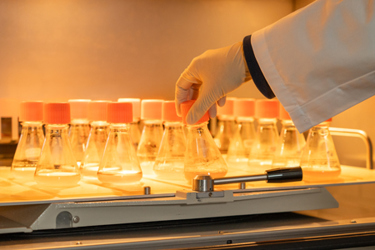
Biologics development depends on the ability to rapidly convert genetic sequence data into high-quality protein material for early research and downstream applications. This process relies on coordinated cell line development, gene manipulation, cell culture optimization, and purification. Speed and consistency are critical, as early material informs key decisions in developability, particularly for complex modalities such as antibody–drug conjugates.
Traditional workflows often rely on transient expression systems for early material generation. While useful for producing small quantities quickly, these systems introduce variability and lack scalability. Because they differ from production-relevant platforms, they may not accurately reflect product quality attributes observed later in development. This can lead to misaligned data, inefficient resource use, and increased risk during technology transfer.
An integrated strategy centered on stable expression systems addresses these challenges by aligning early material generation with downstream manufacturing processes. By initiating production in parallel with cell line development, this approach improves consistency, scalability, and predictive value. It also enables higher yields and supports more advanced studies earlier in development.
Combining stable and transient expression within a unified framework allows developers to balance speed with relevance. The result is a more efficient path from sequence to clinic, with reduced bottlenecks and improved confidence in early-stage decision-making.
Get unlimited access to:




Enter your credentials below to log in. Not yet a member of Pharmaceutical Online? Subscribe today.