
AI In Action: Evaluating Project Assessment

By Katie Anderson, Chief Editor, Pharmaceutical Online
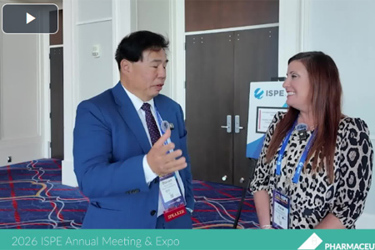
When Steven Chan of Gilead was a young engineer, he asked a senior engineer why their process was a certain way. To his surprise, the senior engineer answered, “Because that is how we have always done it.” He promised himself at that time that he was not going to be the “old man” in the room who said that.
Fast forward 40 years of engineering experience later, and Chan certainly is not the one uttering those words. In fact, he is the one in the room asking how we can do things differently. At ISPE’s 2026 Annual Meeting & Expo, Chan presented on his experience and outcome developing an AI tool to help evaluate project assessments.
Why Project Assessments Need AI
Chan recognized the need for calculation assistance and data aggregation when it comes to project assessments. As he noted in his presentation, these project assessments often take weeks and a good deal of engineering time. Chan asked himself if AI could help reduce that time while still preserving accuracy. He asked himself, he noted, because of that promise he made to himself when he was a young engineer.
After evaluating a number of LLMs, Chan went to an outside team and employed Stokes AI. “I gave it a project that I knew cold; one that I had scoped two years earlier. I gave it that project to test its capabilities, and then I went out to grab a cup of coffee,” he explained.
What Chan discovered when he returned from grabbing his cup of coffee astonished him. Not only was the AI report accurate, but what had taken the team weeks, now took one afternoon.
“It reduced the time and effort by 99% and gave us up for a 10% increase in productivity. It quickly determined the validity of a project, flipping time spent generating information to make decisions to spending more time evaluating the information and reaching decisions faster,” explained Chan.
But as Chan went on to add, this isn’t really a productivity story. Sure, yes, it increases productivity now, but it is more of a competitive story. “Everyone will have expertise in these tools,” noted Chan. “All of us have a decision to make. Get ahead and be in control, or wait for the change to impact us.”
Preservation of Organizational Expertise
Some engineers in the field may be wondering how tools like this may impact the need for their roles. Chan emphatically discussed how using AI tools will amplify engineering expertise, not replace it. The experienced engineer’s time in data aggregation and calculation is spared for time spent on important decision making.
“The [experienced engineer] becomes even more important. Experienced engineering still uses judgement, challenges assumptions, validates context, integrates competing requirements, manages risk, and accepts accountability for those outcomes. AI may assist in collecting the data, but engineering expertise remains the ability to determine whether the answer is correct, appropriate, and safe,” he went on.
He continued that the value of engineers has never really been performing calculations. “The value of engineers has been knowing which calculations matter, which assumptions are valid, and whether the answer can be trusted,” he noted.
That is why engineering and AI go hand in hand. AI pulls the data and makes the calculations, and engineering makes the judgement call based on expertise, knowledge, and sound judgement.
“Experienced engineers who work with AI will replace those who do not. They will outperform those working alone or just AI alone,” Chan concluded.
“AI is a tool, not a solution. It can generate insights and recommendations, but it cannot provide accountability, judgement, governance, or organizational alignment.” As far as the future of the technology, Chan sees promise in looking into some of its advances in design. However, the team is pleased about validating a tool that not only helps them do their job but brings medicine to patients faster.