
Building PFMs For Scalable Manufacturing

By Katie Anderson, Chief Editor, Pharmaceutical Online
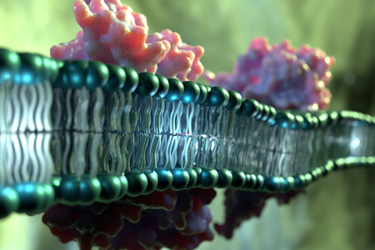
It may seem like I’ve been talking about proteins a little too much lately, but there is good reason. Targeting proteins, whether it is for degradation or modification, is giving small molecule drugs a big boost for diseases previously considered undruggable.
Rectify Pharmaceuticals is making waves in this space, developing positive functional modulators (PFMs) as oral small molecules designed to restore or enhance membrane protein function rather than inhibit it. I sat down with Rob Hughes, Ph.D., chief scientific officer at Rectify, to learn more about how PFMs work, hear about the manufacturing considerations for the technology, and learn what lies ahead for this exciting category.
Membrane proteins have traditionally been difficult to drug. What technical or platform advances have made them more tractable from both a discovery and development standpoint?
Rob Hughes (RH): When we founded Rectify almost five years ago, we recognized that membrane proteins are traditionally difficult to drug. Typically, when people think about drugging proteins, they think about inhibiting their function. We were looking for ways to improve or enhance the function of those proteins — hence the name Rectify.
Because most small molecule infrastructure was built around inhibitors, Rectify built its platform differently. It combines proprietary compounds designed to interact with membrane protein hotspots, platformable and translational assays, and structural biology, particularly cryo-EM, to support structure-based design. Together, those tools help identify molecules that can advance through preclinical work and toward the clinic.
How does the shift from inhibition to restoration affect downstream CMC and manufacturing considerations?
RH: We do end up with traditional small molecules. Our molecules are well within regular drug-like space, generally in the 300 to 400 molecular weight range, with modest lipophilicity. From a CMC perspective, the different mechanism of action does not create a particular challenge.
It still comes down to scaling up the compounds, understanding solid state, and addressing standard developability considerations. Although the mechanism is different, they are small molecules at the end of the day.
During discovery, do you run into issues with solubility, stability, or scalability as you design these drugs?
RH: Not in the final optimized molecules. As candidates move through the funnel, we rule out compounds with solubility or developability challenges. Those considerations have been addressed in the molecules that progressed later in testing.
Your lead program targets ABCB4 and BSEP simultaneously. Does that dual-target approach introduce additional formulation or manufacturing complexity?
RH: No, because it is still a single molecule. We designed the testing funnel to find molecules that work on both BSEP and ABCB4, because impacting both targets could be important in hepatobiliary diseases such as PSC, our lead program, as well as PBC.
It is not two agents in one pill. It is a single small molecule that is equipotent on both targets, so we only have to solve scale-up and formulation once. Our molecule is particularly well-behaved, so that has not been problematic.
What have been some of the biggest challenges in developing this molecule into a functional drug?
RH: First, we had to build a platform that could find the mechanisms of action we wanted. We focused on molecules that bind directly to BSEP and ABCB4 and elicit activity through that interaction, rather than less selective approaches such as modulating RNA processing.
The next challenge was translational biology. We developed novel in vivo preclinical models to build confidence that we were affecting the biology appropriately and producing downstream disease-relevant effects. Then came the standard small molecule optimization challenge: putting the right properties into one package.
How do you work toward consistent oral delivery to target tissues such as the liver or CNS?
RH: For our lead programs, we evaluated preclinical bioavailability and consistency across species. We also assessed particle size and made sure our process delivered it consistently so we could control variability and understand compound performance.
Clinical data will test that further. Our compound has high bioavailability and good solubility characteristics, so we expect fewer challenges than with a poorly soluble, more variable compound.
What are the critical quality attributes for PFMs? Are they different from those of other small molecule drugs?
RH: The mechanism is different, but the small molecule considerations are familiar. Membrane proteins undergo processing and post-translational modification as they move from RNA to protein, through the ER and Golgi, and finally to the membrane. Correct folding and chaperoning are central to that process. Our molecule helps more of the correct protein reach the cell surface, where it is active.
For the molecules, we focus on potency, selectivity, a relatively low projected human dose, and favorable toxicology and drug-drug interaction profiles. There is no intrinsic PFM-related issue to overcome; standard small molecule optimization still applies.
Which analytical methods or assays are most important for linking product quality with biological activity?
RH: It is focused on being able to assay the amount of protein that is present, because that is tied to our mechanism of action.
We use tags, antibodies, imaging, and related tools to determine whether we have increased protein expression at the cell surface and localized it correctly. We also measure function, then connect expression, localization, and activity in vitro and in vivo to downstream effects that may be useful in disease.
Rectify has announced a partnership with Boehringer Ingelheim. What do you look for in partnerships, and how do you see them playing out over the life of a drug?
RH: Our announced partnership is with Boehringer Ingelheim in cardiorenal disease. We bring early discovery capabilities around the target and platform, and identification of small molecule PFMs with good ADME/PK, while they bring translational and clinical development expertise. We would look for similarly synergistic relationships going forward.
You have identified several targets for PFMs so far. What targets or opportunities are you looking toward next?
RH: We have moved programs from the ABC transporter space into partnerships or advanced stages, and we now see opportunities to screen broader membrane protein targets.
We think we can pair the platform with compelling biology. Disclosed targets include PC1 and PC2, which are associated with kidney disease, as well as other proteins where missense variants link protein function to disease.
What do you see as the biggest potential benefits of the PFM platform for patients?
RH: The benefit is small molecule convenience combined with targeted restoration of protein function. Small molecules are often used to inhibit enzymes; PFMs create the possibility of increasing protein activity when loss of function drives disease.
At a high level, PFMs are similar in intent to enzyme or membrane protein replacement, but driven by a small molecule. Instead of delivering the whole protein package, the molecule helps the body produce more functional protein.
Looking ahead, what are you hoping to see for this category?
RH: CFTR modulators show that small molecules can improve membrane protein function and meaningfully change patient treatment. We hope to extend that idea across other diseases.
Our hepatobiliary program could become a disease-modifying treatment, but we have to prove that clinically.
The same applies to our Boehringer Ingelheim cardiorenal program and our CNS work, where restoring or enhancing protein function could affect patient outcomes.
The next stage is treating patients and executing clinical trials while continuing discovery work on new targets.
Is there anything else you would like to add?
RH: We think PFMs represent a new small molecule paradigm with potential to address diseases in ways that were not previously available.
Targeted protein degradation reduces protein activity; PFMs are the other side of that coin, aiming to enhance protein function where that could be therapeutic. It is a great time for small molecule drug discovery, and new modalities can ultimately benefit patients.
 Robert Hughes, Ph.D., is the chief scientific officer and previously the EVP of drug discovery and preclinical development at Rectify Pharma. Prior to joining Rectify, Hughes Disarm Therapeutics, Boehringer-Ingelheim, and Pfizer, working across multiple therapeutic areas, including cardiometabolism, neurodegeneration, and immunology, as well as target classes advancing programs from conception to the clinic. Hughes is a co-author/co-inventor on more than 65 publications and patents.