
Can Molecular Glue Degraders Make The Undruggable Druggable?

By Katie Anderson, Chief Editor, Pharmaceutical Online
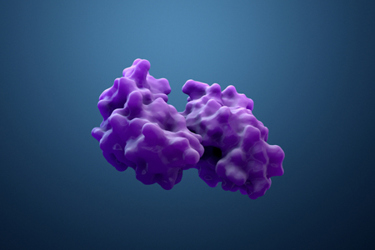
Molecular glues have moved from pharmacologic curiosity to one of drug discovery’s most closely watched approaches for reaching targets conventional small molecules cannot. The premise is straightforward: use a small molecule to redirect the cell’s protein-disposal machinery toward a disease-driving protein.
Phil Chamberlain, co-founder, president, and CEO of Neomorph, has helped define that shift. While at Celgene, he solved the crystal structure of human cereblon bound to thalidomide, work that helped explain how thalidomide analogues function as degradative molecular glues and supported a more intentional approach to cereblon modulators.
From Serendipity To Structure-Guided Discovery
Much of the field’s early work centered on neosubstrates — the proteins recruited to cereblon and marked for degradation. In a degradative glue system, the neosubstrate is the disease-relevant protein the drug is designed to eliminate.
“There was a lot of work to be done then to figure out what neosubstrates were degraded by the existing drugs, which ones were clinically important, and then beyond that, how many proteins within the proteome could possibly be degraded with glues,” Chamberlain said.
A major advance came in 2016, when researchers solved the structure of GSPT1 bound to cereblon. The work showed that thalidomide-like chemistry could be modified to recruit new proteins, strengthening the case that molecular glues could be designed rather than discovered.
That structure also revealed a recognizable surface feature on neosubstrates that interacted with both cereblon and the glue. With predicted protein structures now broadly available through tools such as AlphaFold, researchers can search the proteome for similar features and identify proteins that may be amenable to degradation.
Cereblon is only one E3 ubiquitin ligase. Human cells contain more than 640 E3 ligases, and Neomorph’s strategy is to extend molecular glue discovery beyond cereblon by engineering glues that work through additional ligases.
Why “Undruggable” Targets May Be Reachable
Many proteins considered undruggable lack the features traditional small molecules rely on, including deep binding pockets, catalytic activity, or accessible surfaces that allow an inhibitor to bind and block function.
That limitation is especially relevant for intracellular proteins, including transcription factors. While antibodies and other biologics can address many extracellular or cell-surface proteins, intracellular disease drivers have remained harder to reach.
“Glues, because of the way they work, have no regard for the traditional rules of druggability,” Chamberlain said. “The first proteins that were discovered to be targetable with glues were classic undruggable transcription factors.”
Rather than inhibiting an active site, a molecular glue changes the specificity of an existing cellular complex. It brings a target protein into proximity with an E3 ubiquitin ligase, enabling the ligase to tag that protein for degradation by the proteasome.
Harnessing The Cell’s Protein Recycling System
Cells constantly tag proteins for destruction as part of normal protein turnover. Molecular glue degraders aim to redirect that machinery toward a specific disease-linked protein that may be overexpressed, mutated, mislocalized, or otherwise dysregulated.
“What we do is we take the existing machinery and modify it just enough with a small molecule to give it a different specificity,” Chamberlain said. “In that way you can destroy a protein that is linked to disease.”
The degrader is both potent and selective, eliminating the intended protein while sparing unrelated proteins. Neomorph has built discovery infrastructure and specialized expertise around finding these molecules and optimizing them into drug-like candidates.
A Different Resistance Profile
Resistance remains a persistent problem for many inhibitors, particularly when tumor cells acquire mutations in the same binding pocket targeted by a drug. Molecular glues may offer a different route because they typically recruit protein surfaces distinct from those used by conventional inhibitors.
That does not mean glues will be immune to resistance, Chamberlain noted, but their resistance mechanisms may differ from those seen with other modalities.
“At the very least, pre-existing resistance should not affect glues that can be discovered,” he said. “But of course, glues will have their own drug resistance mechanisms. It’s just useful for drug discovery because they tend to be different.”
Small-Molecule Delivery, Complex Biology
One advantage of the modality, Chamberlain said, is that a highly sophisticated mechanism can still be delivered as a small molecule. Because the cell already contains the degradation machinery, the drug only needs to redirect it.
That creates the possibility of oral therapies that behave more like conventional small molecules from a manufacturing and commercialization standpoint, even though their biological effect differs from traditional inhibition.
Neomorph’s lead clinical molecule, NEO-811, is an orally bioavailable molecular glue degrader designed to degrade ARNT, also known as HIF-1β. The company is evaluating NEO-811 as monotherapy in a first-in-human Phase 1/2 trial in locally advanced or metastatic non-resectable clear cell renal cell carcinoma.
ARNT is an obligate binding partner for transcription factors including HIF-1α, HIF-2α, and AhR, which are involved in angiogenesis, proliferation, and tumor immunity. In clear cell renal cell carcinoma, loss-of-function mutations in VHL can drive constitutive HIF signaling.
Manufacturing Without A Modality Penalty
Neomorph has not disclosed detailed chemistry, manufacturing, and controls information for NEO-811, but Chamberlain described the molecule as a classic small molecule with formulation expectations consistent with that category.
“It’s really one of the joys of this technology that we really can rest on more than a century of pharmaceutical knowledge in how to prepare small molecules,” he said.
For clinical supply, Chamberlain said Neomorph has generated kilogram-scale drug substance and drug product. The company’s broader goal is to accept the high technical burden of discovering and optimizing glues while keeping manufacturing and downstream commercialization as straightforward as possible.
Clinical Strategy And The Road Ahead
Neomorph has not publicly committed to whether it will commercialize NEO-811 independently or pursue partnerships for the asset. Chamberlain said the priority is execution: advancing a broad pipeline, making patient-centered development decisions, and continuing to expand what the modality can do.
The company also entered a 2025 collaboration with AbbVie to develop molecular glue degraders for targets across oncology and immunology, underscoring broader industry interest in protein degradation.
From a regulatory standpoint, Chamberlain said Neomorph does not currently foresee unusual hurdles, though early clinical data will guide decisions around development strategy, including whether expedited designations such as Fast Track or Breakthrough Therapy may be appropriate.
What Comes Next
As molecular glue discovery improves, Chamberlain expects more candidates to enter the clinic, including drugs that act through ligases beyond cereblon. Some may complement existing therapies; others may open disease-relevant targets that have had few viable therapeutic options.
The field still faces real challenges. Molecular glue degraders require the coordinated interaction of the small molecule, the E3 ligase, and the target protein. That makes discovery and optimization demanding, especially for newer ligases with less biological and clinical precedent.
“You need to be willing to embrace all of that complexity,” Chamberlain said. “But if you really can pick any protein from the proteome, a lot of assumptions about what is possible in drug discovery may not be true.”
For drug developers, the takeaway is not that molecular glues will make every target easy. It is that the modality may change which targets are considered feasible. If researchers can continue improving target identification, ligase selection, and chemistry optimization, molecular glues could create new options for diseases driven by proteins once considered unreachable.
“Small molecule discovery isn’t fast,” Chamberlain said. “This is likely to happen over the next decade as opposed to the next month. But all of these things are coming.”
 Phil Chamberlain is co-founder, president, and CEO of Neomorph. He obtained his BA and D.Phil. degrees from the University of Oxford before traveling to the U.S. to work at the Genomics Institute of the Novartis Research Foundation (GNF). Chamberlain joined Celgene, San Diego in 2007 and built and led the Structural and Chemical Biology department, most recently as Executive Director, Protein Homeostasis and Structural Biology. Chamberlain has published work on targeted protein degradation in journals including Nature, Nature Structural and Molecular Biology and Nature Chemical Biology. He was the recipient of the John W. Jackson leadership award, the most prestigious achievement award at Celgene.