
Combustible Dust Risk Assessment For Pharmaceutical Downflow Booths: Understanding Hazardous-Area Classification And Component Selection
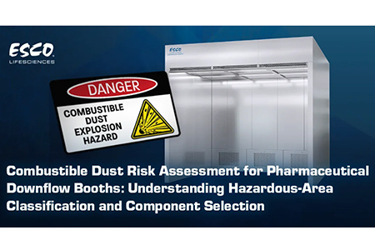
Handling pharmaceutical powders within downflow booths introduces complex combustible dust challenges that require meticulous risk evaluations. Determining appropriate hazardous-area classifications under standards like the National Electrical Code and ATEX directives depends heavily on specific material characteristics, including particle size, moisture content, and minimum ignition energy. Rather than applying uniform protection requirements across every component, a risk-based evaluation helps facility engineering teams analyze release sources, containment effectiveness, and housekeeping protocols. Consequently, components directly exposed in the active work zone require rigorous hazardous ratings, while internal plenums protected by multi-stage filtration may utilize non-rated enclosures equipped with proper dust-tight seals. Evaluating these engineering parameters ensures compliance, mitigates electrostatic and ignition hazards, and protects manufacturing personnel. Explore the full article to master hazardous-area classification strategies and optimize equipment selection for powder-handling environments.
Get unlimited access to:


Enter your credentials below to log in. Not yet a member of Pharmaceutical Online? Subscribe today.