
Explosion Suppression Products
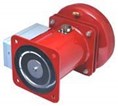
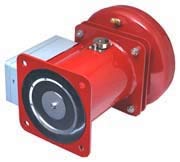
The System III Explosion Suppression Products deliver a suppression agent into an enclosed area at the first sign of a fireball, effectively suppressing an explosion in its earliest stages of formation. Applications include collection, transfer and processing of agricultural products, wood products, pharmaceuticals, and waste products.
A typical system consists of a power supply module, a system monitor, a unitized detector and one or more "cannons." Together these components provide a self checking system, protection against false actuation and reduced cost of ownership without compromising the speed of response required in these explosive situations
The unitized detector contains three individual sensors that are set to respond to a change in the process pressure (which could also be the onset of an explosion), and are arranged to provide the best possible combination of sensitivity to explosion and freedom from false actuation. Two of the three sensors must respond before the system is triggered, but the sensor logic will accept signals from any two of the three.
Power to the detector and cannon(s) is intrinsically safe and is supplied through a barrier in the System Monitor. Typically located in the control room, the system monitor also interprets signals from the supervised circuits and indicates system status through dedicated LEDs. For remote signaling and notification purposes, the system monitor actuates three relays, one each for alarm, fault and process shutdown.
A power supply module provides 24 vdc to the system with either 120 or 220/240 vac line voltage input. Batteries within the power supply module are maintained on continuous charge and provide system backup if power is lost. A switch on the system monitor can be used to immediately check the status of the batteries, which is indicated on a meter in the system monitor enclosure. An individual switch located in the power supply module must be reset to re-activate the system after actuation. Relays in this module are typically used to shut down the process and provide input to other monitoring equipment at the site.
Delivery of the extinguishing agent is accomplished through the cannon. A canister within the cannon contains the agent, usually sodium bicarbonate, and an explosive charge. When the agent is dry chemical powder, it will compact over time. Activation of the explosive charge breaks up any compaction of the agent and at the same time cuts open the seal to a pressurized tank containing an inert gas to guarantee prompt, uniform delivery of the agent. A user-operated "disarm" mechanism prevents acccidental discharge of cannons when plant personnel are working inside of process equipment.
Circuits are supervised continuously and automatically to notify on-site personnel should system performance be compromised in any way. Capacitor circuits are redundant and can be checked by actuating a reed switch located on the cannon diagnostics board. The nose of the cannon contains an etched mylar element to detect possible abrasion of the cannon sealing elements by process materials, and a dedicated LED and audible alarm will warn of the damage.
Cost of ownership has been addressed at every stage of development. The lower pressures used in the system means savings in the initial purchase price. Installation costs are reduced because of the intrinsically safe firing circuits, which do not require explosion-proof conduit. With supervised circuits, maintenance personnel can easily spot trouble and locate the source. Of great importance is the fact that the system can be refit on-site after an activation.
Visit Industrial Protection Devices at Interphex, Booth 164.
Industrial Protection Devices, 7768 W. 78th St., Minneapolis, MN 55439. Tel: 612-941-0146. Fax: 612-941-0646.