
FDA Issues New Guidance On Therapeutic Equivalence
By Tim Sandle, Ph.D.
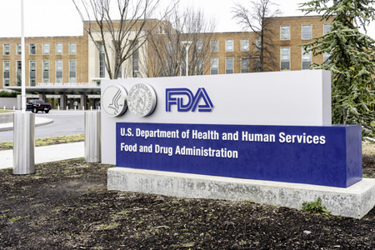
The FDA has issued guidance on the Evaluation of Therapeutic Equivalence,1 clarifying the scientific and regulatory principles that underpin whether one drug product can be substituted for another. The guidance is intended to be considered alongside the publication Approved Drug Products With Therapeutic Equivalence Evaluations (which is commonly known as the Orange Book).2 The nearest European Medicines Agency (EMA) equivalent is the concept paper Product-specific bioequivalence guidance.”3 The two FDA documents function as a regulatory policy statement on substitution, whereas the EMA framework is more like a scientific demonstration framework based on demonstrating bioequivalence and comparability.
While the guidance is often viewed through the lens of generic drug approval and pharmacy substitution, its implications extend far beyond regulatory labeling. For drug developers and manufacturers, the document serves as a reminder that therapeutic equivalence is built upon a foundation of robust pharmaceutical development, manufacturing control, and demonstrated product performance.
The guidance explains that a product can only be considered therapeutically equivalent when the following three criteria are met:
- pharmaceutical equivalence
- bioequivalence
- expectation of the same clinical effect and safety profile under labeled conditions of use.
These requirements carry significant implications for product design, process validation, quality systems, change management, and life cycle control.
Pharmaceutical Equivalence
The first FDA requirement is pharmaceutical equivalence. To achieve this base requirement, drug products must contain the same active ingredient, dosage form, route of administration, and strength and meet appropriate standards for identity, quality, purity, and potency.4 For manufacturers, this means that developing a product with the correct active pharmaceutical ingredient is only the starting point. The product must consistently demonstrate that critical quality attributes remain within specification throughout its life cycle. Notably, pharmaceutical equivalents do not have to contain identical excipients. Therefore, differences in inactive ingredients are permitted provided the products still meet the applicable quality standards.
This places significant emphasis upon:
- formulation development
- raw material control
- process validation
- analytical method validation
- stability programs
- supplier qualification.
Many companies underestimate the complexity of achieving pharmaceutical equivalence. Seemingly minor differences in excipient grade, particle size distribution, manufacturing parameters, or packaging materials can influence product performance and potentially undermine equivalence claims. In terms of the perspective of GxP timelines, therapeutic equivalence begins long before bioequivalence studies are performed.
Bioequivalence: More Than A Regulatory Exercise
The second pillar is bioequivalence. Here, the FDA requires evidence demonstrating that the rate and extent of absorption do not differ significantly from those of the reference product (when administered at the same molar dose under similar conditions).5 The FDA's guidance reinforces that bioequivalence is fundamentally linked to product quality and manufacturing consistency. However, a successful study does not guarantee future success if the manufacturing process is not adequately controlled. Potential process problems include:
- variability between manufacturing batches
- changes in raw material characteristics
- equipment scale-up effects
- process transfers between facilities
- inadequate control of critical process parameters.
Each of these issues can produce material differences in dissolution characteristics or drug release profiles that may threaten continued bioequivalence. Consequently, manufacturers should implement robust pharmaceutical quality systems capable of detecting and controlling process drift before it affects clinical performance.
Manufacturing Quality Remains Central
One of the most important messages in the FDA guidance is that therapeutic equivalence is inseparable from manufacturing quality. The FDA explicitly notes that approval depends upon adequate facilities, controls, manufacturing methods, and packaging systems capable of maintaining product identity, strength, quality, and purity. This means therapeutic equivalence cannot be considered solely a development function. It is a life cycle responsibility shared by:
- pharmaceutical development
- manufacturing
- quality assurance
- regulatory affairs
- supply chain management.
Inspectors increasingly assess whether firms maintain a state of control after approval, not simply whether they have crossed the line and achieved initial approval. A product that was therapeutically equivalent during registration can become non-equivalent if manufacturing control deteriorates.
What Can Go Wrong?
Several failure modes can jeopardize therapeutic equivalence and undermine a manufacturer’s attempts to conform to the FDA guidance.
Process Drift
Gradual process changes often occur unnoticed, yet over time these can cause the process to move away from its originally validated or qualified state. Equipment wear, operator variability, environmental factors, and raw material variation are examples of where changes can alter product characteristics. Examples of process drift include:
- tablet hardness shifts
- changes in dissolution performance
- increased degradation rates
- alterations in particle size distribution.
Such changes may initially remain within specification yet eventually impact clinical performance.
Inadequate Change Control
Many equivalence failures arise following manufacturing changes. Examples of poorly controlled change management include:
- introduction of a new API supplier
- changes to excipient sources
- site transfers
- equipment upgrades
- process optimization projects.
While there are several factors needed for a robust change process, without appropriate comparability assessments, manufacturers may inadvertently alter product behavior.
Weak Analytical Systems
Therapeutic equivalence also depends upon confidence in analytical data. Data integrity deficiencies, poorly validated methods, lack of robust statistical analysis, inadequate laboratory investigations, or weak trending programs can conceal emerging product quality issues. In such situations, firms may lose the ability to demonstrate ongoing equivalence despite maintaining regulatory approval.
Supply Chain Disruptions
Changes in suppliers, shortages of critical materials, transportation issues, or geopolitical events can introduce variability that ultimately affects product quality. Manufacturers should recognize that supply chain resilience is becoming an increasingly important element of maintaining therapeutic equivalence.
Implications For Generic Drug Manufacturers
For generic manufacturers, the guidance confirms FDA's longstanding position that substitution relies on scientific evidence rather than commercial assumptions. A generic applicant must demonstrate, as per the guidance:
- pharmaceutical equivalence
- bioequivalence
- manufacturing consistency.
Success therefore depends upon integrating pharmaceutical development and quality management at the required stages throughout the program.6 Manufacturers should avoid viewing bioequivalence studies as isolated projects. Instead, they should ensure that commercial manufacturing processes reflect those used during development and registration. Otherwise, approvals may become increasingly difficult to defend.
Implications For Innovator Companies
The guidance also carries importance for so-called innovator organizations. Such reference product manufacturers often undergo:
- process improvements
- facility upgrades
- technology transfers
- packaging changes.
These activities require careful evaluation to ensure that post-change product performance remains consistent. It is important for innovator companies to apply the same scientific rigor used in development to post-approval life cycle management. A common misconception is that therapeutic equivalence is solely a generic drug concept. Maintaining a consistent clinical effect and safety profile remains equally important for originator products.
Remediation: What Should Be In Place?
When risks to therapeutic equivalence are identified, firms must demonstrate a structured remediation program. An effective remediation strategy should include:
Comprehensive Investigation
Investigations should determine whether quality defects arise from:
- formulation changes
- raw material variability
- manufacturing process drift
- equipment performance
- environmental factors
- laboratory issues.
The subsequent root cause analysis should be evidence-based and scientifically justified.
Enhanced Trending
Manufacturers should strengthen trending programs to examine for:
- dissolution performance
- assay results
- content uniformity
- stability data
- complaint rates
- process capability metrics.
Having an effective trending process in place will help the manufacturer to identify emerging risks before they become regulatory issues.
Process Revalidation And Comparability
Where significant changes occur, firms should assess:
- critical quality attributes
- process capability
- batch-to-batch consistency
- clinical relevance of observed changes.
Additional comparability or bioequivalence data may be required in some circumstances.
Strengthened Quality Systems
FDA expectations are increasingly linked to pharmaceutical quality system maturity. To achieve this, organizations should ensure:
- effective change control
- robust deviation management
- strong CAPA systems
- continuous process verification
- data integrity controls.
These systems assure that therapeutic equivalence is maintained throughout the product life cycle.
In summary, FDA's therapeutic equivalence guidance reinforces an important principle: Therapeutic equivalence is not simply a regulatory designation; it is the outcome of sound pharmaceutical science and sustained manufacturing control. To be successful, developers and manufacturers need to build quality into products from the earliest stages of development.
References
- FDA, Evaluation of Therapeutic Equivalence, Guidance for Industry, August 2026, at: https://www.fda.gov/media/160054/download
- FDA. Approved Drug Products with Therapeutic Equivalence Evaluations | Orange Book, 46th edition (2026) at: https://www.fda.gov/drugs/drug-approvals-and-databases/approved-drug-products-therapeutic-equivalence-evaluations-orange-book
- EMA. Concept paper on the development of product-specific guidance on demonstration of bioequivalence. EMA/CHMP/423137/2013. Issued July 2013, at: https://www.ema.europa.eu/en/documents/scientific-guideline/concept-paper-development-product-specific-guidance-demonstration-bioequivalence_en.pdf
- Shao P, Feng Q, Pan F. et al. Evaluation of the Pharmaceutical Equivalence of Lidocaine and Prilocaine Creams. Pharmaceutics. 2026;18(6):707
- Huang C, Ying Y, Wu Y, et al. Pharmacokinetics and Food Effect of HDM1002, a Novel Oral Small-Molecule GLP-1 Receptor Agonist, in Healthy Chinese Volunteers: A Bioequivalence Study. Diabetes Obes Metab. 2026;28(9):8136-8144
- Alvin K, Ye J. Generation of cell lines for monoclonal antibody production. Methods Mol Biol. 2014;1131:263-71
About The Author:
 Tim Sandle, Ph.D., is a pharmaceutical professional with wide experience in microbiology and quality assurance. He is the author of more than 30 books relating to pharmaceuticals, healthcare, and life sciences, as well as over 170 peer-reviewed papers and some 500 technical articles. Sandle has presented at over 200 events and he currently works at Bio Products Laboratory Ltd. (BPL), and he is a visiting professor at the University of Manchester and University College London, as well as a consultant to the pharmaceutical industry. Visit his microbiology website at https://www.pharmamicroresources.com.