
Gaining An Edge In GLP-1 Production
By Brandon Miller and Natalie Pollock, Clarkston Consulting
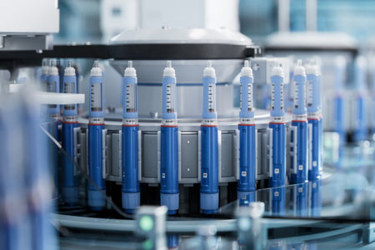
GLP-1s are on track to become the biggest drug class in history, with annual sales projected to surpass $100 billion over the next five years.1 As of 2025, roughly 10 million Americans2 are on GLP-1s, for both treatment of type 2 diabetes and weight loss, and that number is expected to reach 25 million by 2030.
This is especially significant because the pharmaceutical industry is currently shifting gears. The shortage-driven production of the past few years is giving way to a long-term operation model. Since GLP-1s are increasingly used as chronic therapies,3 this long-term model must support continuous production rather than episodic scaling to help meet this need.
This change requires manufacturers to take a new approach to how they scale production.
The Hidden Constraints Behind Complex GLP-1 Manufacturing
The challenge with GLP-1 manufacturing is that it doesn’t scale like traditional pharmaceuticals due to its complex development life cycle and structural constraints. The production process, known as solid-phase peptide synthesis (SPSS), is inherently time-intensive and each stage involves a new limitation. Each amino acid must be added one at a time under carefully controlled conditions, and the process can’t be accelerated without risking quality.
SPSS also has significant yield constraints. It results in notable product loss that scales with the length of the peptide being synthesized. What comes out of that process is a crude compound, typically only 45%-65% pure4 and requiring additional purification steps before it can meet therapeutic-grade standards. This purification process is expensive and technically demanding, and every percentage point of impurity contributes to revenue loss and extended production cycles.
Additionally, the solvent-intensive nature of the manufacturing process adds another layer of complexity. Solvents drive up material costs and require specialized, complex, and costly manufacturing facilities that aren’t easy to build quickly. Sterile environments, precision equipment, and the controlled conditions required for peptide synthesis mean that the physical infrastructure itself becomes a scalability challenge.
The final fill/finish stage, when the drug is prepared and packaged for patients, also remains a major bottleneck. For injectable GLP-1s specifically, this means sterile manufacturing environments, precision equipment, and the assembly of autoinjector devices that must meet quality standards. Upstream synthesis capacity is irrelevant if fill/finish can’t keep pace.
These constraints aren’t limited to the manufacturing plant itself. Currently, global peptide manufacturing capacity is already limited. The biopharma industry has over 60,000 job vacancies,5 and skill development in this industry takes years. New facilities take even longer to come online, and on top of that, more than 40% of key starting materials used for U.S.-approved active ingredients are sourced from China, introducing geopolitical and logistical risks.
These challenges present structural constraints, as the systems themselves must be redesigned to increase production. This is why the GLP-1 supply chain can’t respond quickly enough to surging demand.
Technology-Forward Manufacturing
Manufacturers can’t wait for these bottlenecks to resolve themselves, and the ones getting ahead are taking active steps to redesign their systems. In order to be successful in such a delicate landscape, manufacturing needs to be digitally enabled and technology-forward.
Eli Lilly, the manufacturer of Mounjaro and Zepbound, has already begun efforts to increase GLP-1 production. For example, in response to the surging demand for tirzepatide (the active ingredient in its GLP-1 injections), Lilly built a manufacturing facility in Ireland capable of producing five metric tons of the drug per year. To increase capacity, this facility introduced new technologies, including a novel hybrid synthesis platform, plug flow reactors (PFRs), nanofiltration technology, process analytical technology (PAT), and advanced digitalization. These technological advancements have set a new benchmark for GLP-1 manufacturing.
Lilly manufacturers are also prioritizing resilience by building capacity across multiple sites to reduce reliance on single suppliers or regions. They have announced new manufacturing sites to be developed in Pennsylvania,6 Texas,7 and Alabama.8
Novo Nordisk, the manufacturer of Ozempic and Wegovy, took a different approach to expand its manufacturing. The company completed an acquisition of Catalent,9 a CDMO, valued at $16.5 billion in 2024. This deal gave Novo Nordisk control over three of Catalent’s fill/finish facilities10 in Italy, Belgium, and the United States. By expanding its manufacturing footprint through internal investment and acquisitions, Novo Nordisk has helped address one of the most significant bottlenecks in the supply chain by bringing it in-house.
Beyond these company-specific decisions, the broader industry is converging around a range of improvements, including continuous manufacturing (replacing slower, batch-by-batch production), aqueous peptide synthesis (which reduces solvent dependency), advanced digital monitoring, and site automation. These innovations improve efficiency and represent a reimagining of how GLP-1 production works at its core.

The Case For Oral GLP-1s And Its Limits
One up-and-coming area is oral GLP-1 therapies. So far, oral GLP-1 therapies have been developed to reduce patient reliance on injections. This method eliminates the need for autoinjector assembly and sterile fill/finish processes, two of the biggest manufacturing bottlenecks. In theory, oral formulations could simplify the overall production process, supporting increasing capacities; however, it comes with drawbacks.
The main challenge is bioavailability. Oral semaglutide, currently the most advanced oral GLP-1, reaches the bloodstream at a rate of about 0.8%.11 This means that only a small fraction of the dose actually reaches the bloodstream, significantly reducing the drug’s effectiveness. Until this problem can be solved, oral GLP-1s will be unlikely to offer much relief for supply chain pressures.
Moving Forward
For GLP-1s, the early shortage era was all about scale, and manufacturers were prioritizing producing more, faster. Now, the emerging models are centered around resilience. Success means building capacity that is distributed across multiple sites, reducing dependence on any single supplier or region, and embedding quality control directly into the manufacturing process rather than treating it as a post-production checkpoint.
As GLP-1 demand continues to rise, manufacturers that have already begun repositioning will have a head start in the coming years. The manufacturers best positioned will be focused on ways to improve the structural challenge they are facing. This means operational manufacturing that integrates new developments in areas like peptide synthesis and fill/finish. Additionally, aligning manufacturing strategy with long-term adherence patterns and areas that indicate future expansion, such as sleep apnea, addiction, and oncology, can help manufacturers stay ahead in a fast-paced, rapidly evolving landscape.
The next phase of GLP-1 development will no longer be defined by companies’ capability to develop the drug but their ability to develop systems that can consistently and reliably produce them at scale. For clinical and manufacturing leaders, that means developing a coordinated manufacturing network strategy that is reliable across regional disruptions, not relying on single suppliers, and balancing the manufacturing load across locations. To reduce constraints related to purification, fill/finish, and quality, organizations must optimize operations to improve throughput across manufacturing and supply chain, especially between production, assembly, and product release. Lastly, the manufacturing focus needs to shift from volume-based planning to demand-based planning, especially with the planned increased indications and patient access.
In the GLP-1 market, the differentiating factor is now whether companies can develop and manage a system capable of delivering a drug consistently to the patients who need it.
References:
- Global Opportunity Team. (2025, September 22). Next Order Effects of Increasing GLP-1 Use. Morgan Stanley Investment Management. https://www.morganstanley.com/im/en-us/individual-investor/insights/articles/effects-of-increasing-glp-1-use.html
- J.P. Morgan. (2026, February 27). How Supply and Demand for Weight Loss Drugs is Playing Out in 2026. J.P. Morgan. https://www.jpmorgan.com/insights/global-research/current-events/obesity-drugs
- Moiz, A., Filion, K.B., Tsoukas, M.A., & et. al. (2025, August). The expanding role of GLP-1 receptor agonists: a narrative review of current evidence and future directions. eClinicalMedicine. https://www.sciencedirect.com/science/article/pii/S2589537025002950
- Millennial Scientific. (2025, September 22). Managing Impurities in GLP-1 Peptides: How Carbon Media Enhances Purification. Millennial Scientific. https://www.millennialscientific.com/post/managing-impurities-in-glp-1-peptides-how-carbon-media-enhances-purification
- Palmieri, S. (2025). Future Challenges in Biopharmaceutical Workforce Development White Paper. Syner-G. https://synergbiopharma.com/wp-content/uploads/2025/10/SynerG_Future-Challenges-in-Biopharmaceutical-Workforce_whitepaper.pdf
- Pharmaceutical Online. (2026, February 2). Eli Lilly To Build New $3.5B Injectable Drug Manufacturing Site Supporting GLP-1 Therapies In Pennsylvania. Pharmaceutical Online. https://www.pharmaceuticalonline.com/doc/eli-lilly-to-build-new-b-injectable-drug-manufacturing-site-supporting-glp-therapies-in-pennsylvania-0001
- Eli Lilly and Company. (2025, September 23). Lilly plans to build a new $6.5 billion facility to manufacture active pharmaceutical ingredients in Texas. Eli Lilly and Company. https://investor.lilly.com/news-releases/news-release-details/lilly-plans-build-new-65-billion-facility-manufacture-active
- Business Facilities. (2025, December 9). In Alabama, Eli Lilly To Invest $6B In GLP-1 Manufacturing Site. Business Facilities. https://businessfacilities.com/in-alabama-eli-lilly-to-invest-6b-in-glp-1-manufacturing-site/
- Shirley, E., & Firestein, J. (2024, February 5). What Does the Catalent Acquisition by Novo Holdings Mean for the Biopharma Industry? Clarkston Consulting. https://clarkstonconsulting.com/insights/catalent-acquisition-by-novo-holdings/
- pharmaphorum. (2026). Novo completes $16.5bn takeover of Catalent. pharmaphorum. https://pharmaphorum.com/news/novo-completes-165bn-takeover-catalent
- Overgaard, R.V., Navarria, A., Ingwersen, S.H., & et. al. (2021, May 10). Clinical Pharmacokinetics of Oral Semaglutide: Analyses of Data from Clinical Pharmacology Trials. Clinical Pharmacokinetics. https://pmc.ncbi.nlm.nih.gov/articles/PMC8505367/
About The Authors:
 Brandon Miller is a data-driven, people-focused health equity strategist and organizational transformation leader at Clarkston Consulting. He has expertise in and a passion for organizational efficiency, DEI, and talent development and is a firm believer that a culture of belonging is a critical component in unleashing organizations’ innovation and effectiveness. Miller received his B.S. degree in biomedical engineering with a minor in technology & management from the Georgia Institute of Technology. He is the co-author of The Intersection: Shifting into Greatness and the cofounder of Too Fly Foundation, an organization that provides passports and travel grants to students in underserved communities.
 Natalie Pollock is a senior at UNC-Chapel Hill studying media and journalism with a minor in conflict management. Her work focuses on translating complex topics into clear, compelling narratives. At UNC, she has written for The Daily Tar Heel, and through her work at Clarkston Consulting, she contributes to research on a range of topics, including life sciences and pharmaceutical trends.