
Here's How FDA's Accelerated Approval Pathway Has Evolved Since '24
By Partha Anbil, MIT Sloan Life Sciences Industry Advisor
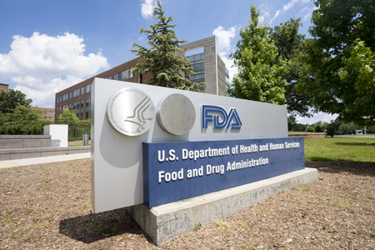
For over three decades, the FDA's accelerated approval pathway has enabled patients with serious or life-threatening conditions to access promising treatments faster by allowing approvals based on surrogate endpoints rather than clinical endpoints demonstrating direct patient benefit. However, mounting evidence of systemic weaknesses — delayed confirmatory trials, questionable validity of surrogate endpoints, and inconsistent enforcement — has prompted congressional action and FDA reform.
Today's regulatory landscape reflects a critical rebalancing: enabling rapid access to novel therapies while imposing substantially heightened accountability measures. Understanding these changes is essential for regulatory professionals, clinical development teams, and industry strategy leaders.
Most recent changes began in 2024, with a new framework for accelerated approval. Since then, a number of new initiatives aimed at speeding up drug approvals have rolled out, including the Commissioner’s National Priority Voucher Program and a reauthorization of the Rare Pediatric Disease Priority Review Voucher program. International relevance has been a key driver in these programs as faster progress in other nations threatens U.S. dominance in new drug innovation.
Even though a final guidance has not been published, the agency has been building on the framework. In this article, I will discuss case studies that bring us up to date on accelerated approval policy.
The FDA's Accelerated Approval Framework
In 2024, the FDA released a comprehensive 22-page draft guidance document titled "Expedited Program for Serious Conditions — Accelerated Approval of Drugs and Biologics," marking the first significant overhaul of accelerated approval policy in a decade.1 This guidance implements mandates within the Food and Drug Omnibus Reform Act (FDORA), part of the Consolidated Appropriations Act of 2023, and directly addresses findings from academic research on pathway performance.
Key Requirements For Granting Accelerated Approval
The new guidance clarifies that drugs must meet all the following criteria:
- address serious or life-threatening conditions with no available therapies or limited effective alternatives,
- provide evidence of effectiveness through surrogate or intermediate clinical endpoints reasonably likely to predict clinical benefit, and
- demonstrate meaningful advantages over existing therapies when available.
Notably, the FDA now emphasizes that a drug's indication must address "unmet medical need," defined more stringently than in previous guidance to ensure genuine therapeutic gaps.1
Mapping Updates To FDA's Accelerated Approval Pathway
Heightened confirmatory trial requirements
Under the 2023 congressional mandate implemented in this guide, the FDA has new authority to require that confirmatory trials be underway before or shortly after accelerated direct response to data showing that preapproval trial initiation correlates with timely completion. The Confirmatory Trial Guidance released in 2025 explicitly states: "If FDA determines that a confirmatory trial must be underway before Accelerated Approval and the trial is not underway, FDA does not intend to grant Accelerated Approval until this deficiency is addressed."2
In some cases, the FDA may require that trial enrollment be completed before approval — a substantial barrier that will reshape development timelines. Companies must now provide 180-day progress updates on post-approval studies, including enrollment targets and completion milestones, creating unprecedented transparency requirements.
Case study: pembrolizumab's portfolio management
Pembrolizumab (Keytruda), Merck's PD-1 inhibitor, exemplifies the expanded scope of accelerated approval. From September 2014 through February 2024, pembrolizumab received approximately 40% of its approved indications via the accelerated pathway, roughly 18 indications. 3
By February 2024, 14 of 18 indication-specific accelerated approvals had been converted to traditional approvals, with two withdrawn and ongoing post-marketing requirements extending into late 2024 or 2025. The median conversion time was 2.6 years, approximately six months faster than the industry median, reflecting Merck's investment in rapid confirmatory trial execution and competitive advantage under the new FDA framework.
FDA learning curves and regulatory expertise
An academic analysis of accelerated approval performance identified the FDA's experience as the strongest predictor of timely, high-quality confirmatory trials. Newer therapeutic areas, particularly neurodegenerative diseases, showed substantially higher rates of delays and quality issues, reflecting regulatory uncertainty about appropriate trial designs and endpoints.
The FDA has acknowledged this challenge.
Case study: Aduhelm's failure prompted new knowledge-building framework
The approval of Biogen's Aduhelm occurred when the FDA had minimal experience with amyloid-targeting therapies for Alzheimer's disease, complicating endpoint selection and trial timeline estimation.5 Under the 2025 confirmatory trial framework, the FDA will proactively build expertise in emerging areas through enhanced preapproval engagement, potentially requiring confirmatory trial protocols to be submitted before approval consideration — directly addressing the identified FDA learning gap.
Expedited withdrawal procedures
FDORA also granted the FDA expedited withdrawal authority that lengthy formal processes had previously constrained. The prior system — exemplified by the hydroxyprogesterone caproate (Makena) case, in which withdrawal took more than a decade despite apparent lack of efficacy — will no longer define regulatory outcomes.4
Under the new process, if a confirmatory trial fails to demonstrate clinical benefit on the pre-agreed primary endpoint, the FDA may withdraw approval more rapidly, provided that manufacturers retain appropriate due process rights. This balances patient protection with regulatory efficiency.

Case study: ovarian cancer PARP inhibitor withdrawals
Recent regulatory history of poly-ADP-ribose polymerase (PARP) inhibitors illustrates the shift toward withdrawal. Olaparib (Lynparza) and rucaparib (Rubraca) received accelerated approvals for heavily pretreated recurrent ovarian cancer based on surrogate endpoints (response rates). However, confirmatory trials later demonstrated limited or no overall survival benefit. The FDA subsequently converted these indications to regular approval status despite not meeting clinical benefit thresholds,6 a decision that would likely trigger consideration of withdrawal under the 2025 guidance. The EMA demonstrated faster action, restricting use more promptly and imposing clearer conditions, thereby creating divergent regulatory standards that U.S. companies must now navigate.
Case study: Elevidys and the limits of agency discretion for biologics
The accelerated approval history of Elevidys (delandistrogene moxeparvovec-rokl), Sarepta Therapeutics’ AAVrh74-based gene therapy for Duchenne muscular dystrophy (DMD), offers a clear biologic-side stress test for the levers contemplated under the new framework. In June 2023, the FDA granted Elevidys accelerated approval for ambulatory boys aged 4 to 5 with a confirmed DMD mutation, based on micro-dystrophin expression as a surrogate endpoint reasonably likely to predict clinical benefit. The decision was made over the objections of multiple FDA review teams, with then-CBER Director Peter Marks invoking regulatory flexibility for serious rare diseases to grant approval. In June 2024, despite the confirmatory Phase 3 EMBARK trial missing its primary endpoint (change in North Star Ambulatory Assessment at 52 weeks), the agency converted Elevidys to traditional approval and broadened the label to ambulatory and non-ambulatory patients aged 4 and older — again over the recommendations of three review teams and two senior officials, who characterized the supportive secondary findings as “exploratory” and “possibly due to chance.”7
The levers the agency chose not to pull at that point are as instructive as those it did. Under the 2024 draft framework and FDORA’s expedited withdrawal authority, a confirmatory trial that fails its pre-agreed primary endpoint is precisely the trigger contemplated for withdrawal or, at minimum, for keeping the indication on accelerated rather than traditional status pending additional evidence. Instead, the agency converted Elevidys to full approval, declined to require a new placebo-controlled confirmatory study, and allowed the broadened indication to remain in place. That posture changed only after post-marketing safety signals forced action: following two reports of fatal acute liver failure in non-ambulatory patients in mid-2025, the FDA issued a CBER safety communication, requested that Sarepta suspend distribution, and placed related gene therapy clinical trials on hold.
On Nov. 14, 2025, the agency approved revised labeling that added a boxed warning for serious liver injury and acute liver failure, removed the indication for non-ambulatory patients, restricted use to ambulatory patients aged 4 and older, and imposed a post-marketing observational study of approximately 200 patients followed for at least 12 months.8
For biologics developers, the Elevidys arc illustrates both the durability and the limits of regulatory discretion under the new framework. Center director override can still secure approval and label expansion in the face of negative confirmatory data, but the agency’s heightened post-FDORA toolkit — boxed warnings, indication narrowing, distribution suspension, and clinical hold authority across a sponsor’s gene therapy portfolio — is being deployed more rapidly than in earlier eras such as Makena.
The operational implication is direct: confirmatory trial design, surrogate-to-clinical-benefit linkage, and post-marketing safety surveillance must be planned with the assumption that an adverse readout or an adverse safety signal will be acted upon, and that the breadth of an indication granted at approval is no longer a stable assumption.
Conclusion
The FDA's heightened accountability for accelerated approval confirmatory trials responds directly to documented regulatory failures while preserving the pathway's essential functioning, thereby enabling rapid access to breakthrough therapies for severe conditions with unmet needs.
References:
- FDA. (2024) Accelerated Approval – Expedited Program for Serious Conditions, December: Guidance
- FDA. (2025) Accelerated Approval and Considerations for Determining Whether a Confirmatory Trial is Underway
- Springer, Drugs (2024) The Utilization of the Accelerated Approval Pathway in Oncology: A Case Study of Pembrolizumab, Kester, R., et al.
- McGuireWoods. (2025) Rethinking FDA's Accelerated Approval Pathway: New Draft Guidances and Expected Implications.
- MIT Science Policy Review. (2022) Biogen’s Aduhelm controversy as a case study for accelerated approval biomarkers in Alzheimer’s and related diseases, Berg, A., et al.
- Journal of Pharmaceutical Policy and Practice. (2024) Regulatory histories of recently withdrawn ovarian cancer treatment indications of 3 PARP inhibitors in the US and Europe: lessons for the accelerated approval pathway, Shahzad, M., et al.
- BioPharma Dive. (2024) Duchenne approval exposes FDA rift over Sarepta gene therapy, Fidler, B., June 21, 2024.
- FDA. (2025) FDA Approves New Safety Warning and Revised Indication that Limits Use for Elevidys Following Reports of Fatal Liver Injury, Press Announcement, November 14, 2025.
Editor's Note: The views expressed in the article are those of the authors and not of the organizations they represent.
About The Author:
 Partha Anbil is at the intersection of the life sciences industry and management consulting. He is currently senior vice president of life sciences at Coforge Limited. He held senior leadership roles at WNS, IBM, Booz & Company, Symphony, IQVIA, KPMG Consulting, and PWC. He has consulted with and counseled health and life sciences clients on structuring solutions to address strategic, operational, and organizational challenges. He was a member of the IBM Industry Academy and is a healthcare expert member of the World Economic Forum (WEF). He is also a life sciences industry advisor at MIT, his alma mater.