
Inside Chugai's Digital Infrastructure Strategy

By Katie Anderson, Chief Editor, Pharmaceutical Online
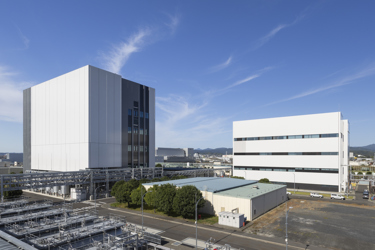
When a facility is fully automated and designed for manufacturing flexibility, it needs a digital infrastructure that pulls the systems together, reports data accurately and efficiently, and recognizes areas for continuous improvement. Chugai’s FJ3 facility took a measured, strategic approach to the digital infrastructure of its FJ3 facility, which recently earned an honorable mention for ISPE’s 2026 Facility of the Year Awards. In a previous interview, I talked to Chugai’s Mitsuteru Kohriyama, Takeshi Kudo, Jumpei Tsurumiya, and Masato Nishino about the facility’s automation and modular design. Here, we will explore the facility’s digital network.
How are the DCS, MES, WMS, and ERP systems integrated across the facility?
Chugai Experts (CE): All systems are integrated to enable a seamless and paperless workflow across the facility. The ERP system (SAP) serves as the core platform for planning and master data management, ensuring a consistent and reliable foundation for all business operations.
The manufacturing execution system (MES) functions as the central system for executing production instructions, while also collecting and managing manufacturing data in real time.
The warehouse management system (WMS) is tightly integrated with both ERP and MES, enabling real-time synchronization of inventory status and logistics information throughout the facility. This ensures accurate material tracking and supports efficient production planning and execution.
At the equipment level, the distributed control system (DCS) is responsible for precise process control, including parameters such as temperature, pressure, and flow. By integrating DCS with MES, manufacturing instructions are directly linked with shop floor control data, enabling seamless coordination between planning and execution.
As a result, this integrated architecture ensures high levels of data consistency and traceability across all operations, while minimizing human error and strengthening data integrity. This approach provides a robust digital foundation for reliable and efficient pharmaceutical manufacturing.
What communication protocols and data standards are being used between systems?
CE: For system integration, we combine business data integration using standard SAP interfaces such as IDoc and APIs with equipment data integration via OPC and the PI System. Equipment data is collected from the process control system (PCS) and integrated into the MES through the PI System, enabling a consistent flow of information from the shop floor to higher-level systems.
By applying appropriate data standards and communication protocols separately to business and equipment domains, we have adopted a loosely coupled architecture. This approach ensures flexibility and scalability in system integration, allowing individual systems to evolve without impacting the overall structure. Furthermore, the integration is built on standard specifications, including SAP standard A interoperability and maintainability across the system landscape while ensuring robust and reliable system integration. As a result, the architecture supports efficient data exchange, simplifies system expansion, and provides a stable digital foundation for advanced manufacturing operations.
How accessible is real-time operational data across departments?
CE: In our facility, equipment and manufacturing data are integrated through the PI System, creating an environment where real-time operational data is accessible across departments. A wide range of users including manufacturing, quality, maintenance, R&D, and management functions—can continuously access the same up-to-date information through visualization tools such as PI Vision.
This integrated data platform serves as a single source of truth, ensuring consistency, accuracy, and reliability of data across the organization. By providing unified and transparent data access, the system supports faster and more informed decision-making across all functions. In addition, appropriate access control is implemented through role-based permissions, ensuring that only authorized personnel can access relevant data. This allows stakeholders across the Chugai group to securely retrieve the information they need while maintaining strong data governance and compliance with organizational requirements.
Overall, this digital architecture not only enhances data visibility and collaboration across departments but also establishes a robust foundation for data-driven operations and continuous improvement.
What reporting and dashboard capabilities are available to operations and management?
CE: In FJ3, equipment and process data are consolidated within the PI System, enabling real-time monitoring and trend analysis through PI Vision dashboards. In daily operations, these dashboards are actively used for the digitalization of routine inspections, reducing paper-based records, improving operational efficiency, and allowing immediate access to inspection data. These capabilities enable manufacturing and maintenance functions to quickly assess plant conditions based on a consistent set of data.
In addition, appropriate access control is implemented through role-based permissions, ensuring that users can securely access the information relevant to their responsibilities. It should be noted that visualization of data for management-level decision-making is not addressed individually within the scope of the FJ3 project. Instead, it is supported as part of a company-wide digital infrastructure strategy.
Furthermore, we have established a foundation for remote operations, including remote data access and condition monitoring using digital interfaces and surveillance systems. This enables flexible operations today and provides a pathway for future enhancements, such as remote monitoring and control, to further improve efficiency and responsiveness. This comprehensive digital infrastructure supports reliable, data-driven, and high-quality manufacturing operations.
A Wise Investment for the Future
Not only does Chugai’s data architecture support efficient data visibility and exchange, but it also creates an environment for continuous improvement, supports advanced manufacturing and can make system expansion down the road easier.
Though the initial planning, investment, and implementation in this network no doubt presented its challenges, that commitment ultimately will pay off with facility changes, expansions and increased production.
Bios
 Mitsuteru Kohriyama is Plant Manager at Chugai Pharmaceutical, where he has also led API production teams and has over 20 years of experience in API manufacturing. He played a key role in a $400-plus million API manufacturing facility project as a safety subject matter expert, overseeing equipment design—particularly improving cleaning processes—and containment measurement.
 Takeshi Kudo has over 20 years of experience as a plant engineer at pharmaceutical manufacturing plants. After joining Chugai Pharmaceutical in 2015, he continued to handle control system engineering, including DCS and MES, and was responsible for both FJ2 and FJ3.
 Jumpei Tsurumiya joined Chugai Pharmaceutical’s production engineering research department in 2015 and was responsible for API manufacturing plant design and construction. He worked in the pharmaceutical manufacturing and digital engineering department and was an equipment design expert, overseeing equipment design for FJ3.
 Masato Nishino joined Chugai Pharma Manufacturing Co., Ltd. IT department in 2010 and was responsible for the operation and management of manufacturing execution systems. He oversees system design and automation activities for the FJ3.