
Integrated Drug Discovery
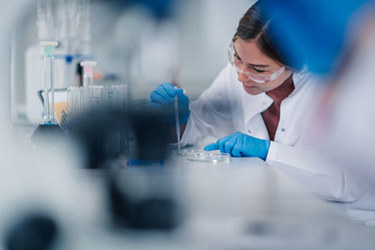
Integrated drug discovery greatly benefits programs by blending various scientific disciplines into a unified team focused on your project.
Whether expanding hits, progressing a hit-to-lead series, or pushing lead optimization into preclinical candidate selection, Curia’s team of experts is experienced, trusted and proven. Our teams of medicinal chemists, computational (CADD) scientists, in vitro biochemical and cellular biologists, structural biologists, and DMPK scientists work internally, and externally, to maximize efficiency and reduce timelines. Program issues are overcome by maintaining focus on the most pressing needs and making data driven decisions.
Keys to successful integrated drug discovery:
- Experience & expertise: Experience understands how best to use available expertise to push forward
- Communication: Keeping all team members, internally and externally, apprised of new developments, challenges, or breakthroughs is critical to maintaining momentum
- Partnership: Collaboration with the client and all members transforms a group of talented scientists into a team that views every issue and breakthrough as their own
Scientific expertise available for integrated drug discovery projects:
In Vitro Biology
Biochemical and cell-based assay development, screening and structure-activity-relationship (SAR) support including high-content cellular imaging and biophysical testing by Biacore™ SPR.
Computer Aided Drug Design (CADD)
2D/3D Virtual screening for hit finding, protein modeling to aid docking of target ideas aiding synthetic prioritization.
Medicinal Chemistry
Highly experienced medicinal chemistry team excited to work with in vitro biologists, structural biologists, and drug metabolism and pharmacokinetics (DMPK) scientists to solve problems, drive progress, invent, and deliver preclinical candidates.
Structural Biology
An experienced and talented team of protein crystallographers, Curia’s structural biology scientists generate de novo structural information of how a ligand interacts with a target protein, as is the case with structure-based drug development (SBDD) programs, providing a wealth of information to improve compound binding hypotheses and target designs.
DMPK
From initial studies such as solubility, permeability, metabolic stability and plasma protein binding, through to IND enabling CYP inhibition/induction and metabolite identification studies the DMPK team provides crucial information for the selection of promising candidates.