
Lilly's Unified Mindset For A Global Parenteral and Device Manufacturing Network
A conversation with Syed Abbas Yar-Khan, Eli Lilly and Company, and Jon O'Connell, Bioprocess Online

Anyone standardizing a multinational parenteral manufacturing network must create congruity where others see paradox. While some may see innovation and early technology adoption as an affront to the universal blueprint, Abbas Yar-Khan and the rest of the leadership behind Eli Lilly and Company's one-team-mindset are threading a needle to achieve the best of both worlds. They're in pursuit of a deeply templated approach to facility design that also reacts quickly to regulatory adjustments and new manufacturing breakthroughs.
Lilly's capital projects portfolio is one of the most aggressive in the history of pharma, with many of those projects centered on parenteral manufacturing. During the J.P. Morgan Healthcare Conference, CEO David Ricks summarized the $55 billion effort with sites underway in Germany, Ireland, the Netherlands, and 10 in the U.S. and Puerto Rico.
Yar-Khan, a Lilly group vice president, is scheduled to speak at the 2026 ISPE Europe Annual Conference about the company's approach to standardized facility design, governance frameworks, and the company's full-court press toward automation and agentic artificial intelligence happening across continents.
Ahead of his ISPE Europe presentation, Yar-Khan took some of our questions about the balancing act.
When Lilly designs a new parenteral suite, how much of the blueprint remains fixed, especially in light of local site constraints or specific modality requirements? Can you talk about the realities of implementing a one-team mindset across different regulatory jurisdictions and cultures?
Yar-Khan: At Lilly, we approach aseptic/parenteral manufacturing design with a strong preference for standardization. A proven design should be the starting point for every new facility, not something we reinvent from scratch. That said, no design is ever deployed identically in every context. Site-specific realities like local infrastructure, available footprint, and modality-specific requirements all shape how a standard gets implemented on the ground. The conversation internally is less about what's fixed versus flexible, and more about being disciplined when we do deviate, so exceptions don't quietly erode the value of the standard.
On the one-team mindset, the intent is real, and so is the investment behind it. Regulatory expectations vary across jurisdictions, and alignment ultimately comes from relationships and shared understanding more than policy alone. What makes this achievable is a commitment to investing in every site equally. Every site, regardless of age or geography, is equipped to perform at the same standard. That means the same technology platforms, the same software, the same ways of working, whether you're in Sesto, Italy, or Indianapolis, Indiana.
And the collaboration that follows is very real. It's common to see experts from one site helping bring a new facility online, or team members on long-term and short-term assignments across locations, bringing those learnings back home. People carrying knowledge and relationships across geographies is what gives the one-team mindset its true meaning.
Does disciplined replication stifle innovation? How do you balance standardization with the adoption of new technology?
Yar-Khan: Standardization and innovation are not mutually exclusive, but you have to be deliberate about where you allow each to operate. Our standard design is a floor, not a ceiling. We don't freeze technology; we freeze the interfaces. So, a new isolator platform, a new CCIT method, or a new environmental monitoring sensor can be adopted as long as it integrates into the established utility, automation, and data architecture.
We manage technology adoption through a formal readiness framework. New technologies are piloted at a single site under an innovation designation before they are considered for network rollout. This creates a structured pathway that rewards sites for being early adopters without forcing the rest of the network to absorb unvalidated risk. The discipline of replication accelerates innovation because when our baseline is consistent, we can isolate and evaluate the delta introduced by a new technology much more cleanly than if every site were running a different starting configuration.

How has the transition to a standardized automated platform changed Lilly's approach to environmental monitoring and data integration across global sites?
Yar-Khan: The transition to a network-standardized automated filling platform has been transformational for Lilly's environmental monitoring (EM) programs, enabling true global harmonization of sampling methods and strategies, including frequency, locations, and approaches to microbiological air, surface, and total particulate monitoring across critical filling operations worldwide.
This standardization has made data directly comparable across sites for the first time, supporting network-wide trend evaluation and KPI tracking. It has also accelerated investigations by making cross-site knowledge and experiences immediately applicable and fostered more effective communication around shared technical challenges and continuous improvement efforts, ultimately driving operational excellence across the entire global network.
Do you lean on any governance frameworks to promote quick uptake of new lessons from site to site?
Yar-Khan: Yes, governance plays a critical role in ensuring that lessons learned don't stay siloed at the site where they originated. We rely on a few key mechanisms to drive rapid knowledge transfer across the network.
At the operational level, our weekly parenteral device network (PDN) huddle (Tier 4) create a regular, structured touchpoint where sites can surface emerging issues from their SLT (Tier 3) huddles, share recent learnings, and flag trends in real time. The cadence is intentional; weekly connection means we're not waiting for a monthly or quarterly review to act on something important.
We also track PDN metrics that give the network a shared view of performance, which naturally surfaces where best practices are working and where intervention or support is needed. And at a broader level, our on-site business reviews provide a forum to formally share lessons learned and best practices across the five dimensions we care most about: safety, quality, delivery, people, and cost.
Together, these forums create both the rhythm and the accountability to make knowledge-sharing a habit rather than an afterthought, so that when one site learns something valuable, the rest of the network benefits as quickly as possible.
As you move toward end-to-end automation, how have operator skill requirements evolved?
Yar-Khan: Operator skill requirements have shifted fundamentally, and in ways that are more demanding than before. Traditional operators needed manual technique and procedural execution. Today, they need data fluency, system awareness, and sound decision-making under uncertainty.
What's accelerating that shift is AI. We are moving along a maturity curve in how our operators interact with these systems. It starts with a conversational interface, where an operator can ask the system "how are my lines running today?" and get a real-time, summary answer. That alone is a step change from dashboards and paper logs.
The more transformative move is toward agentic AI, where the system isn't waiting to be asked. It continuously analyzes process data, equipment behavior, and historical patterns, and proactively surfaces what it identifies as a potential problem before it becomes one. The operator's role shifts from monitoring to decision-making, with the right information already in front of them at the right moment.
That requires a new kind of operator: someone who understands not just what the system is telling them, but why, and has the judgment to act on it, push back, or escalate. That combination of technical literacy and critical thinking is what we are building across our network.
When operating with a one-team mindset, how do you ensure that blind spots aren't duplicated across the network?
Yar-Khan: Standardization gives us a strong foundation, but we never assume it's complete. We are always actively looking for what we might have missed.
Our most effective safeguard is personnel mobility. We rotate people across sites specifically to create observers who aren't acculturated to local norms. But at Lilly, this goes deeper than a rotation program. We don't hire people for a job; we hire them for a career. It is not unusual for a site head to have led operations at multiple sites across our global network. That cross-site leadership experience builds something governance frameworks can't: the instinct to question assumptions, because you've seen the same challenge look very different from one site to another.
We complement this with external benchmarking through forums like this one and an internal audit program that flags network-wide findings as their own category. But the strongest safeguard is always people, specifically making sure the right ones have seen enough of the world to know what they don't know.
About The Expert:
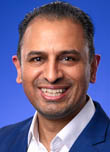 Syed Abbas Yar-Khan is group vice president of Global Parenteral Products and Devices at Eli Lilly and Company. He oversees a network of 12 manufacturing facilities and more than 50 CMOs across the United States, Europe, and Asia. With a team of more than 8,000 employees, he is responsible for end-to-end operations, including formulation, aseptic filling, device assembly, packaging, and distribution of all finished drug parenteral product lines for global markets. Before joining Lilly, he spent over 25 years as a leader in Takeda’s Global Manufacturing and Supply, where he held various roles including senior vice president, manufacturing, for the Plasma Operating Unit and site head at the Los Angeles manufacturing facility. He has also held roles with increasing responsibility within the quality function, including head of quality for the Plasma Operating Unit. Abbas holds an MBA from IMD in Lausanne, Switzerland, and a bachelor's in chemical engineering from the University of California, Berkeley.