
Navigating Downstream Processing (DSP)
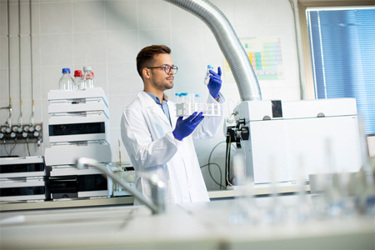
When your fermentation titers are low and your product degrades within hours of harvest, downstream processing stops being an operational concern and becomes a commercial one. Scaling DSP is a multidimensional challenge: you're managing massive fluid volumes with limited separation efficiency, racing against product stability windows, and navigating infrastructure requirements, like ATEX-rated solvent zones, that can't be improvised at the last minute.
The difference between a program that reaches the market and one that stalls in scale-up often comes down to how well your DSP workflow is designed and equipped from the start. A fully integrated four-step approach, covering biomass separation, filtration and concentration, purification and isolation, and analytical validation, gives you continuous control over yield, purity, and mass balance at every stage.
For heat-sensitive products, continuous centrifugation minimizes hold time during harvest. Multi-stage Tangential Flow Filtration optimizes membrane surface area to your target's molecular weight. Chromatography at up to 500L industrial scale and integrated distillation units handle the full range of aqueous and organic separation needs. Real-time HPLC, UPLC, and LC-MS/MS analysis ensures every step meets quality specifications before you advance.
Understanding the tradeoffs between inorganic and organic solvent systems is also critical: your molecule type, facility capabilities, and regulatory environment all factor into the right approach. Contact Curia to discuss how their DSP infrastructure can support your scale-up strategy.
Get unlimited access to:




Enter your credentials below to log in. Not yet a member of Pharmaceutical Online? Subscribe today.