
Navigating Rough Pharma Seas With Collaboration

By Katie Anderson, Chief Editor, Pharmaceutical Online
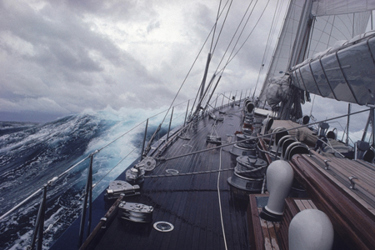
In her home country of Denmark, Susanne Hundsbaek-Pedersen, EVP and Global Head of Pharma Technical Operations for Roche, summoned the country’s concept of hygge and passion for direct, candid dialogues when broaching the difficult topic of navigating the troubling pharma waters that lie ahead.
To Hundsbaek-Pedersen, hygge is a deep sense of coming together and belonging in a nice atmosphere. It was her wish that this concept would help bring pharma professionals together at ISPE’s 2026 Europe Annual Conference to collaborate and address roadblocks to efficient, global pharma production. “One thing I learned from being in a lot of businesses is the value of looking beyond your own company. There is always someone who has an idea and who figured it out,” added Hundsbaek-Pedersen.
She then guided attendees through the ocean of challenges before sharing the solutions and opportunities that her team at Roche had identified. “Today we are sailing in a more complex and challenging environment than ever before. There is a lot of light ahead, but we need to recognize that the waves are higher and the current is stronger than it has been for many years,” she noted.
Pressures On Network Design
Recent years have brough about several challenges in network design. Trade route disruptions, political instability, technological bans and tariffs have all influenced network design. This has led pharmaceutical manufacturers to rethink their design to address capacity.
The past few years have seen several facility investments to increase capacity, both in new developments and expansions. Many of those, to the tune of $320 billion, have been committed to U.S. investments, and Roche committed $50 billion to U.S. manufacturing, according to Hundsbaek-Pedersen. The company saw a decrease in U.S. CDMO capacity, with prices increasing. Construction prices were also changing, and Hundsbaek-Pedersen and assumes that they will start to see a challenge in talent base and resources to operate this shifting network.
So, where do you start to rethink your footprint? For Roche, it rethought its supply chain. For some materials, it needed to not only dual source but also source with geopolitical neutrality. It also brought in next level facility design to its new facility investments.
“We are moving from the 2D blueprints with optimizations afterward to simulating every movement end to end in order to see the bottlenecks and the interplay between all of our processes. We believe it compresses our time significantly. Inclusion and integration is what really makes it. The complete integration across the entire facility is a huge endeavor with a very promising payback,” explained Hundsbaek-Pedersen.
Evolving Regulatory and Environmental Landscape
Regulations are always evolving and changing, as technology continues to progress. This puts pressure on the industry to adapt. This means an adaptation in technology and regulatory prowess, as regulations become more and more granular. “It means our quality management system needs to be much more agile,” added Hundsbaek-Pedersen.
Roche has adapted its regulatory submissions to a single AI supported dossier. “We have nearly 250-350 regulatory submissions each year,” noted Hundsbaek-Pedersen. To simplify this process and remove redundancies, the company uses AI for fast dossier preparation for submissions that are data driven.
An AI Way of Thinking
“AI is the biggest single disruption technology in human history, and it will challenge our organizations as well. Fifty percent of the work we see today is anticipated to be automated, and even more so if we look to supply chain management and regulatory. This is not an if, this is a how do we orchestrate this journey and how to make this happen,” explained Hundsbaek-Pedersen.
Though AI is a huge challenge, Hundsbaek-Pedersen also believes it is a huge opportunity. Roche utilized AI for process prediction and optimization. For its biologics portfolio, it built 200 models of golden batches that predict a combination of all parameter settings. This technology is being deployed for the eight products in scope. “This allows us to identify microdeviations invisible to the human before they actually start violating our specifications. We bridge it with our experts so that we get the causal drivers well reflected, and our system is a valuable one, “added Hundsbaek-Pedersen. But, this data isn’t just available to Roche. The company has made this AI integration an open platform so it can share its data for others to learn. “It is about bringing the experts with the power of data and sharing that broadly, concluded Hundsbaek-Pedersen.
Complex Internal Processes
The biggest complexity to address in pharma is often an internal one, according to Hundsbaek-Pedersen. “The biggest leak in our ship is the one we brought upon ourselves.”
She referred to the way businesses have been set up, with departments thinking in silos in addition to other complications like asset configurations, fragmented IT landscape, overpopulated decision processes, and layers of governance.
To address this at Roche, the company looks at both robust processes and efficient operations. “There are so many ways to be fast, but the only sustainable one is robust processes and secondly to run efficient operations,” added Hundsbaek-Pedersen. The company focuses on two paths to achieve robust processes and efficient operations: pioneering for excellence and radical simplification. Through these, it leverages technology to improve the processes while simplifying the answers at the same time. “We can only build sophistication when our foundation is strong,” explained Hundsbaek-Pedersen. They are deliberate on only what brings value and not unneeded complexities.
All Players on Board
To conclude her presentation, Hundsbaek-Pedersen used her sailing metaphor to explain that w hen the storm gets wild, the good sailor is the one who is prepared.
To prepare for the waves ahead, all players need to be on board. She encouraged peers in the pharmaceutical industry to collaborate and share without boundaries, connecting knowledge and data. She encouraged everyone to get involved and play a part in what she views as a hyperconnected ecosystem. Working together will help the industry align our standards.
“I ask us all to do more work aligning our standards. Why can we not come together and join agendas, understanding what drives complexity across the value chain. Let’s travel together, for the full potential of science and the full hope of patients. How will you respond from your seat?”
To further motivate the industry, Hundsbaek-Pedersen finished her presentation with,“We can be overwhelmed by the storm, or we can choose to sail through together. We can be the force that creates the tides.”