
Optimizing Filling Technology To Minimize API Loss
By Samuel Chia, Director of Aseptic Manufacturing, Pharmaceutics International, Inc.
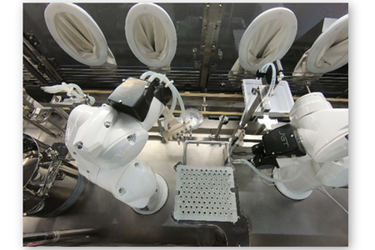
The paradigm shift in today’s manufacturing landscape toward smaller batches for more targeted patient populations is dramatically impacting how drugs are developed and manufactured. With active pharmaceutical ingredient (API) values continuing to climb as batch sizes go down, upstream production costs are increasing significantly. This means even the smallest loss of API at the fill/finish stage can waste thousands of dollars and potentially result in a lower-yielding manufacturing lot. It can also lead to under-dosed finished product and annul the beneficiary therapeutic effects for the patient. Fortunately, new advances in filling technology offer solutions that can minimize lost API and eliminate sources of risk while still meeting the regulatory requirements for testing and quality assurance.
Sources Of Product Loss
As the last step of drug production before a product reaches a patient, fill/finish is a critical phase of pharmaceutical manufacturing. Failures during this process could result in lost batches due to contamination or drug product degradation that puts not only the efficacy of a drug at risk but also its safety. Small and emerging companies already facing a strain in capital often cannot afford these costly product losses during manufacturing or the inevitable delays that occur once an issue is discovered and investigated.
There are several points when API loss can occur, and it is important to understand what those are, so you can select a filling line that has been carefully designed to eliminate them.
Container Closures
The container closure system you select must not only meet the needs of the patient and the target market but also must be one that can retain product and prevent oxygen from being introduced during filling, which can lead to oxidation and, therefore, drug product degradation. An experienced CDMO can help guide you on the most appropriate system for your product.
Filtration
Filtration is another area where product loss may occur due to retention of products on tubing. Reducing tubing sizes and choosing filters that adequately hold and filter your product minimize the volume of residual product retained in the tubing. Eliminating areas where API is retained helps ensure 100 percent of product recovery during filling.
Weight Checks
One key source of API loss is weight checking, as destructive weight checks or improper fill volumes both result in wasted API. Traditional fill lines perform weight checks at set intervals in the process as the vials are filled or require the line to be paused for testing. In the former case, vials that are under- or over-filled are discarded. This challenge can be overcome by using a filling line where weight checks are performed during the filling process with in-line, non-destructive weight checks. Every vial is tared before filling and actively measured during the filling process. This allows the vial fill volume to be automatically corrected instead of being discarded, reducing loss at this stage and successfully maximizing the available amount of API.
Contamination
Physically reducing API loss during the filling process is a major step toward maximizing yield. However, this does not address loss due to other failures, such as contamination. To maximize API yield in the filling process, eliminating sources of risk must also be addressed. Using state-of-the-art restricted access barrier systems (RABs) technology with fully automated robotics can combat known contamination sources. In comparison to cleanroom filling and older technologies, closed systems, such as RABS, reduce contamination risk from the environment and personnel. Combining robotics with RABs technology further reduces human intervention.
Traditional Vials
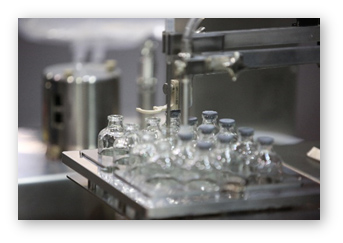 A less commonly targeted risk source is the vials themselves. Traditionally, vials are non-sterile when received, and the fill/finish manufacturer prepares them for filling. However, washing, depyrogenation, and sterilization activities are often not a core competency and can divert focus from more critical processes. In addition, bulk vials jostle each other during shipping, adding the risk of glass particulates. Using ready-to-use (RTU) vials, syringes, and cartridges on the same machine alleviates these risks and offers increased flexibility and efficiency.
Reservoirs And Dead Space
Oftentimes, several connectors are used in the construction of filling and filtration assemblies. The joints in these assemblies can also be a source of fluid retention. To avoid this, molded tubing can be used to prevent “dead space” that retains products and results in loss. Additionally, because the assemblies are autoclaved, flushing must be performed, leading to residual moisture and product loss. RTU tubing and filling assemblies can be used reduce this risk as well.
Mitigating Risk By Design In Aseptic Fill Finish
When considering technologies for fill finish that can combat the highest risk areas for product loss, it is important to keep in mind that most of what is available today is not designed for high-value small batch API. To address this, Pii purchased the GENiSYS® R, an aseptic small batch filling and closing machine that uses automation and RTU components to bring drug products to market safely and cost-effectively. For example, human intervention is one of the greatest sources of contamination risk in aseptic filling, making it critical to reduce manual operations as much as possible. Pii uses recipe-driven pharmaceutical-grade robotics in the GENiSYS R to eliminate manual errors in the machine setup, lowering the risk of contamination by design and significantly improving overall system flexibility and reliability. The use of robotics and tool-less changeover also diminishes the mechanical complexity typically associated with traditional filling machines. With only one way to assemble the machine’s parts, there is less potential for error in setup, cleaning, and operating, as all parts that are not robotic do not require fine-tuned alignment. The potential for cross contamination between batches is further mitigated through single-use fluid paths, which removes the need for cleaning validation.
The GENiSYS R’s use of robotics combined with a highly intuitive user interface and advanced alarm handling system reduces the possibility of lost batches due to anomalies that may show up during a batch run. The underlying system technology enables the operator to safely and aseptically address any issues without losing the batch itself. Should there be a bad fill or an improperly closed container and/or sealed vial, the system can identify the anomaly and positively identify the container for removal from the batch before it is completed.
Maintaining vigilant oversight of a facility is also vital in understanding and preventing sources of contamination. That is why Pii included environmental monitoring in the GENiSYS R, which measures system sterility and cleanliness by sampling the air for active non-viable particles as well as passive and active viable particles. If anything is detected, users can pinpoint the potential sources for contamination and develop methods for not only addressing them but also developing proactive measures for preventing them in the future. Additional transparency is available through electronic batch records (EBRs). EBRs from the GENiSYS R interact with the Pii enterprise-wide batch record system to document records on each batch they manufacture, facilitating compliance through the availability of essential production data in electronic format.
Another area of focus when considering the system Pii wanted to purchase was maximizing product yields, which is especially relevant when running small batches, due to the value of each batch. The inclusion of surge bag load cells in the system design allow for precise management of product volume. Using only the product required for the batch run via fluid path line holdup increases product yields while minimizing product loss. In addition, Pii configured the GENiSYS R with statistical in-process weight check (IPC) to allow the user to set the statistical IPC from zero to 100 percent during the batch run, ensuring fill accuracy throughout the batch. In larger batches, the system can identify the need for an uninterrupted pump calibration correction to ensure fill accuracy, regardless if a batch is 250 units or 10,000 units.
Overall, the GENiSYS R includes several features that can address the major challenges of fill/finish, specifically when it comes to those related to small batch production. By working closely with our partners to fully understand product characteristics, Pii can then use this advanced fill/finish technology to minimize errors and product loss, accelerating development plans and approvals, thus allowing products to reach patients quickly and safely.