
Overcoming 3 Key Challenges Of Working With CDMOs For Radiopharmaceuticals
By David Hertlein, vice president of consulting, Pinnaql
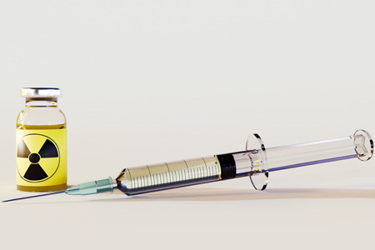
As a father and an engineer, I often think about the systems we build and who they ultimately serve. In life sciences, the answer should always be patients. When those patients are children facing cancer, the responsibility feels even greater.
Radiopharmaceutical therapies represent one of the most promising advances in oncology today. Their ability to deliver targeted radiation directly to cancer cells offers a level of precision that is especially important in pediatric care, where long-term effects matter just as much as immediate outcomes.
But realizing that promise is not just about scientific discovery. It depends on execution.
As pipelines expand, outsourcing to CDMOs has become essential. These partners bring scale, infrastructure, and specialized expertise. At the same time, radiopharmaceuticals introduce a level of operational complexity that challenges traditional outsourcing models. Short isotope half-lives, small-batch production, and strict GMP requirements leave very little room for delay or variability.
In my experience, organizations that succeed in this space are the ones that address three critical challenges early and intentionally.
1. Technology Transfer Under Compressed Timelines
Technology transfer is always a pivotal moment, but in radiopharmaceuticals, the margin for error is significantly smaller.
Many of these therapies rely on isotopes with very short half-lives. That means manufacturing, testing, and delivery must happen within tightly controlled windows. A delay is not just a scheduling issue. It can render an entire batch unusable and, more importantly, delay treatment for a patient who may not have time to wait.
Too often, tech transfer is approached as a documentation exercise. In reality, it is a process of building shared understanding.
The most effective transfers I have seen begin well before the first engineering batch. Strong organizations establish a joint transfer team with representatives from process development, manufacturing, quality, QC, and supply chain on both sides. They run readiness assessments to confirm equipment fit, hot cell capacity, shielding requirements, analytical method capability, and material availability before timelines are locked. They also conduct detailed process simulations to map every step from isotope receipt through final dose release, identifying where minutes can be lost or deviations are most likely to occur. Early engineering runs, shared batch record reviews, and predefined escalation paths for same-day decisions help prevent surprises once commercial timelines begin. This creates a foundation where both organizations are working from the same playbook.
Development and manufacturing teams align on critical process parameters, identify risks together, and invest time in detailed process mapping before execution begins. This creates a foundation where both organizations are working from the same playbook.
When that alignment is missing, even well-designed processes can struggle to scale. When it is present, teams move with confidence, even under pressure.
2. Validation Consistency Across CDMO Networks
Validation is what makes complex systems reliable. It is how we ensure that processes perform the same way every time, regardless of where or by whom they are executed.
In radiopharmaceutical manufacturing, that consistency becomes even more important. Short product dating, specialized aseptic processes, radiation safety controls, and integrated equipment such as synthesis modules, dose dispensers, isolators, and environmental monitoring systems leave little room for variation.
I have worked with organizations where multiple sites operated under slightly different validation approaches for similar systems. Over time, those inconsistencies created regulatory risk, slowed change implementation, and reduced confidence in operational data.
Validation cannot be treated as a one-time milestone. It must function as an ongoing discipline.
Organizations that manage this well take a more structured approach. They standardize validation templates, risk assessment methods, and acceptance criteria across CDMO sites. They align expectations for audit trails, electronic records review, calibration status, and preventive maintenance for time-critical production equipment. They establish periodic review cycles to assess system performance, deviations, alarms, and recurring interventions so validation remains current as processes evolve.
Leading teams also connect validation to day-to-day operations. For example, they trend media fill outcomes, environmental monitoring data, synthesis yield variability, and equipment downtime to identify when re-qualification or procedural updates may be needed before issues escalate. Change controls are reviewed quickly, with clear criteria for when software updates, component replacements, or workflow changes require validation impact assessments.
The result is not just stronger inspection readiness. It is a more dependable operation where teams can make faster, more confident decisions under tight production timelines.
3. Real-Time Data Availability And Decision-Making
In radiopharmaceutical manufacturing, time is not an abstraction. It is a constraint that shapes every decision.
This becomes most visible at the point of batch release. If data is incomplete, fragmented, or delayed, teams are forced into reactive decision-making. In some cases, batches are lost not because the process failed, but because the data needed to release them was not available in time.
That is a preventable problem.
Organizations that invest in integrated digital infrastructure early are better positioned to manage this reality. When systems are connected and data is captured in real time, teams are not piecing together information at the end of a run. They can see what is happening as it happens and act accordingly.
Equally important is the quality of that data. Completeness, accuracy, and consistency are not just regulatory expectations. They are operational requirements. When data can be trusted, decisions can be made quickly and with confidence.
In an environment where every hour matters, data latency becomes a risk, not just an inconvenience.
Moving From Handoff To Partnership
Across all three of these challenges, a common theme emerges. Success in outsourced radiopharmaceutical manufacturing depends on how well organizations operate as a unified system.
The most effective CDMO relationships do not feel like handoffs. They function as integrated partnerships built on shared expectations, transparent communication, and aligned ownership of risk.
This is especially important as the industry moves toward more distributed manufacturing models. Because of isotope decay, production often needs to occur close to where patients are treated. That adds complexity, but it also reinforces the need for consistency across sites, systems, and teams.
When that consistency is in place, scale becomes possible without sacrificing control.
Execution Defines Impact
Radiopharmaceuticals are redefining what is possible in oncology. For patients and families, particularly in pediatric care, they represent hope grounded in precision science.
But innovation alone is not enough.
The ability to deliver these therapies reliably, safely, and at the right moment depends on disciplined execution across increasingly complex and distributed systems. It requires organizations to think differently about technology transfer, validation, and data. It requires CDMOs and sponsors to operate not as separate entities but as coordinated partners.
When systems are designed with both rigor and practicality in mind, organizations are able to move faster without compromising quality.
Ultimately, the goal is simple. Build systems that work the way they are intended to, every time, so that patients can receive the treatments they are counting on.
That is the standard. And it is one worth meeting.
About The Author:
 David Hertlein is vice president of consulting at Pinnaql, where he helps life sciences organizations improve operational performance, strengthen compliance, and execute complex engineering and manufacturing initiatives across highly regulated environments. He has more than a decade of leadership experience spanning pharmaceutical manufacturing, process engineering, commercialization, and business growth. Prior to joining Pinnaql, Hertlein held leadership roles with AbbVie, where he served as associate director of engineering and previously as manager of manufacturing and process engineering. He has also held roles at Clarke Solutions and Patheon. He holds an MBA from the University of Cincinnati and a B.S. in chemical engineering from the University of Cincinnati.