
Printing A New Path To The Brain: 3D Buccal Nanofilms For CNS Lymphoma

By Katie Anderson, Chief Editor, Pharmaceutical Online
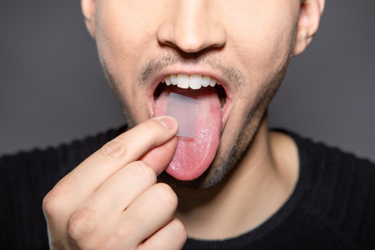
Though methotrexate is the most effective therapeutic against primary central nervous system (CNS) lymphoma, it can cause toxicity issues at therapeutic concentrations. Aditi Suchitkumar Satoskar and her research team at Mercer University sought to look for alternatives, investigating a noninvasive approach that combines methotrexate-loaded bovine serum albumin nanoparticles, an RVG-derived brain-targeting peptide, and a 3D-printed buccal film. The team presented this research in the poster presentations at 2026 PharmSci 360. I had a chance to speak with Satoskar in advance of the show to discuss the rationale behind the platform, the roles of microfluidic synthesis and design of experiments in its development, the challenges of scaling production, and the studies still needed to assess its potential for targeted drug delivery.
Why did you choose to investigate another delivery treatment for CNS Lymphoma?
We wanted to address the challenge of delivering methotrexate to the brain more efficiently, rather than replacing the existing treatment. Although high-dose methotrexate is a cornerstone of primary CNS lymphoma treatment, achieving adequate drug concentrations in the brain while minimizing systemic toxicity remains a challenge. Our approach combines RVG-conjugated, brain-targeted nanoparticles with a buccal film as a non-invasive delivery platform, to improve methotrexate delivery to the brain. However, further pharmacokinetic and efficacy studies are needed to determine whether these benefits can be achieved.
Did you experiment with options other than buccal films for delivery?
We chose buccal films because they offer a convenient, non-invasive delivery platform and can incorporate nanoparticles into a thin polymer matrix. We were particularly interested in the potential for buccal absorption, which may help bypass gastrointestinal degradation and hepatic first-pass metabolism. We have focused on developing and optimizing nanoparticle-loaded films by investigating different polymer compositions. Although other delivery systems are possible, we have not conducted a direct comparison with alternative routes in this study. Our aim was to establish a suitable formulation and evaluate its drug-release and delivery performance.
What benefits do nanoparticles provide for this drug delivery?
Nanoparticles came into play because we wanted to combine drug delivery and brain targeting in a single system. We used Bovine Serum Albumin (BSA) as the carrier for methotrexate because it is a protein-based material that can accommodate the drug and can be modified for targeted delivery.
We incorporated an RVG-derived peptide onto the nanoparticle surface to explore its potential to facilitate transport across the blood–brain barrier. The buccal film is used for the administration these nanoparticles, while they carry the drug and provide the targeting ligand.
The key advantage is that each component serves a different purpose. However, we still need further studies to confirm brain delivery, biodistribution, and therapeutic efficacy of our formulation.
Are there other ways to produce this drug other than microfluidic synthesis?
Yes, there are several methods we could use to prepare these nanoparticles, including batch desolvation, emulsification, and thermal gelation. In our study, we chose microfluidics to prepare the methotrexate-loaded BSA nanoparticles because it allows us to control the mixing conditions more precisely and optimize the formulation.
This can help improve reproducibility and achieve more consistent particle characteristics. Microfluidics also offers potential for scaling up production. So, while it is not the only available method, we believe it is a promising approach for developing a reproducible nanoparticle formulation.
Can you take us through the microfluidic synthesis?
We prepare the formulation in two stages. First, we use a microfluidic mixer to combine the required streams under controlled flow conditions, allowing methotrexate-loaded BSA nanoparticles to form. We then functionalize the nanoparticle surface with the RVG peptide to introduce the brain-targeting component and characterize the nanoparticles before incorporating them into the film.
In the second stage, we incorporate the nanoparticles into our film-forming polymer formulation and use 3D printing to prepare the buccal films. Finally, we characterize the finished films to evaluate their physicochemical properties and overall formulation quality.
Can you explain your approach to Design of Experiments Optimization?
We use DoE to understand how different formulation components work together and how they influence the quality of our buccal films. Rather than testing every possible combination, DoE allows us to study selected combinations of Kollidon VA64, Kollidon 90F, and PEG 2000 in a structured manner. We then use these experimental results to identify the formulation that best meets our desired film characteristics. The main advantage of DoE is that it helps us understand the relationship between formulation composition and film performance, making the optimization process more systematic, reliable and comparatively easier.
How do you get such a high yield rate?
Our high yield is likely due to the optimization of the nanoparticle preparation conditions and maintaining controlled mixing during microfluidic processing. These conditions help us achieve consistent nanoparticle formation, while the collection and processing steps also influence the final recovery.
However, yield and encapsulation efficiency are different. Yield reflects the amount of product recovered, whereas encapsulation efficiency tells us how much of the initial methotrexate is incorporated into the nanoparticles. We evaluate these as separate parameters to better understand the overall performance of our formulation.
How easy is it to produce the RVG-tagged MTX-BSA NPs. Do you anticipate any issues with scale up?
Our results demonstrate that we can successfully prepare RVG-tagged MTX–BSA nanoparticles at the laboratory scale. Microfluidics is particularly promising for scale-up because production capacity can be increased while maintaining controlled mixing conditions. With further process optimization, we aim to maintain consistent particle characteristics, drug loading, and RVG functionalization at larger scales which would serve as the major challenge. The next step would be to evaluate the reproducibility and stability of the nanoparticles when incorporated into the films, supporting the development of a scalable and reliable delivery platform.
How do you anticipate buccal films changing the treatment of CNS lymphoma?
We see buccal films as a potential way to make methotrexate delivery more convenient and less invasive. By combining buccal film administration with RVG-tagged nanoparticles, we aim to develop a platform that can deliver the drug through the oral mucosa while supporting targeted delivery to the brain once absorbed. If successful, this approach could offer an alternative route for drug administration and potentially improve the balance between therapeutic delivery and systemic exposure. However, further studies on mucosal absorption, brain distribution, and therapeutic efficacy are needed before we can determine its clinical potential.
Do you have plans to research more drugs loaded into nanofilms?
Yes, we see potential to explore this platform with other drugs in the future, particularly those that face challenges with conventional delivery. But currently, our focus is on fully evaluating the methotrexate formulation and establishing its stability, drug release, and delivery performance. Once we better understand how the platform performs, we can explore adapting it to other drugs, keeping in mind that each would require its own formulation optimization.
From Proof of Concept to Clinical Potential
The research remains at an early stage, but it illustrates how formulation science, targeted nanoparticles, and additive manufacturing could converge to address a persistent drug-delivery challenge. The next round of studies (examining stability, mucosal absorption, biodistribution, and therapeutic efficacy) will be critical in determining whether this buccal-film platform can move beyond proof of concept and, ultimately, offer a less invasive approach to delivering medicines for CNS lymphoma and other difficult-to-treat conditions.