
Rebuilding America's Pharmaceutical Backbone Through Small-Batch Manufacturing
By John Raech, Pinnaql
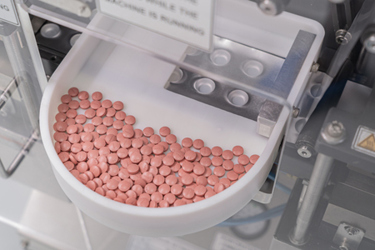
For decades, the pharmaceutical industry optimized for scale. Manufacturing moved offshore, production volumes increased, and global supply chains became longer and more complex. On paper, the model made sense. It reduced costs and expanded capacity.
But the pandemic exposed a hard truth: efficiency without resilience creates vulnerability.
When the United States struggled to access something as basic as N95 masks, it became clear how dependent we had become on overseas manufacturing. The same vulnerabilities exist across pharmaceutical supply chains today. Many critical active pharmaceutical ingredients (APIs), generic medicines, and small molecule drug products are still sourced internationally, leaving patients and providers exposed to geopolitical disruption, transportation delays, and supply instability.
Today, reshoring pharmaceutical manufacturing is no longer viewed simply as an economic initiative. It has become a strategic priority for improving supply chain resilience, reducing dependence on overseas production, and strengthening the nation's ability to reliably supply essential medicines. That realization is what ultimately drove our investment in modern domestic manufacturing capabilities.
After spending 18 years at Johnson & Johnson, I had the opportunity to see both the strengths and limitations of large-scale pharmaceutical operations. In 2021, we acquired a two-site facility with a vision to create something different: a modern manufacturing model designed around agility, resilience, and localized production.
The first phase focused on developing drug product and analytical capabilities. The second phase is even more important to me personally: restoring pharmaceutical manufacturing capabilities in the United States in a way that is practical, scalable, and sustainable.
This is not about recreating the manufacturing parks of the past. The future will look very different.
Why Small-Batch Manufacturing Matters
The pharmaceutical industry is evolving in ways that favor more agile manufacturing. Many small molecule products, including essential generics, specialty pharmaceuticals, and low-volume commercial products, no longer require massive production campaigns. Instead, manufacturers increasingly need flexible capacity that can economically produce smaller commercial volumes while maintaining quality, efficiency, and regulatory compliance.
In some cases, market demand for an off-patent or off-exclusivity drug may only require a few kilograms annually. The FDA itself continues to identify essential medications where additional domestic manufacturing capacity is needed because supply remains fragile. Many of these shortages involve mature small molecule drug products and generic medicines where limited manufacturing capacity and offshore production have increased supply chain risk.
Traditionally, the economics of small-volume manufacturing did not work well within large batch-based facilities. But advances in synthetic drug manufacturing, process automation, and continuous manufacturing are changing that equation. Today, it is possible to manufacture highly targeted production volumes with extraordinary efficiency. In some cases, what used to require large-scale infrastructure can now be completed in a matter of days or weeks within a highly compact footprint.
One example we often discuss internally is a product requiring approximately 4.5 kilograms annually. Using modern synthetic manufacturing approaches, that volume can be produced in a single week. That fundamentally changes how we should think about pharmaceutical infrastructure.
A New Manufacturing Model For The United States
For years, reshoring conversations centered around building enormous manufacturing campuses. While large facilities will always have a role, they are not the only answer. The future may depend more on distributed manufacturing networks made up of smaller highly advanced facilities strategically located across the country.
We are building our current model out in approximately 5,500-square-foot increments. That is a fraction of the size traditionally associated with pharmaceutical production, yet it is capable of supporting highly specialized small molecule manufacturing in a compliant and efficient environment.
The goal is not simply smaller buildings. The goal is smarter manufacturing.
Digital validation, automation, modern quality systems, and integrated data strategies allow facilities to operate with greater speed, flexibility, and consistency while maintaining strict regulatory compliance. These capabilities align closely with the broader digital transformation occurring across pharmaceutical manufacturing today.
What excites me most is the scalability of this model. There is no reason the United States could not support thousands of these facilities over time, each focused on essential medicines, generic pharmaceuticals, specialty small molecule products, or region-specific manufacturing needs.
That type of distributed infrastructure creates resilience in a way centralized manufacturing never fully can.
Regulatory Momentum Is Creating Opportunity
Regulators understand the urgency.
The FDA continues to emphasize supply chain resilience, domestic manufacturing capacity, and modernization initiatives that support advanced manufacturing technologies. Emerging technology programs are helping accelerate conversations around continuous manufacturing and digitally enabled operations.
At the same time, state governments are increasingly recognizing the economic and strategic importance of pharmaceutical manufacturing. Pennsylvania, for example, has shown strong support for advanced manufacturing initiatives and innovation-focused infrastructure investment.
This creates a rare alignment between industry need, regulatory interest, and public sector support.
The organizations willing to move early will help define the next generation of pharmaceutical manufacturing in the United States.
Execution Still Matters Most
Technology alone will not solve supply chain fragility.
Execution, compliance, and operational discipline remain critical. As manufacturing becomes more decentralized and digitally enabled, organizations must ensure that speed never comes at the expense of quality or patient safety. That requires experienced teams that understand both innovation and regulation. It requires the ability to integrate engineering, validation, automation, quality systems, and operational readiness into one cohesive strategy. The organizations that succeed will be those that can combine agility with discipline, building manufacturing environments that are not only efficient but also inspection-ready, scalable, and resilient under pressure.
The opportunity ahead is significant. We now have the tools, technologies, and operational models to rethink how pharmaceutical manufacturing can serve patients more effectively while strengthening domestic supply security at the same time.
Looking Ahead
Reshoring pharmaceutical manufacturing is not simply an economic conversation. It is a national resilience conversation and, ultimately, a patient care conversation.
The industry has an opportunity to rethink how medicines are produced, where they are produced, and how quickly we can respond when supply chains are disrupted. We do not need to rebuild the old model. We need to build a better one. Small-batch manufacturing, advanced processing technologies, and distributed production networks offer a path forward that is faster, more flexible, and more resilient than the systems we relied on in the past.
The future of pharmaceutical manufacturing will not be defined by the size of a facility alone. It will be defined by adaptability, speed, precision, and the ability to manufacture critical medicines closer to the patients who need them.
Over time, this approach has the potential to fundamentally reshape domestic drug manufacturing in the United States. Instead of relying on a small number of centralized production hubs, we can create a modern network of agile manufacturing facilities capable of supporting essential medicines, generic pharmaceuticals, specialty small molecule products, and other critical drug products with greater responsiveness and reliability.
That shift will not happen overnight. But the foundation is already being built.
The organizations investing in smarter, distributed manufacturing today are helping create a future where the United States is not only more self-sufficient but also better positioned to innovate, respond, and lead in the next era of pharmaceutical manufacturing.
About The Author:
 John P. Raech is Founder and Partner at Pinnaql. He has more than 30 years in the consumer, OTC, and pharmaceutical industries. He has held positions of increasing responsibility in R&D, operations, change management, and project management. He has spent years developing and refining manufacturing processes, both manual and automated, and has led or played a key role in the successful development and commercialization of many consumer and OTC products and processes. Raech’s knowledge of manufacturing technologies and equipment, combined with his thorough understanding of the product development process and regulatory compliance, has served as the cornerstone for his founding of Pharma Resource Group, Inc. Raech holds a BS in business and has successfully completed a significant amount of the coursework toward an Executive MBA.