
The Effect Of Tablet Porosity On Dissolution
Porosity is a characteristic that influences many of the critical quality attributes of finished pharmaceutical products. Porosity can help predict deformation properties during compression, pharmacokinetic behavior within the body, shelf life, moisture penetration, and bioavailability. In theory, porosity measurements could also be a predictor for dissolution rates. The more porous a product, the more water or gastric fluid should be able to infiltrate the tablet and dissolve the tablet, allowing the API to be released. Dissolution rate is a key attribute for immediate release drugs, so understanding how the porosity of each substance affects the end dissolution rate is very useful for creating an immediate release drug formulation. Porosity and surface area of a substance can be measured by gas adsorption analysis usually by the Brunauer, Emmett and Teller (BET) technique or mercury intrusion porosimetry.
Excipients like sodium starch glycolate, a disintegrant, can assist in the dissolution of an API. Excipients are often processed and changed throughout manufacturing so initial porosity of excipients may not correlate with final porosity and dissolution rates. Initial porosity of excipients may change through compression or other manufacturing processes. The porosity of an excipient is still important and it has been shown that variations in porosity of excipients can influence end product performance. One way in which excipient porosity can affect the final product performance is in blend uniformity. To ensure the appropriate amount of an API is in each tablet, an API can be first mixed with a very porous excipient such as Polyvinylpyrrolidone (PVP) to create a uniform blend using a geometric dilution and then combined with the other excipients. This will ensure an appropriate amount and distribution of API in each tablet.
The porosity of product intermediates such as roller compacted ribbons has actually been shown to affect the final product dissolution rate. In a study conducted by CoreRx, Inc. and Micromeritics Instrument Corp, roller compacted ribbons were created with different process parameters, resulting in different ribbon porosities. The final products formed using these roller compacted ribbons showed different dissolution rates. The product intermediates that had greater porosity showed faster dissolution rates as final products than those with less porosity. Knowing this, product intermediate porosity can be adjusted through changing process parameters to increase or decrease a final product dissolution rate. Intermediate porosity may even be able to increase the overall formulation solubility of formulations with a poorly soluble API. This parameter may be identified as a Critical Quality Attribute (CQA) in a company’s Quality by Design (QbD) initiative. For more information on roller compaction ribbons and the effects on final production dissolution view the Real-Time Density Measurement Video (http://www.micromeritics.com/Library/Archived-Webinars/Roller-Compaction-in-Pharm-Development/Uses-of-Roller-Compaction-in-Pharmaceutical-Developement.aspx).
Final tablet porosity probably indicates the most about dissolution rate. The more porous a tablet, the more the dissolution medium can infiltrate and break down the tablet, releasing the API. When super disintegrants swell up, they make the dissolution processes. Porosity measurements can assess the extent to which liquids will penetrate tablets for dissolution assessment. Knowing the final tablet porosity may also help set coating formulation parameters for adequate film coating coverage in coating operations.
 Of course, dissolution rates do not depend exclusively on porosity. Other factors such as solubility, surface area, and particle size can also be indicators of dissolution rate. Through knowing porosity, surface area, and other key characteristics in combination with performing dissolution testing, formulation and process parameters may be adjusted to reach your optimal dissolution rate.
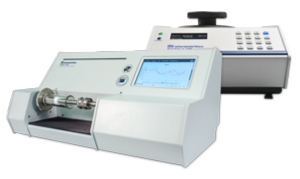
Knowing the porosity of a substance is a key to predicting the performance of a pharmaceutical product. Micromeritics offers a range of instruments that utilize BET technique and mercury intrusion porosimetry such as the ASAP 2020 and Autopore V Series to give you the most accurate data with ease. Find the ideal porosity instrument for your application at Micromeritics with our Product Selector Tool. (http://www.micromeritics. com/Product-Showcase/Product-Selector-Tool/Porosity.aspx)