
The Rise Of The Autonomous Pharma Plant

By Katie Anderson, Chief Editor, Pharmaceutical Online

What does a production facility of the future look like? That’s exactly what Bayer management asked its team before planning began for the world’s most modern pharmaceutical facility, Solida 1. Was it possible to construct a facility with end-to-end automation, continuous production, AI-enabled communication, modular design, process flexibility, and reduced carbon footprint—all while taking out the operator?
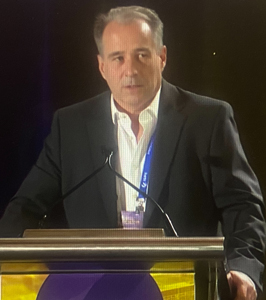
The answer was yes, but it took some out of the box thinking, according to the pharma technology systems lead Jurgen Wiedemann. At ISPE’s 2026 Facilities of the Future Conference, Wiedemann took the audience through the team’s journey, from concept to continuous manufacturing.
Biz Benefits of Modular Design
The module design reduced the investment by scaling-out and copy/pasting designs in addition to mitigating the future pipeline. The separation of modules also reduced design risks. Alterations could be made by continuing production in remaining modules and operational risks were reduced.
Designing for Continuous Production
Rather than having each batch in an individual room, the new design needed a more open concept. Solida-1 was designed as a ballroom layout. “You waste nearly 25% of the space with doors and walls. They disrupt the automation process, so we only put them in if they have a benefit,” explained Wiedemann.
Inside the ballroom was a workstation concept, where the flow is horizontal. “You can manipulate the horizontal flow by moving things in and out. Therefore, it is flexible,” added Wiedemann. The steps of that flow can, therefore, be tailored to what you need based on the medicine you are producing. The process is fully automated, and a lifting column moves components into place rather than an operator. To switch from a package unit to a process unit, the team had to develop its own Production Control Flow (PFC) system that supplies the units with the materials and the containers needed in the process.
Ensuring that this automated system works properly, communication is needed between the MES, the PFC and the Packaging Unit. The MES dictates the overall process, and the PFC brings the Packaging Units what they need to carry it out. Widemann continued that they had to spend a bit more to ensure communication between the units. “Suppliers have a tendency to build in a cheaper XPS. It is better to go more expensive, so the machines communicate with each other,” he noted.
But the design novelty doesn’t end at the ballroom workstation. The modular design also applies to the overall facility and its house in a house layout. The infrastructure and the production equipment are housed in separate modules within the main facility. In addition, there is vertical separation between the utilities. To figure out what utilities they needed, the team went through detailed process models.
Regulatory Approval and Future Plans
The facility’s design challenged pharmaceutical production norms, and its team was worried how the regulatory authorities in Germany would respond. “We were afraid how the regulatory authorities would look at such a project. They are used to one batch in one room. How would they react to such a freak thing,” joked Wiedemann.
But proactivity paid off for the team. They decided to involve the regulatory authorities early, and they were pleased to find out that the authorities approved of the project.
The design of Solida 1 is not complete, according to Wiedemann. The future holds plans for three extensions, and the modularity of its design makes these extensions not only feasible but fairly straightforward.