
6 Things You Need to Know from Life Sciences Future SW

By Katie Anderson, Chief Editor, Pharmaceutical Online
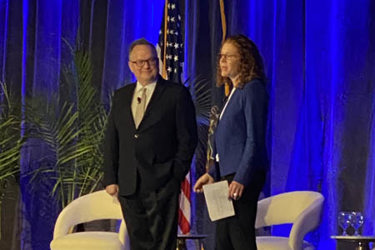
For momentum in pharmaceutical research and development, consider taking a second look at Western Pennsylvania, where capital is flowing in, innovation is picking up and growth is expected. I had the pleasure of attending my first Life Sciences Future SW meeting on Apr. 9, 2026, in Pittsburgh, where industry gathered to learn, network, and explore emerging technologies. If you want to know exactly what is happening in Western PA, stay with me.
1. You Are Going to Get Punched in the Nose.
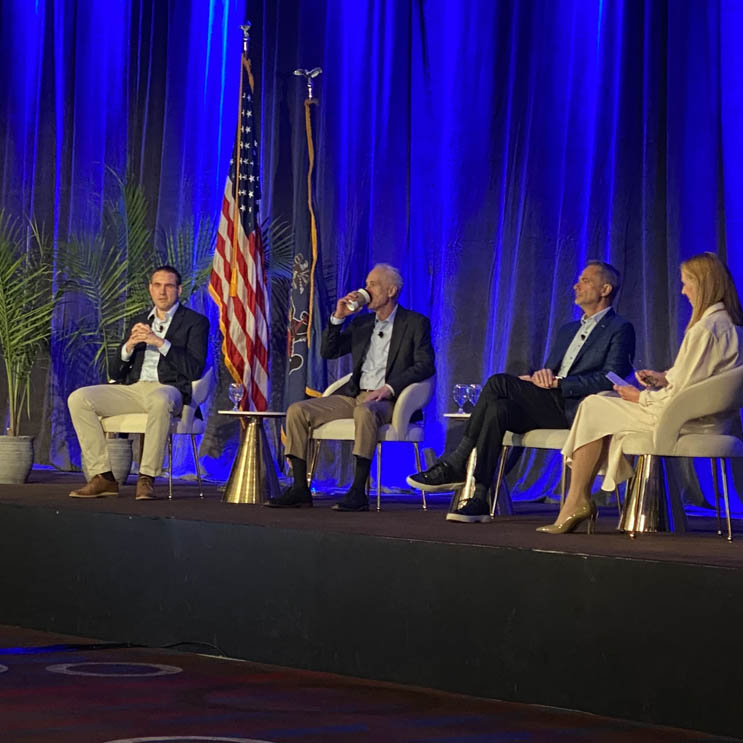
In the morning’s kickoff panel, Michael Bozik, M.D., (Biohaven) Scott Morley (University of Pittsburgh), and Nick Pachuda (Peptilogics) gathered together in a panel moderated by Lisa Witte (Thermo Fisher Scientific) to discuss achieving success in life sciences in an uncertain market.
Two themes were apparent in the questions and answers that flowed among the panel: perseverance and focus. Pachuda noted how hard 2025 was for startups with a great amount of unpredictability. “Perseverance and conviction kept us going. We kept going because we knew our product had legs,” he added.
Dr. Bozik continued that you must focus on your core, where you have your biggest strength. Occasionally, this means you have to do less than you could, according to Dr. Bozik, to apply the focus to where it needs to be.
“Don’t be overly reactive to the moment,” added Morley. He continued that there is a lot of innovation happening currently, but to continue to take those learnings, evolve and stay the course.
In perhaps my favorite moment of the panel, Dr. Bozik added that “You are going to get punched in the nose,” meaning challenges will arise to knock you down. To that he added, “Sometimes you are going to have to dig deeper and find a different path.”
2. The Company You Keep Is Important.
In the opening panel, both Dr. Bozik and Pachuda emphasized the importance of the people that surround you. Dr. Bozik explained, “Focus on the importance of relationships. Explore relationships where there is a win/win.”
Pachuda continued to surround yourself with people who have been there. He added that this will help you weather the storm.
3. Personalized Medicine Made Affordable
In the second panel of the day, Chris Murphy (ElevateBio), Nathan Netravali, Ph.D.. (Smith + Nephew) and Anantha Shekhar, M.D., Ph.D. (University of Pittsburgh School of Medicine) gathered to discuss personalized medicine.
Murphy emphasized that the industry needs to get away from our traditional method of operations. He furthered that AI needs to be used in assessment to increase the success rate of manufacturing these medicines. Capacity also needs to be optimized, and it comes down to cost. “We need to industrialize these medicines. We need to drop these costs,” he added.
Disruptive technology is coming from Pittsburgh. In the BioForge facility, researchers are synthetically making mRNA. This will make cell therapy faster and cheaper.
Dr. Shekhar noted the huge biomedical research capacity at the University of Pittsburgh. He added that genetic testing has almost become a point of care service. According to Dr. Shekhar, AI will soon make it possible to have all our health information we need on our phones to manage our care.
4. Personal Experience Leads to Great Discovery
There are a number of ways new medicines are discovered, but for Undaunted Bio’s UDB 412, the discovery is rooted in personal experience. The company’s co-founder and chief medical officer, Ernest Manders, M.D., suffered from trigeminal neuralgia (TN) as a result of lyme disease. The pain he endured was debilitating, and the medicine used to treat it was not well tolerated, according to his son and co-founder Christian.
Dr. Manders remembered a successful off-label treatment he had taken for the pain of post-herpetic neuralgia, trimeprizine. Though an antihistamine in traditional use, trimeprizine was successful in treating his TN. The company began to explore repurposing the drug for TN treatment, and UDB 412 was put into the pipeline. The delivery of the drug will be through an oral thin film, for rapid dissolution and enhanced bioavailability.

5. End The Stigma on Clinical Trials
I don’t often attend presentations on clinical trials, but I was intrigued by a clinical trial panel featuring Nicole Ansani (UPMC), Stacy Hurt (Parexel), Lara Luciano (GSK), Chelsea Osterman, M.D., (Tempus AI) and moderated by Teresa Whalen (Cytogents).
“We need to change public perception of clinical trails,” noted Hurt, adding that many patients will react with, “You mean, like a Guinea pig?” The answer? Education, health literacy and patient navigation are the key to ending the stigma surrounding clinical trails, according to Hurt.
Dr. Osterman added that nurse navigators are the perfect individuals to facilitate these steps to a better understanding of clinical trials.
Ansani’s team did a study to evaluate women in clinical trials and found out that women are more likely to enroll in a clinical trial if it is recommended by their medical professional. Whalen echoed that it is a matter of trust. To help establish that trust, Dr. Osterman added that there are videos of mock patient convos that have been created to frame the side effect profile of a drug, and these videos can be used by medical professionals to prepare for these conversations and increase trust.
6. Cancer Innovation Continues
Though I didn’t make it to as many entrepreneur presentations as I would have liked, I was able to attend two that showcased advancements being made in oncology.
For pancreatic cancer, Pittsburgh-based Duo Oncology has developed DUO-207, a nanosized combination of gemcitabine and paclitaxel to penetrate the tumor more effectively, increase the time the drug stays on the tumor and reduce administration time/toxicity.
Have you heard of HiDARs? High Drug Antibody Ratios (HiDARs) are ADCs developed by Myris Therapeutics that utilize polymer technology to deliver 50-300 targeted payloads rather than the 2-8 delivered by ADCs. According to Tonia Simakova who presented the technology at the event, HiDARS “have the specificity of an antibody with the cytotoxicity of a small molecule drug.” The company is focused on treating solid tumors with the technology, including drugs for lung, breast and colorectal cancer.
A Bright Future For Western PA
In opening remarks for Life Sciences Future SW, Megan Shaw, president and CEO of Pittsburgh Life Science Alliance, highlighted that capital is coming into the region, particularly in life sciences. In a later panel, Morley matched this with the record number of invention disclosures he has seen at The University of Pittsburgh. Indeed, money is coming into Western PA, innovation is happening, and the future looks bright.