

ABOUT TCP ANALYTICAL
TCP Analytical is a leading provider of analytical, life science, pharmaceutical, biotechnology, and laboratory solutions serving customers across research, development, manufacturing, quality control, and regulated production environments. Through its portfolio of specialized companies and brands, TCP Analytical delivers a comprehensive range of chemicals, reagents, sterile solutions, peptides, filtration products, laboratory consumables, contract manufacturing services, and custom scientific solutions.
The organization supports a diverse customer base including pharmaceutical manufacturers, biotechnology companies, academic institutions, government laboratories, environmental testing facilities, healthcare organizations, and industrial manufacturers. With expertise spanning analytical chemistry, bioprocessing, cell and gene therapy, peptide synthesis, GMP manufacturing, and laboratory operations, TCP Analytical provides innovative products and technical expertise that help accelerate scientific discovery and improve operational efficiency.
Committed to quality, regulatory compliance, customer service, and continuous innovation, TCP Analytical partners with organizations throughout the product lifecycle to deliver reliable solutions that meet the highest industry standards.
ALCONOX
-

Enhance pharmaceutical cleaning by aligning chemistry, process design, and monitoring to remove complex residues, reduce contamination risk, and ensure consistent, compliant performance.
-

Standardize compliant cleaning by integrating risk-based validation, effective residue detection, and science-based limits to reduce cross-contamination and protect product quality.
-

Optimize critical cleaning processes by implementing precise mixing procedures and utilizing diverse testing methods to monitor bath life, prevent corrosion, and enable reliable surface cleanliness.
-

View the basics of cleaning validation and discuss the support services you should seek from your critical cleaning products supplier to optimize your cleaning validation process.
-

Enforce reliable lab results by improving washer performance, detergent selection, and rinsing to prevent residues, cross-contamination, and spotting—supporting reproducibility and compliance.
-

A low-foaming, high-emulsification cleaning approach that removes tough residues, supports automated processes, ensures consistent rinsing, and meets strict validation needs across complex equipment.
-

Riverarch Equity Partners (“Riverarch”) and other investors, including Audax Strategic Capital, The Hillman Company, Lacy Diversified, and PPM America, together with their portfolio company TCP Analytical are pleased to announce the acquisition of Alconox, LLC (“Alconox” or the “Company”), a leading provider of branded laboratory cleaning solutions.
-

Alconox is pleased to announce that we have extended the shelf life of our critical cleaning detergents from 2 years (24 months) to 3.5 years (42 months). This significant improvement in shelf life is based on extensive stability testing, and our goal of continuous improvement. Thus ensuring the continued reliability and performance of our detergents throughout this extended period.
-

Learn how thorough cleaning and process optimization in pharma manufacturing prevent cross-contamination, ensure product integrity, and enhance efficiency while also improving compliance and reducing costs.
-
The Cleaning Validation Summit 2025, hosted by PharmaEd Resources on March 10-11 in beautiful La Jolla, CA, will bring together top industry experts to discuss the latest innovations and regulatory insights in pharmaceutical cleaning validation.
-

Process optimization is key to achieving effective pharmaceutical and cosmetic critical cleaning. Learn how manufacturers can improve cleaning efficiency and ensure product safety.
-

Gain insight into the most recent upgrades to Alconox's powder detergent packaging and the company's focus on continuous improvement from the Vice President of Strategy, Michael Moussourakis.
-

How can I clean residual hormone residue from our process lines and tanks?
-

Learn about an effective cleaning solution that removes DNA from laboratory equipment and materials without the need for bleach.
-

It is important to have clean laboratory equipment, as any “leftover” proteins could contaminate your next experiment. Learn about three of the best methods for cleaning proteins, RNA, and DNA.
-

Cleanliness can be detected to varying degrees or levels. Learn about methods of detecting and measuring cleanliness in relation to soil quantities.
-

Explore aqueous detergent selection criteria as it fits into three broad categories: function and efficacy, health and safety, and environmental.
-

Examine the steps of cleaning validation for both low-volume and high-volume manufacturers and the important role these studies play.
-

Testing and selecting an aqueous cleaning system involves a seven-step process. In this chapter of The Aqueous Cleaning Handbook, follow along as we walk through those steps to help you optimize your cleaning process.
-

In this chapter of The Aqueous Cleaning Handbook, we explore the key definitions of aqueous cleaner ingredients, the types of aqueous cleaners, and the application of isoelectric points to cleaning.
-

This chapter of The Aqueous Cleaning Handbook explains what an aqueous cleaner is, what it contains, and how it can improve your cleaning process.
-

This handbook is intended to assist laboratory and manufacturing plant scientists and engineers in accurately selecting and maximizing the performance of aqueous cleaners and systems.
-

What does the BATH-O-CARD acronym represent, and how can it help you during your aqueous cleaning process?
-

Here, we focus on the critical cleaning of hard surfaces utilized in 3D printing processes across industries, such as extruded plastics, photosensitive substrates, metals, and metal alloys.
-

Learn what combinations are most effective when cleaning RNA contamination, and review important details regarding interfering residues.
-
For over 75 years, Alconox has been the recognized leader in detergents, used extensively in the laboratory, pharmaceutical, biotech, medical device, healthcare, electronics, solar, food, nuclear, optics, cannabis and cosmetics industries.
-

Explore general cleaning concepts, important sanitary surface considerations, cleaning guidelines for cannabis manufacturers, medical device re-processing and cleaning applications, and more.
-

Explore detergent selection and chemistry, sanitary surface considerations for COVID-19, cleaning strategies for cannabis manufacturing, and solutions for challenging residues in consumer products and cosmetics.
-

All Alconox Inc. detergents are Class I Medical Devices and listed as FDA-registered detergents. The list of the detergents is found on the FDA website with FDA Registration number 2410887. Alconox Inc. is also proud to be ISO9001:2015 and ISO13485:2016 Certified.
-

Warm temperatures can denature some hormones and proteins, causing cleaning problems. Gain insight on how temperature can effect enzymatic and emulsifying activity in cleaning mechanisms.
-

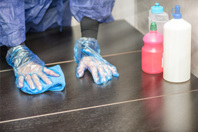
If you are looking to manually clean coveralls, bunny suits, bouffants, and the like, the Alconox detergent you have in house will be great. In a more ideal circumstance, we would go with what is essentially Alconox powder enhanced with protein enzymes. This truly gives thorough removal/cleaning of biological, proteinaceous, viral, and microbial residue. This is Tergazyme® Enzyme-Active Powdered Detergent – see our Tergazyme detergent video. Both detergents, the Alconox and Tergazyme powder, do not contain traditional “laundry” detergent attributes: florescent whitening agents, softeners and fragrances. They both contain excellent dispersants, emulsifiers and wetting agents that can enhance cleaning significantly. So they won’t “smell” clean, they just will be clean. In fact, critically clean.
-

Per Center for Disease Control (CDC) guidelines for cleaning and disinfecting viruses and other pathogens, any form of disinfection necessarily follows cleaning. The process of cleaning will remove any residues that might shield any virus or pathogen from the disinfection step that comes next. Disinfection, following thorough cleaning and rinsing, can be done with bleach solutions, 70% alcohol solutions, or other products with EPA-approved emerging viral pathogens claims. As outlined by CDC, bleach solutions should reside on surface for at least one minute and can be made as follows:
- 5 tablespoons (1/3rd cup) bleach per gallon of water, or
- 4 teaspoons bleach per quart of water
An excellent cleaning and wiping solution can be made with 0.5% (0.75- 1.5 oz/gal or 5 mL/L) Alconox® Powdered Precision Cleaner or Liquinox® Critical Cleaning Liquid Detergent, depending on preference for powder or liquid concentrate, respectively. Following which, per the CDC guidelines, wipe with the above bleach solution or other disinfectant solution. Allow wiped-down surfaces to sit for several minutes before rinsing to complete the disinfection.
-

A great deal is known about how pH affects aqueous critical cleaning. The first step is for you to identify the residue that needs to be removed and then determine the optimal pH range that will remove it.














LIFECYCLE BIOTECHNOLOGIES
-

Maintain cell integrity and reliable results with ready-to-use, preservative-free solutions designed to prevent contamination and support consistent fluid quality in sensitive workflows.
-

Ensure reliable, reproducible results in demanding laboratory workflows with ultra-pure water. Tight impurity control and consistent standards minimize contamination risks in sensitive applications.
-

Take control of your water quality strategy and elevate reliability across operations — discover how optimized high-purity water solutions can strengthen both compliance and efficiency today.
-
")
Achieve accurate, reproducible results in PCR and sensitive molecular workflows with high-purity, enzyme-free water that eliminates contaminants for consistent laboratory performance.
-

Streamline laboratory and production workflows with ready-to-use sterile reagents. Eliminate prep time, reduce variability, and improve operational consistency with reliable, efficient packaging.
-

Support accurate immunohematology testing and workflow reliability with high-quality saline solutions. Advanced formulation and packaging minimize contamination risks for consistent lab performance.




BARKER PHARMA
-

Streamline workflows with reliable results with ready-to-use chemical solutions. Custom formulations and flexible packaging save preparation time in complex lab applications.
-

Read the full brochure to better understand how high-purity reagent and electronic chemicals can support your operational and product development goals.
-

Reliable manufacturing relies on strong quality systems, adaptive production, and tailored solutions.


CRITICAL PROCESS FILTRATION
-

Unfiltered air exchange in water tanks can introduce contaminants. Tank vent filtration helps limit bacterial ingress, protect system integrity, and maintain consistent water quality.
-

Air and gas filtration are essential for sterile pharma systems. Tank vent and process gas filters help prevent contamination, protect quality, and ensure reliable, efficient operations.
-

Sterile drug production relies on both prevention and remediation of contamination. A multi-stage filtration strategy reduces microbial load, protects critical filters from fouling, and ensures consistent product quality, process efficiency, and patient safety.
-

A multi-stage filtration approach reduces microbial load, protects critical filters, and helps ensure consistent product quality, process reliability, and patient safety in biopharmaceutical manufacturing.
-

Sterile drug manufacturing requires preventing and removing contamination. Multi-stage filtration cuts microbial load, protects final filters, and supports quality, efficiency, and patient safety.
-

Layered microorganism removal prevents fouling, minimizes disruptions, and maintains product quality in demanding biopharma environments.
-

Layered filtration reduces particles and microbes at each stage, protecting filters, improving reliability, and ensuring consistent, high-quality output.
-

Particles in medical water systems can cut efficiency and damage components. Layered prefiltration controls contamination, protects equipment, and maintains consistent water quality.
-

Particles can form or enter during processing, affecting performance. Layered filtration — from early reduction to final polishing — protects operations and improves consistency.
-

Control contamination in sourced ingredients with layered filtration: particle removal, bioburden control, and tank protection improve reliability, reduce risk, and supports consistent product quality.
-

Ensure chemical product quality with effective final filtration that removes particles and contaminants, boosts efficiency, and meets strict purity requirements across demanding applications.
-

Refine media and buffer prep with filtration that removes particles, reduces bioburden, and safeguards sterility — protecting processes, preventing contamination, and consistent biopharma performance.
-

Maintain pharma water quality with filtration that removes particulates, controls bacteria, and protects system components— improving reliability, reducing risk, and ensuring consistent performance.
-

Enhance medical device reprocessing with multi-stage filtration that reduces bacteria and contaminants, limits recontamination risk, protects device integrity, and supports safer infection control.
-

Improve biopharma workflows with clarification and prefiltration that cut particulates and bioburden, protect downstream steps, and maintain protein product integrity.
-

Optimize particle removal with filtration strategies tailored to process conditions, boosting efficiency, protecting product quality, and reducing contamination risk in small molecule manufacturing.
-

Streamline sterile filtration with high-flow membranes and charge-based capture to remove bacteria and endotoxins, ensuring consistent purity, efficient processing, and reliable performance.
-

Uphold reliable gas and solvent filtration with hydrophobic membranes that resist moisture, support harsh chemistries, and maintain sterility for strong contamination control and consistent performance.
-

Achieve reliable gas and solvent filtration with hydrophobic membranes that resist moisture, support high flow, and maintain sterility for improved control and consistent performance.
-

Boost air and gas filtration with hydrophobic membranes that maintain sterility, support high flow rates, and reduce contamination risk for consistent performance in critical applications.
-

Achieve consistent sterile filtration with dual-layer membranes that balance retention and flow, reduce contamination risk, and deliver reliable performance in high-purity applications.
-

Strengthen single-use filtration with gamma-stable materials and high-capacity depth media to capture particulates, protect downstream steps, and maintain consistent performance.
-

Increase process efficiency using high-capacity depth filtration to remove contaminants, protect downstream filters, and extend filter life for more consistent results.
-

Boost sterile filtration performance with dual-layer membranes and charge-based capture for more effective contaminant removal and reliable results.
-

Optimize sterile filtration with chemically compatible membranes to ensure consistent retention, strong flow, and scalable performance for aqueous and solvent-based solutions in high-purity applications.
-

Use charge-based membranes to remove bacteria, endotoxins, and contaminants, ensuring reliable sterility, stronger process control, and consistent results.
-

For teams seeking to stabilize filtration performance and improve overall process efficiency, understanding how depth media enhances prefiltration can unlock measurable operational gains.
-

Elevate sterile filtration with a dual-layer membrane design that boosts flow, minimizes fouling, and preserves product quality for consistent, efficient performance.
-

Manage high particle loads with high-capacity, charge-based filtration to extend filter life, reduce fouling, and maintain consistent purity in demanding environments.
-

Improve sterile filtration with dual-layer membranes that reduce fouling, extend filter life, and ensure bacterial retention for efficient processing of sensitive liquids in regulated settings.
-

Enhance filtration with dual-layer, charge-based membranes that remove bacteria, endotoxins, and impurities, ensuring consistent sterility, efficiency, and high performance in regulated environments.
-

Preserve cartridge filter performance with effective pre-cleaning, controlled sanitization, and proper storage to prevent fouling, protect integrity, and maintain consistent operation.
-

Ensure reliable filtration by applying proper sterilization, cleaning, and handling with validated methods and compatible chemistries to prevent contamination and maintain consistent results.
















TCP ANALYTICAL
-

Streamline workflows with reliable results with ready-to-use chemical solutions. Custom formulations and flexible packaging save preparation time in complex lab applications.
-

High-purity amino acids for pharma demand tight process control, contamination prevention, and regulatory rigor to deliver consistency, protect downstream steps, and deliver reliable performance.
CONTACT INFORMATION
TCP Analytical
P.O. Box 788
Belmont, NC 28012
UNITED STATES