

PHARMACEUTICAL ONLINE RECENT WEBINARS
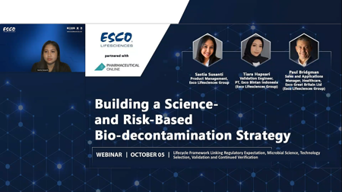
Building A Science- And Risk-Based Bio-Decontamination Strategy
Annex 1 has made bio-decontamination central to sterility assurance, with isolator and barrier cycles now expected to be designed, justified, and reviewed across their lifecycle.
Accelerating CHO Media Development: From Screening To AI Design
Discover how high-throughput screening, process analytics, and AI-guided modeling can help identify promising CHO media and feed combinations faster and support a more predictive approach.
Lessons In Building Connected Lab Operations Across Development And GMP
Building connected operations across development and GMP environments removes bottlenecks and ensures data integrity. Explore practical insights to scale and standardize your lab workflows.
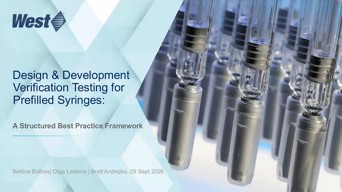
Design Verification Done Right: Smarter Strategies For Prefillable Syringes
A practical framework for planning and justifying design verification programs for prefillable syringes, covering test selection, acceptance criteria, and sample-size rationale within a risk-based approach.
Evaluating Modular CAR T Manufacturing Workflows
As CAR T manufacturing scales, balancing throughput, flexibility, and cell quality becomes increasingly complex. Explore strategies for improving process control, reducing bottlenecks, and more.
How Sodium Hydroxide CIP Affects Column Performance And Resin Lifetime
Sodium hydroxide CIP is essential for column hygiene, but cleaning decisions carry real tradeoffs for resin longevity and long-term chromatography performance.

Annex 1 In Practice: Turning CCS Into Cleanroom Design
Learn how embedding a contamination control strategy into early facility design mitigates risk, protects product quality, and ensures regulatory compliance.
Breaking The Concentration Barrier: New Long-Term Stability And PK Data For Subcutaneous Nanotrastuzuma
Nanoparticle engineering enabled a 440 mg/mL trastuzumab suspension that clears viscosity and stability barriers limiting conventional high-dose subcutaneous biologics formulations.
Building Oral Dosage Forms for Speed Today And Success Tomorrow
Move toward the clinic with confidence using integrated development strategies that support smarter decisions and more efficient product development.
Improving Clinical Translation For ADCs And Immuno-Oncology With Human-Relevant Tumor Models
When preclinical tumor models fail to reflect clinical reality, promising therapies pay the price. This webinar examines how advanced patient-derived organoids and 3D models improve predictive accuracy for ADC and immuno-oncology programs.
Scaling AAV Manufacturing To 1000 L: Strategies For Robust Production
Learn how integrated cell line, media, and process design can support consistent AAV production at larger volumes while maintaining productivity and quality, as well as reducing scale-up risk.
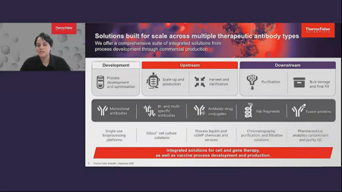
Driving Productivity Across The Antibody Manufacturing Workflow
Learn how integrated upstream and downstream strategies can reduce harvest bottlenecks, improve purification efficiency, and support scalable therapeutic antibody manufacturing.

The Next Generation Of USP <87> Testing
Upcoming USP <87> changes are driving risk-based in vitro testing. Learn how to prepare for new requirements, validation impacts, and continued compliance.

De-Risking Cell Culture Media Scale-Up For Late-Stage Manufacturing
Explore practical approaches to scaling cell culture media manufacturing, from supply assurance to evolving quality requirements, digital formulation tools, and strategies for controlling costs.
How To Achieve Stable, High-Output Stickpack Production
Explore practical ways to improve stickpack production through accurate dosing, reliable sealing, automated quality control, and efficient material handling while reducing complexity.
Beyond Breakdowns: Building A Culture Of Proactive Maintenance
Reactive maintenance can drive costly downtime, deviations, and reliability challenges. Learn how proactive maintenance strategies help improve equipment uptime and strengthen compliance.
Overcome Early Development Challenges Before They Impact Your Program
Poor manufacturability and immunogenicity can delay development. Learn how early developability assessments support IND readiness.
A CCS Is A Purpose-Built Machine, Not A Black Box: Understand The Workings
Learn how to transform your contamination control strategy into a dynamic operational framework that identifies risks and strengthens facility control.
AI-Readiness In A Regulated World: A Practical Playbook For Life Sciences
Uncover how life science teams build defensible governance, maintain human oversight, and manage regulatory risks when adopting advanced digital tools.
Driving Measurable Productivity Gains In CHO Cell Culture
Explore how targeted media supplementation can improve CHO cell culture outcomes, simplify process optimization, and increase productivity across monoclonal antibodies and emerging modalities.
Selecting A Test Method For Your Container System
Selecting CCIT requires matching methods like vacuum decay to product traits. Assess liquid conductivity, headspace, and lifecycle risks to build a compliant leak-detection strategy.

The Future Of Cell Culture Media Development
Predictive modeling and AI are helping reshape cell culture media. Learn how these approaches can focus experimental efforts, accelerate learning, and support more efficient development decisions.
From Data To Decisions: AI And Multi-Omics For Cell Culture Development
See how combining multi-omics data, AI-enabled analytics, and expertise can reveal the biological drivers of process performance, helping biologics developers identify optimization opportunities.
Built For Growth: Engineering Flexible And Scalable Bioprocessing Strategies
Standardizing bioprocess platforms and automation logic simplifies cross-site tech transfer and mitigates workforce constraints during program scale-up.
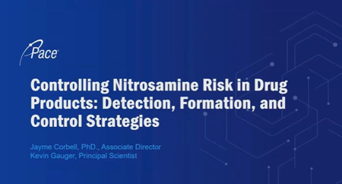
Controlling Nitrosamine Risk In Drug Products: Detection, Formation, And Control Strategies
Bioprocess control relies on clear insight into cell health. Automated tracking cuts risk, saves time, boosts yield, and helps scale up fast to ensure smooth, top quality batch production runs daily.

How Modular Workflows Are Redefining CAR T Manufacturing
Learn how flexible modular workflows can help manufacturers improve process adaptability, throughput, and control while preserving key CAR T quality attributes, including transduction efficiency.
Navigating AI Compliance In Life Sciences: FDA Policy Insights For AI Governance
Navigating life sciences AI compliance requires strong governance, expert human oversight, and transparent, low-risk deployment strategies.
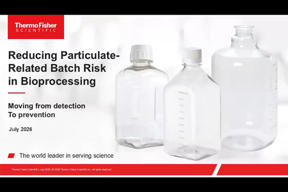
Reducing Particulate-Related Batch Risk In Bioprocessing
Increasing scrutiny around particulate contamination is pushing teams to act earlier. Understanding where risks originate and applying proactive strategies can ease challenges across production.