
Flexible Containment Solutions For Safe Handling Of HPAPI Chemical Synthesis
By Scott Patterson
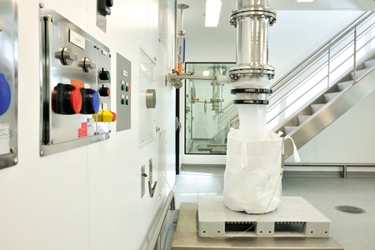
Myriad considerations, spanning the full complement of pharmaceutical manufacturing stakeholders, influence the containment solution decision-making process in pharmaceutical manufacturing. Plant managers are tasked with the efficient use of floor space and managing capital and consumable expenses. Process engineers worry about the system’s impact on the integrity of the formulation and cross-contamination mitigation. Project engineers wring their hands over user-friendliness and operational efficiency. Environmental health and safety professionals concern themselves with occupational exposure levels.
All of these concerns often overlap and roll up into one, simple requirement: that the containment solution works well for every stakeholder. With high potency active pharmaceutical ingredients (HPAPIs) come a heightened awareness of this requirement and the added burden of a higher level of regulatory oversight. Throw the demand for multi-use CMO facilities into the mix—with their increased cost of line change maintenance and inherent cross-contamination risks—and these considerations are further intensified.
Each of these stakeholders evaluates containment solutions through a slightly different lens, but they seek the same objectives: First, can I solve the problem for which I am responsible using the technologies available to me? And second, will the technology that works best for me satisfy the requirements of the other stakeholders in the decision-making process?
Satisfying all parties in the containment solution decision equation usually requires the demonstration of three critical outcomes:
- It works. It limits occupational exposure levels as advertised while facilitating a contained formulary environment.
- It’s affordable. Both the up-front investment and total cost of ownership for the life of the line are budget friendly.
- It’s usable. Line operators and operations managers can efficiently and confidently perform their duties.
Let’s dig into some details around how flexible containment options, manufactured using durable, proprietary, pharmaceutical-grade plastics, fare in the face of these critical requirements.
Does Flexible Containment Create Any Increased Risk?
There’s an occasional headwind against flexible containment adoption, driven by the dated mentality that it’s a temporary, stopgap solution with unproven reliability for day-in, day-out use. Some operators tend to consider why flexible containment won’t work—often focusing on potential points of failure—rather than why it will work in their environment. Tearing and puncture concerns top the list.
Specifically, two of the most common concerns are, what if a unit gets rammed by a forklift in our warehouse before we even take it out of the box, and what if the operator punctures the wall with a knife? The reality is that a forklift is going to pierce stainless steel or shatter glass at a much higher loss to the plant, and what are operators doing with knives in a pharmaceutical manufacturing environment, anyway?
Kidding aside, risk assessment is critical and only growing in importance as standards bodies increase their oversight of HPAPI containment projects, which we’re already seeing in Europe.
Kevin Rosenthal, business head of Drug Product Operations at CDMO Eurofins Alphora, describes risk as the hazard multiplied by the probability of exposure. “The hazard never changes, so to reduce risk we focus on reducing the probability of exposure,” he says. In single-product facilities, reducing the probability of exposure historically involved hard-walled isolators and cleanrooms with negative pressure and a host of other precautions. But, back in 2007, Rosenthal’s work with HPAPI compounds in multi-product facilities demanded he reevaluate his approach to reducing the probability of exposure. “We were in the Phase 1 and Phase 2 clinical trials space, operating a multi-product facility that would sometimes work with a drug just once before retooling for the next campaign,” he says. Hard-wall containment was considered the go-to solution for powder formulations back then, but it was cost-prohibitive for high-throughput CDMOs. That’s when he gave flexible containment solutions from ILC Dover a chance, and he found they passed muster through surrogate monitoring and risk analysis of occupational exposure limits.
“After surrogate monitoring and testing, we were able to demonstrate soft-wall containment strategies, coupled with facility design and procedures, were effective at controlling occupational exposure levels down to 0.03 micrograms per cubic meter,” says Rosenthal. That’s well below the manufacturer’s stated containment levels.
Proprietary materials, design, and construction processes ensure flexible containment components from ILC Dover work as advertised or better. The company is the only manufacturer of flexible containment solutions to employ a lap seam welding technique as opposed to a pinch seam weld. Its solutions, built with trade secret ArmorFlex film, are the only on the market constructed using 3D manufacturing processes. In his dozen years working with flexible containment, Rosenthal says he has never experienced a breach.
How Costly Are Flexible Containment Solutions And Their Consumables?
The initial capex costs associated with flexible containment solutions are less than their hard-wall counterparts by orders of magnitude. Generally speaking, flexible containment components can be installed at a quarter of the cost of comparable hard-wall installations, though Rosenthal estimates the flexible solutions he employs can be had for one-tenth the cost of their hard-wall counterparts. Still, TCO and ROI objections arise. The perception is that the cost of consumables constantly erodes at ROI over the long term.
It’s true, flexible containment solutions require consumables. By design, they are disposable. But what those consumable-cost misperceptions don’t account for is the significant ongoing savings flexible containment solutions facilitate.
A single hard-wall containment installation—in addition to large capital costs—brings with it significant operating costs associated with cleaning and validation. Beginning with the stainless steel IBC’s and then adding the needed ancillary equipment including high containment split butterfly valves, precision lifter, and a CIP/wash station, the total CapEx cost for a fleet of 5 IBC’s will easily exceed $400,000. The all-in cost to implement the DoverPac FIBC technology is less than $50,000. A similar cost comparison exists when looking at isolator systems. The hard wall versions are not always feasible for some operations, but in an example containing a micronizer, the hard wall investment is greater than $500,000. A negative pressure automated flexible isolator, on the other hand, will typically cost less than $100,000. In general, flexible systems will have a CapEx of 25 percent or less vs. the equivalent hard wall type.
While the CapEx comparison can be very straightforward, the cost of ownership and potential risks associated with hard wall systems are more challenging to quantify. In flexible system environments, cost of ownership calculations are largely a simple summary of the consumables needed per batch. CMO’s have relied on this as part of their cost calculation when bidding campaigns. The hard wall systems, however, are a complicated calculation of maintenance, utilities, and the costs of cleaning and validation. One pharmaceutical company compared the energy costs of a single pass HEPA filtered downflow booth to that of a small isolator and found a cost savings from energy savings alone. Reduced cleaning requirements produced even more savings.
Finally, it’s hard to overestimate the value of floorspace in pharmaceutical manufacturing environments. Downflow booths and IBC’s consume a lot of that valuable floor space, thereby limiting capacity due to the storage of these assets when not in use.
While there are enough project- and installation-specific variables to make a hard-and-fast cost comparison unfeasible here, there is a third-party resource available for impartial analysis of biopharma manufacturing process costs. BioSolve software from BioPharm Services (www.biopharmservices.com) is helping leaders in the biopharma community reduce manufacturing costs of platform processes by assessing the impact of new technologies and process routes. Plugging in all of the variables of these costs is sure to justify the ongoing cost savings of flexible single use containment. Consider that the DoverPac, as just one example, is a $600 soft-wall containment device that displaces those expensive IBCs, can be disposed of, and eliminates cleaning costs. Or that flexible isolators are 70 percent less expensive and reduce the isolator surface area subject to cleaning and validation from some 20,000 square inches to just 4,000 square inches, creating a significant savings opportunity. From isolators to highly configurable cleanrooms, the investment in flexible containment solutions can be measured in fractions of the costs of traditional hard-wall solutions.
How Do Flexible Containment Systems Impact Operations And Operability?
The third critical consideration and common objection we hear is that containment is too operator-sensitive for flexible solutions. The misperceptions are that anything less than an uber-trained operator would fail to drive the performance typical of an operator in a hard-wall environment, and that flexible containment solutions are somehow operationally disruptive.
That perception stands in stark contrast to Rosenthal’s observation that hard-wall containment environments are inherently limiting. “If I’m going to make a tablet, I have multiple variables and a many different process options from one project to the next that could all get me to the tablet,” he says. “Hard-wall systems, which were initially driven by the single-product mentality in large pharma, would limit my approach options, especially in a clinical development setting.”
In fact, flexible containment solutions offer some inherent benefits to both the operator and operations in general. Personal protection equipment requirements, for instance, can sometimes be relaxed (within reason). This contributes to reductions in garment costs and training. Visibility is also improved compared to stainless and opaque surface materials.
SafeBridge Consulting Founder and co-Managing Director Allan Ader, Ph.D., DABT, concurs with the visibility benefit. “Flexible containment technologies have matured considerably since the 80’s and early 90’s,” he says, “and a great advantage of flexible is that it gets you closer to the where the dusts and aerosols are generated.”
The compact nature of the infrastructure itself allows flexible containment components to be ordered well in advance of the need for use and tidily stored on shelves, demanding considerably less space—and specifically, less incredibly valuable floor space—than traditional hard-wall components. The reduction in floor space dedicated to cleaning equipment drives further value on the production floor.
The proprietary materials used to construct modern flexible containment solutions are even engineered with operator usability in mind. Contact surfaces, for instance, exceed regulatory requirements for safety while optimizing handling for operators. But, for plant managers, operations teams, and project engineers, the “flexible” in flexible containment refers to more than the materials used in their construction. Modular flexible containment solutions enable near limitless configurability, and adjusting configurations on the fly is infinitely easier working with ArmorFlex than it is working with stainless steel- and/or glass-paneled walls and IBCs. Redundant global manufacturing facilities ensure the availability of all the components, all the time.
Further, flexible isolator technology eliminates the concept of the isolator as a fixed asset. Flexible isolators are easily compactable and portable, eliminating the need for a dedicated suite or other large area within a suite used solely for that function. “It takes a long time to engineer an isolator for purpose,” says Ader. “Flexible might allow you to do it in far less time, and with less initial investment,” he says. It also opens up floor space, one of the most underappreciated and valuable benefits of flexible containment technology.
Do Flexible Containment Solutions Satisfy Regulatory Requirements And Guidance?
Both the FDA and EU Good Manufacturing Practice guidelines offer directives on multiuse facilities, as does the International Society for Pharmaceutical Engineering’s (ISPE) Risk-Based Manufacture of Pharmaceutical Products (Risk-MaPP) document. These provide processors guidance for compliance with FDA and EMA guidelines for control of cross-contamination. Containment technology is a critical consideration in this guidance, which is poised to become more stringent with the growth of HPAPIs and, more specifically, the increase in cytotoxic oncological and antibody-drug conjugate production. Cross-contamination risks increase corollary to the potency of the active ingredient (the hazard in the aforementioned equation), lending to the concept that single-use and flexible, disposable technologies are a strategic approach to meeting regulatory requirements around exposure and cross-contamination.
Cross-contamination is particularly concerning for CDMOs, where line changes are rapid and common and cleaning and validation costs can skyrocket in hard-wall environments. Without proper procedures in place to mitigate the risk of cross-contamination, the contract manufacturing model becomes a cost-prohibitive, untenable proposition requiring dedicated facilities for each molecule. Single-use concepts, on the other hand, eliminate the retention potential over large percentages of the production line at a fraction of the cost.
And, while SafeBridge’s Ader acknowledges that the regulatory bodies aim to protect the patient, it’s the drug innovator’s and manufacturer’s job to protect its workers. “I urge all clients to verify that their containment solution works using quantitative measurement,” he says. “You can put a box around something potentially dangerous and call it good, but people interact with it. Test it using surrogates, initially, and with the API once it’s in place. If you’re a CMO doing work for big pharma, they’re going to require proof that you’re doing that work safely.”
Flexible containment, isolation, transfer, mixing, and handling technologies are challenging norms in the biopharmaceutical industry. They’re facilitating flexible operational configurability, regulatory compliance, speed from concept to production, and cost savings in HPAPI environments. To learn more about flexible containment from the company that invented it, visit www.ilcdover.com.
Bio: Scott Patterson is VP of commercial sales at ILC Dover, where he supports the company’s global pharmaceutical/biopharmaceutical flexible containment systems sales effort.