
Modulus Brings Home Top Award At 2026 FOYAs

By Katie Anderson, Chief Editor, Pharmaceutical Online
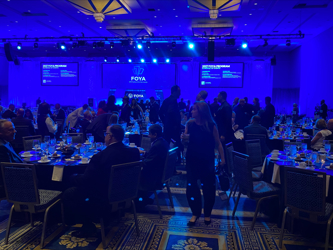
Black-tie style met manufacturing ingenuity at the 2026 Facility of the Year Awards (FOYA) Gala. Held during ISPE’s Annual Meeting and Expo, the celebration put the spotlight on the facilities pushing pharmaceutical manufacturing forward.
The ingenuity on display went well beyond the latest equipment. From technological innovation and operational excellence to sustainability and supply chain solutions, the FOYAs celebrated how facility design brings these pieces together to create a superior working environment.
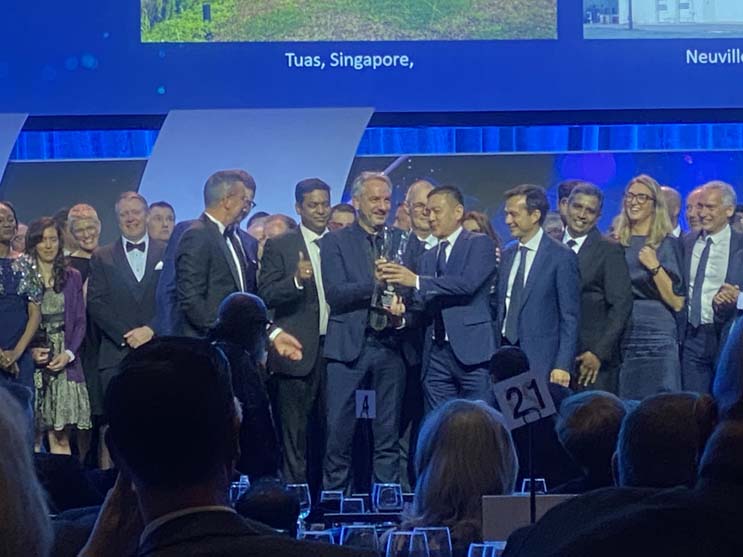
Overall Winner and Facility of the Future: Modulus, Sanofi
Sanofi’s twin Modulus facilities in Tuas, Singapore and Neuville-sur-Saône, France received two awards of the night. Taking the Overall Award, Modulus is designed for maximum production flexibility. Also bringing home the Facility of the Future Award, the sites employ movable, inflatable walls for adaptable production bay sizes so they can reconfigure to produce different medicines. The facilities also integrate advanced HVAC zoning, automated material handling, autonomous mobile robots, and a 3D digit twin platform for next-level sterility.
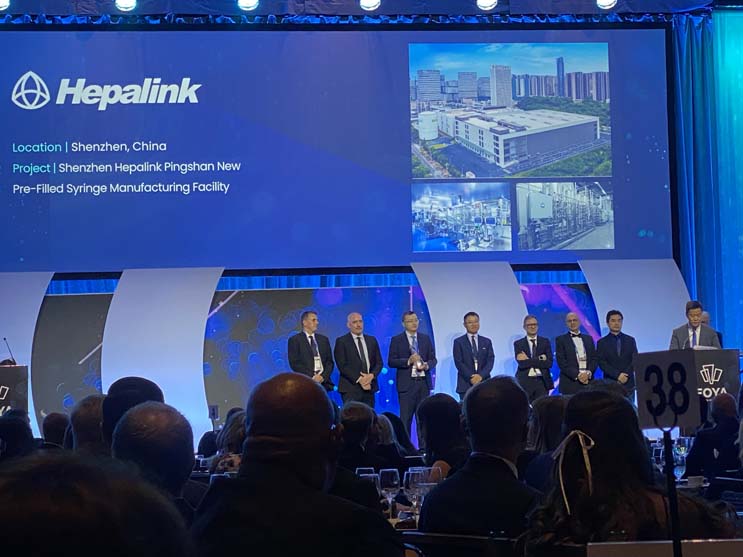
Novel Technology: Hepalink
Harnessing the power of 5G, Shenzhen Hepalink Pharmaceutical Group Co., Ltd. was awarded for Novel Technology for its Pingshan New Pre-filled Syringe Manufacturing Facility. The facility’s 5G ecosystem enables real-time equipment connectivity and zero-touch material handling with 5G-guided vehicles. It also features vaporized hydrogen peroxide transfer chambers and AI-powered inspection technology.
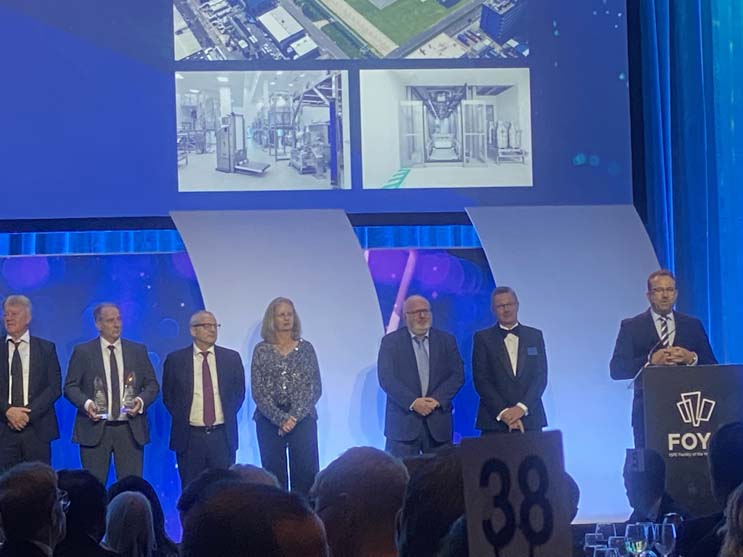
Pharma 4.0 and Operational Excellence: Solida-1, Bayer
Also being awarded two FOYAs that night was Bayer for SOLIDA-1. The facility operates with an automated modular formulation line, customized robotics and flow-control software for end-to-end autonomous operations. In addition to its technological advances, Solida-1 is kind to the environment, with energy-efficient processes, geothermal energy, and a bidirectional heat-pump system powered entirely by renewable electricity reducing annual CO₂ emissions by over 90%.
Project Execution: Eli Lilly and Company
Eli Lilly and Company’s Concord manufacturing site achieved an exceptional project delivery milestone, progressing from groundbreaking in June 2022 to FDA approval in December 2024 within just 30 months. This fully paperless, automated pharmaceutical campus leveraged Cold Dark Shell construction, modularization, proven design replication, and five coordinated workstreams to accelerate delivery while maintaining quality, compliance, and safety.
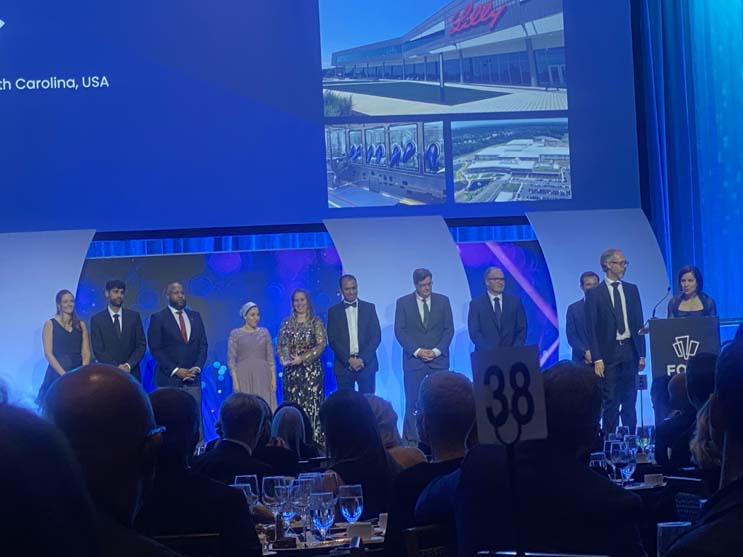
Unmet medical needs: Commercial Cell Therapy Facility, AstraZeneca
The Commercial Cell Therapy Facility in Rockville, Maryland is a biomanufacturing facility designed to support commercial-scale autologous T-cell therapy production and late-stage oncology clinical trials for up to 4,000 patients annually. To ensure uninterrupted manufacturing of patient-specific therapies, the facility was engineered for 100% operational uptime, eliminating facility-wide maintenance shutdowns and reducing the probability of total power loss to less than one event in 10,000 years through advanced resiliency strategies adapted from nuclear power, oil refining, and Tier IV data centers.
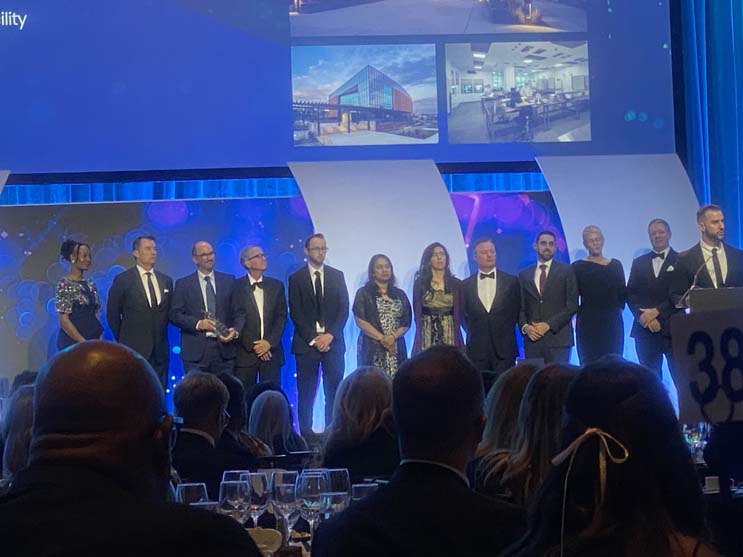
Sustainability: Project AHEAD, Takeda
Project AHEAD (Advanced Heat Pump Demonstrator) at Takeda’s Vienna manufacturing site, is a flagship sustainability initiative demonstrating that energy-intensive pharmaceutical manufacturing can be decarbonized at industrial scale without compromising safety, quality, reliability, or patient supply. The heat pump system uses 100% renewable electricity and natural refrigerants to produce high-pressure steam (11 bar, above 200°C). The project replaces fossil-fuel boilers and reduces CO₂ emissions by up to 80%, saving approximately 1,600 tons annually.
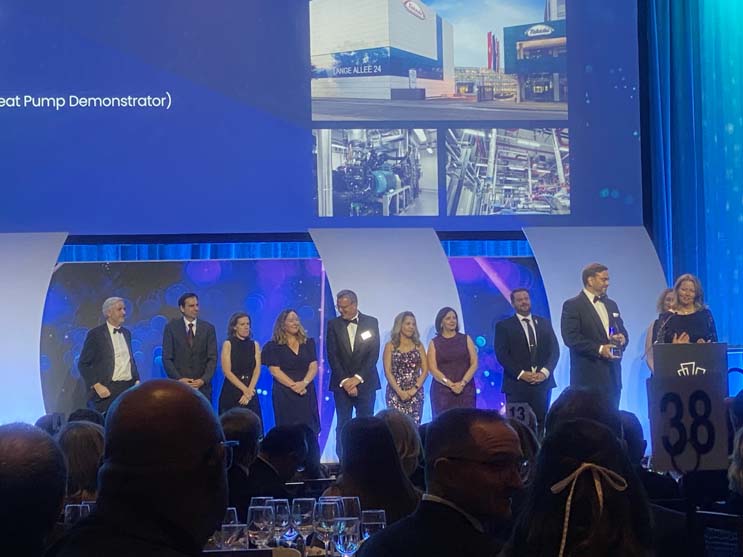
Supply Chain: BSP
The BSP facility addresses a major bottleneck in antibody-drug conjugate (ADC) manufacturing by consolidating drug substance (DS) conjugation and sterile drug product (DP) fill-finish within a single facility in Latina under one quality system. This integrated approach eliminates the fragmented, multi-site supply chain traditionally required for ADC production, reducing inter-site transfers, cold chain exposure, logistical dependencies, potential delays, and multi-vendor oversight.
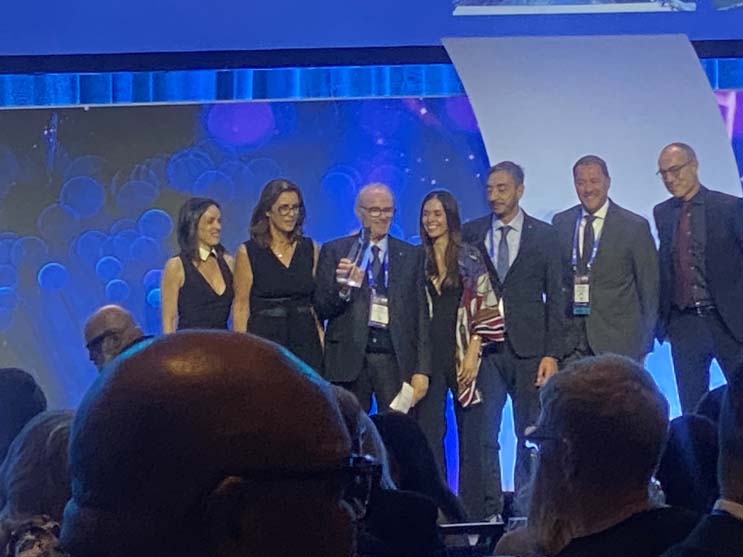
Honorable Mention: FJ3, Chugai
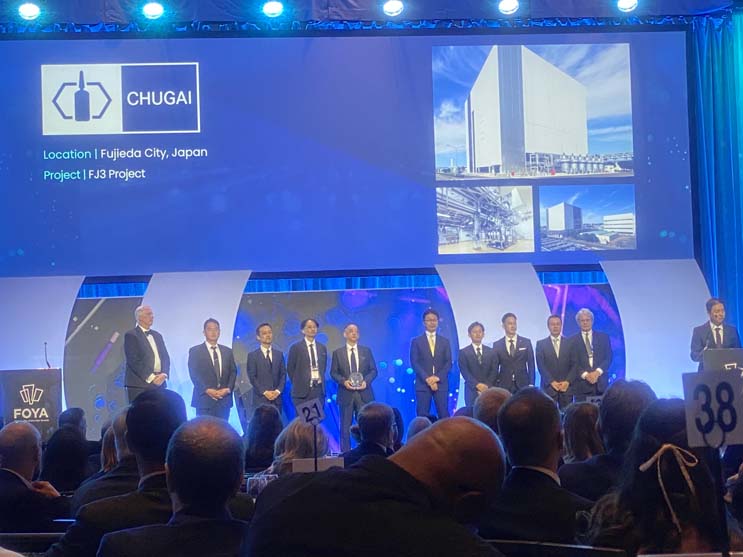
Chugai Pharma Manufacturing’s FJ3 Project at its Fujieda site, is a multiproduct facility that uniquely combines conventional small-molecule and next-generation cyclic peptide manufacturing within a single integrated equipment configuration, enabled by a proprietary Classical Solution Peptide Synthesis platform that overcomes traditional scale-up limitations.
Honorable Mention: Fujifilm
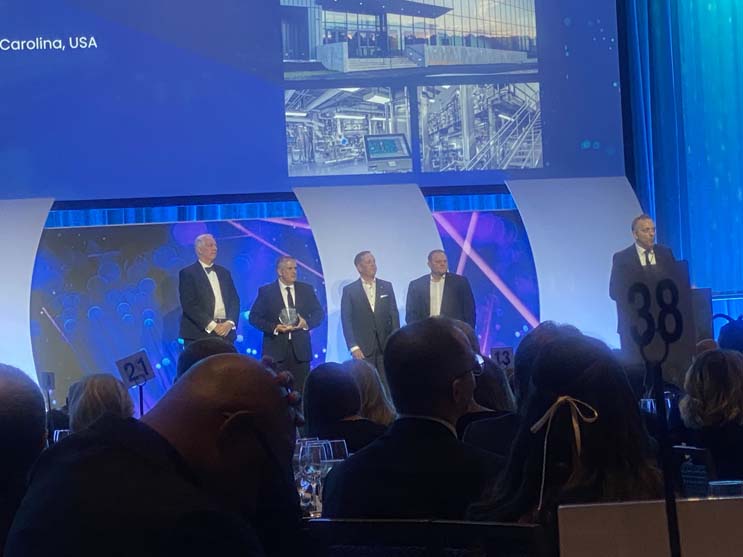
FUJIFILM Biotechnologies’ next-generation biologics manufacturing campus in Holly Springs, North Carolina uses the proprietary kojoX modular replication strategy, digital twins, and standardized designs to accelerate construction, reduce engineering effort, and minimize execution risks while maintaining quality and compliance.
The black ties may be back in the closet, but the ideas behind this year’s FOYA honorees have a longer shelf life. From flexible production spaces to streamlined supply chains, these projects show how thoughtful facility design can tackle some of pharmaceutical manufacturing’s toughest challenges. The deadline to submit for the 2027 FOYA awards is Dec. 7, 2026.