
FEATURED ARTICLES
-
 Is Your Environmental Monitoring Protocol Designed For Real-World Effectiveness?
Integrating environmental monitoring performance qualification early in pharmaceutical facility design prevents regulatory issues, contamination risks, and costly manufacturing startup delays.

WHITE PAPERS & CASE STUDIES
-
 Developing A Science- And Risk-Based Bio-Decontamination Control Strategy For Pharmaceutical Isolators
Modern contamination control links barrier design, bio-decontamination science, and risk-based validation to ensure reliable surface sterility.
-
 FM Approval Standard 4882
A fire in a pharmaceutical cleanroom can be contained, but for sterile manufacturers, smoke can turn a localized event into a far wider decontamination, requalification, and production-recovery challenge.
-
 8 Regulations Every Biotech & Pharma Quality Leader Must Know
Navigate essential biotech and pharma regulations safely. Learn how unifying global standards streamlines audits and accelerates development schedules.
-
 The Life Sciences Guide To AI In Quality & Compliance
Implement AI in quality workflows without regulatory risk. Learn how strong governance and clear validation keep you audit-ready for compliance.
-
 Improving Accuracy In Size Measurements Of Nanomedicine
Precise particle sizing is key to formulation success. Advanced analytics overcome DLS limitations, providing reliable data that reduces risk and supports long-term product stability.
-
 Digital CMC Maturity: Rethinking QTTP And Control Strategy
Digital CMC maturity depends on structured, science- and risk-based knowledge. Learn how connecting development, validation, regulatory, and lifecycle information can accelerate timelines.






PRODUCTS & SERVICES
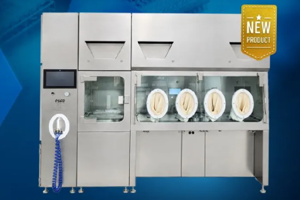
Advanced positive-pressure isolators with integrated nebulized decontamination protect sensitive cell processing and aseptic filling operations while ensuring strict cGMP compliance.
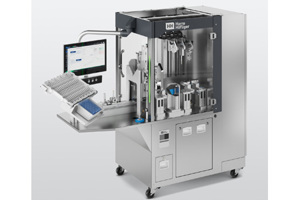
Scale medical device assembly with a compact system designed for clinical trials and small batches. Optimize parameters and simplify device changeovers.
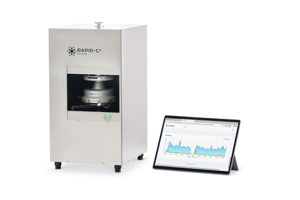
The Rapid-C+ System is a fully automated, advanced biofluorescent particle counter (BFPC) built for continuous real-time air monitoring, integrated with a C-Catch impaction unit for traditional active air monitoring.

Make stressful, last-minute audit prep a thing of the past. Continuous readiness across every framework, with evidence collected automatically.

CAPA and non-conformance management from detection to root cause to corrective action. Every step tracked, every outcome linked to your quality system

Cut the clutter, chaos, and compliance complications. Move to a modern compliance platform that your team will actually use.

Create, review, approve, and distribute controlled documents from one place. Version history is automatic. Every change is recorded in an immutable audit trail. Part of the Qualio compliance platform.

Drive effective change control that doesn't slow your business down. Every change is tracked, reviewed, and connected to the documents, training, and CAPAs it affects.