
FEATURED ARTICLES
-
 IT/OT Convergence Could Lighten Biopharma's Automation Burden
Integration lets frameworks talk to each other through middleware. Convergence brings them under the same architecture, which can can reduce costs and maintenance.

- Beyond The Plate Count: How To Build A Defensible Environmental Monitoring Trend Review
- What Europe's Draft Annex 22 Actually Asks Of Human Oversight Of AI
- A Site Bio-Decontamination Strategy: From Equipment Qualification To Process Ownership
- Is Manual RTP Integrity Verification Introducing Unnecessary Variability?
WHITE PAPERS & CASE STUDIES
-
 The Latest Updates For Sterile Filtration And Single-Use Assemblies
Revised sterile manufacturing rules shift attention from isolated compliance tasks to evidence that sterility holds across filtration, aseptic connections, single-use systems, and suppliers.
-
 Why Smarter Handling Can Save Your Production Line From Inefficiencies
Line performance in packaging is often decided between machines, not within them. Treating handling as a discipline rather than an afterthought changes how flow, protection, and growth are planned.
-
 And Vaporized Hydrogen Peroxide (VHP) For Isolator Decontamination") Comparing Nebulized Hydrogen Peroxide (NHP) And Vaporized Hydrogen Peroxide (VHP) For Isolator Decontamination
Compare Nebulized and Vaporized Hydrogen Peroxide efficacy, cycle times, and validation challenges inside pharmaceutical isolators to optimize your aseptic processing turnaround.
-
 Connected By Design: Laboratory Automation And Digital Transformation Strategy
Task-level automation delivers isolated gains, but the larger payoff in GxP laboratories comes from connecting instruments, systems, and data into workflows where samples move with minimal human handoffs.
-
 Eliminate Variability, Accelerate Results: Value Of Ready-To-Use Reagents
Pre-made solutions reduce operator variability, save bench time, and lower contamination risk by eliminating reagent preparation and reducing handling.
-
 Is Your Water Undermining Your Results?
Water is often chosen by availability rather than application. Defining it as a controlled process parameter targets a variability source that routinely escapes root cause analysis.




PRODUCTS & SERVICES
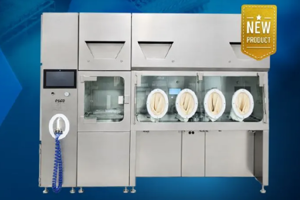
Advanced positive-pressure isolators with integrated nebulized decontamination protect sensitive cell processing and aseptic filling operations while ensuring strict cGMP compliance.
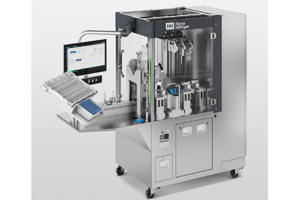
Scale medical device assembly with a compact system designed for clinical trials and small batches. Optimize parameters and simplify device changeovers.
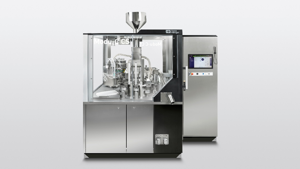
Scale oral solid dose production with a modular capsule filling system featuring rapid trolley changeovers, high-containment isolation, and inline weight verification.
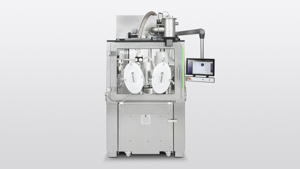
Safely scale potent capsule encapsulation with high-containment isolation up to OEB 5, integrated wet-in-place cleaning, and 100% inline weight verification.
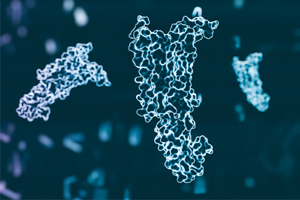
Our solutions have been specified in the testing process for the top two GLP-1 manufacturers
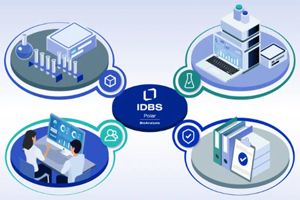
Bioanalytical organizations are responsible for generating accurate, reproducible data that supports development decisions, regulatory submissions and ultimately faster drug approvals. As sample volumes grow and studies become more complex, maintaining quality, compliance and efficiency can become increasingly difficult.

IDBS Polar Request brings lab work request management directly into the Polar platform—alongside experiment execution, structured workflows and compliance. It connects the demand for scientific work to the people, inventory and capacity needed to deliver it.
Synthetic oligonucleotide therapeutics, such as antisense oligonucleotides (ASOs) and small interfering RNAs (si-RNAs), require thorough analysis to establish purity and quality.