ABOUT THERMO FISHER SCIENTIFIC
Thermo Fisher is a leading global provider of bioprocessing solutions. We purposefully connect our capabilities across all phases of the drug lifecycle, accelerating our customers’ pace to patient impact. With our comprehensive portfolio of products and services we are a dedicated partner throughout the biological drug development journey.
Key Capabilities:
- Media and buffer preparation
- Cell expansion
- Cell culture production
- Harvest
- Capture and polish chromatography
- Viral inactivation, filtration, and QC testing
- Bulk storage, fill, and finish
- cGMP chemicals and supply chain services
- Expert professional support to meet process, scale, quality, and regulatory requirements
WEBINARS AND VIDEOS
-

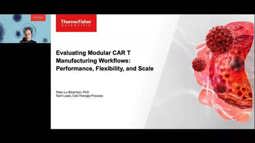
As CAR-T advances, shifting clinical progress and market dynamics are reshaping development strategies. Explore how evolving therapies and operational demands are redefining the next wave of innovation.
-

From lab to production scale: a researcher's firsthand account of what bioreactor scaling and high-density perfusion really demand in practice.
-

Learn how a structured, scalable approach to process development can help improve productivity, maintain product quality, and support a smoother transition to manufacturing.
-

Up to 146% higher protein titers in CHO-K1 culture. See how advanced feed technology and animal–origin–free formulations are redefining what consistent protein production looks like.
-

See how the right biotech products, workflows, and technical expertise help teams accelerate development and bring life-changing therapies from lab to commercial reality.
-

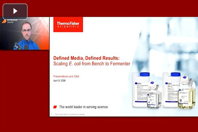
Understand the benefits of chemically defined media in E. coli systems, explore real-world plasmid DNA data, and learn practical strategies for scaling to robust manufacturing.
-

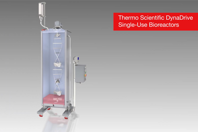
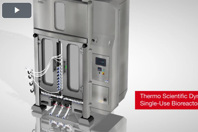
Explore DynaDrive Single-Use Bioreactors through expert videos covering reactor design, mixing performance, sparge technology, and scalable workflows from bench-scale to commercial production.
-

Single-use assembly design is evolving fast. Learn how scalable platforms, digital automation tools, and global supply networks are converging to support sustainable biopharma manufacturing at scale.
-

Uniform bubble size and consistent mass transfer across scales through drilled-hole sparge technology improves oxygen delivery and CO2 stripping in demanding cell culture processes.
-

Single-use bioreactors with turndown ratios up to 20:1 enable facilities to operate across wide volume ranges within the same vessel, streamlining seed trains and reducing capital requirements for multi-product operations.
-

Consistent vessel design, sparging, and bag materials across 1L to 5,000L volumes enable predictable bioreactor scale-up from development through commercial manufacturing.
-

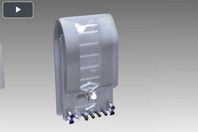
Cuboid bioreactor design eliminates vortexing through natural baffling, delivering homogeneous mixing and consistent nutrient distribution for high cell density upstream processes.
-

PFAS-free bioreactor film technology provides proven biocompatibility and strength across workflows while simplifying validation and reducing material variability for compliant operations.
-

Hear from industry experts on how teams can integrate manufacturability considerations earlier through rapid prototyping, data-driven media development, and predictive modeling.
-

Explore five key advantages of single-use bioreactors, including scalable design, homogeneous mixing, broad chemical compatibility, and streamlined seed train processes for bioproduction success.
-

Learn about manufacturing solutions that streamline cell culture media scale-up with global production capabilities, equivalency strategies, and quality assurance for reliable supply.
-

See how this kit accelerates clone development to 14 weeks with ≥7 g/L protein titers while reducing costs through royalty-free commercial licensing for therapeutic applications.
-

Thermo Fisher Scientific's portfolio of resDNASEQ solutions is here to meet your specific needs enabling you to test for residual host cell DNA and release your biotherapeutics with confidence in safety and confidence in product quality.
-

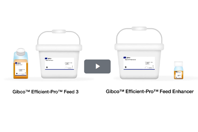
The Gibco Efficient-Pro Medium and Feed System is a cutting edge new media and feed system.
-

Discover practical solutions for common quality control bottlenecks in biotherapy manufacturing. Learn how to improve protein analytics and DNA testing robustness and accelerate time to market.
-

This featured event at the Gibco cell culture media 60th-anniversary in Grand Island, New York spotlights proactive strategies used by Thermo Fisher Scientific to decrease risk, ensure quality and meet customers raw material needs worldwide.
-

Watch this video to learn more about the Thermo Scientific HyPerforma Single-Use Mixer DS 300. This Modular mixing system offers a cost-effective, docking station-style mixing platform with multiple mixing-volume options.
-

In this webinar, we will share a variety of strategies for implementing and validating microbial identification systems in the cGMP environment, possible difficulties along the way, and a comprehensive solution that addresses these challenges.
-

Discover how biobased materials in bioprocessing enable measurable carbon emission reductions. Learn practical strategies to meet decarbonization goals and adopt greener, operationally sound practices.
-

Hear Sandi True, a Field Applications Specialist discuss helping customers navigate challenges often encountered when evaluating and implementing Residual DNA Quantitation, Mycoplasma Detection, and Microbial Identification Assays.
-

Scaling bioprocesses requires matching critical variables to ensure consistent cell behavior and product quality. Optimize operations with efficient tools that enable more experiments per year.
-

Take a video tour of our newly expanded dry powder media manufacturing facility in Grand Island, New York. The expansion has added more than 45,000 square feet of Animal Origin Free (AOF) manufacturing space to help meet increasing global demand.
-

Discover strategies for optimizing process control, refining media selection, and ensuring safety through rigorous contaminant detection to mitigate development risks.
-

An overview of the inbound supply chain in gene therapy and the process development challenges that are frequently faced. Learn about concepts such as scaling, cell culture media sourcing, mixing technologies, and configurable packaging.
-

Learn the reasons why the animal origin-free trend in bioprocessing has taken so long to reach microbial bioproduction and the technical hurdles overcome during the development of Gibco CD Bacto Supreme.
-

This Knowledge Culture Basic Education Series on CHO media will explore CHO cells: their lineage, historical culture media, and process improvements. We will dive into how to optimize cell culture performance for superior outcomes.
-

Learn more about our cell culture media manufacturing global network, including details of the Paisley, Scotland site's capacity expansion supporting the bioprocessing industry's rapidly growing needs.
-

Learn more about our cell culture media manufacturing global network, including details of the Grand Island, New York sites capacity expansion supporting the bioprocessing industrys rapidly growing needs.
-

Build bioprocessing resiliency with strategic supply chain management. Learn to meet quality, compliance, and time-to-market demands amid global volatility with effective sourcing.
-

Explore cutting-edge chromatography techniques accelerating vaccine purification across diverse modalities, with case studies on HPV, Malaria, and COVID-19.
-

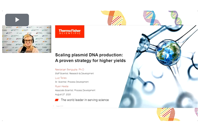
Learn how an agile manufacturing partner scaled their plasmid DNA production and achieved higher yields by optimizing their media selection and fermentation processes.
-

Learn how to leverage AI, omics integration, and collaborative research to build more physiologically relevant disease models and accelerate the development of next-gen cell therapies.
-

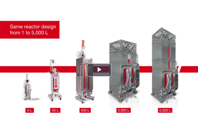
Ready to transform your process development? Introducing the 5 L Thermo Scientific DynaDrive Single‑Use Bioreactor (S.U.B.), now available! Experience the same bioreactor design from bench to commercial and re‑imagine scalability in process development.






CONTACT INFORMATION
Thermo Fisher Scientific
7305 Executive Way
Frederick, MD 21704
UNITED STATES
Contact: Hunter Tuck
FEATURED SOLUTIONS
-

See how intensified capture, polishing, inline dilution, and integrated chromatography can ease downstream bottlenecks and support scalable mAb purification while maintaining product quality.
-

Higher cell densities can strain harvest operations. See how integrated centrifugation and chromatographic clarification may reduce solids, improve efficiency, and support scalable processing.
-

Increase mAb output without adding capacity. See how intensified seed and production strategies can shorten timelines, reduce manual handling, lower facility burden, and improve productivity.
-

Particulate control starts with practical decisions. Learn how material selection, acceptance criteria, and operator handling practices can help reduce contamination risk and support stronger quality.
-

Choose the right level of clean for bioproduction storage and transport, with options designed to help manage particulate, endotoxin, sterility and material requirements across critical workflows.
-

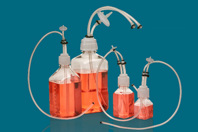
Simplify fluid transfer workflows with ready-to-use, gamma-irradiated bottle assemblies designed to reduce setup, cleaning, and contamination concerns across media or buffer transfer applications.
-

Modular manufacturing strategies can support scalable T-cell processing while maintaining key quality measures. Explore how workflow design choices can help balance efficiency and performance.
-

Gain insight into how targeted nutrient supplementation increased CHO cell growth, boosted antibody production, and improved glycosylation profiles across batch and fed-batch cultures.

FEATURED INSIGHTS
-

Next-generation antibody formats require more precise purification strategies. Explore how subdomain-specific VHH ligands can address structural heterogeneity, improve purity, and preserve stability.
-

Gain insight into how combining centrifugation with targeted depth and chromatographic clarification can reduce filter demand, ease facility constraints, and support efficient mAb harvest.
-

Explore how process optimization can address downstream mAb manufacturing bottlenecks, reduce labor and consumable costs, and support more efficient production without compromising performance.
-

See how integrated upstream and downstream intensification strategies can increase monoclonal antibody yield, streamline workflows, improve facility utilization, and reduce manufacturing costs.
-

Membrane design and filtration capacity affect pressure, throughput, and scale-up. See how comparative testing reveals opportunities to reduce required filtration area, capsule use, and changeouts.
-

Looking beyond unit price reveals how reliability, leak prevention, and shelf life affect bioprocessing costs. Make purchasing decisions that support resilient and predictable operations.
-

Discover how working volume, material type, and solids behavior affect single-use mixing performance, with practical findings on blend times, homogeneity, analytical methods, and agitation rates.
-

Examine how closed-loop conductivity control supports accurate step and linear gradients, as well as consistent chromatography performance across changing flow rates and process conditions.